
The Federal Government has dismissed claims that it spent about two per cent of Nigeria’s Gross Domestic Product (GDP)—estimated at over ₦8 trillion—outside the approved budget, describing the reports as a misrepresentation of comments made by the International Monetary Fund (IMF) Resident Representative in Nigeria and the organisation’s 2026 Article IV Consultation Report.
The government said the claims were inaccurate and could mislead the public about the country’s fiscal management.
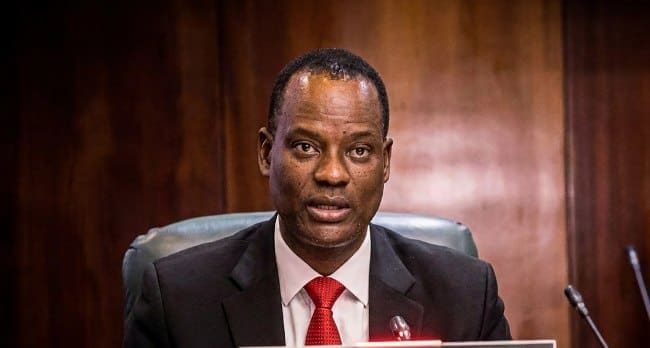
In a statement issued on Sunday, the Minister of Finance and Coordinating Minister of the Economy, Taiwo Oyedele, said the Federal Government does not operate a “shadow budget” or spend public funds outside the constitutional and statutory framework governing public finance.
He explained that sections 80–83 and 162 of the 1999 Constitution (as amended) provide that public funds can only be withdrawn and spent in accordance with the Constitution and laws enacted by the National Assembly.

According to him, all Federal Government spending is backed by duly enacted Appropriation Acts, Supplementary Appropriation Acts or other statutory authorisations approved by the National Assembly.
Oyedele added that multi-year capital projects, which span several budget cycles, are implemented in line with existing laws and approved capital rollover provisions where applicable.
“These are recognised features of public financial management and should not be misconstrued as expenditures outside the budget,” he said.
He described as inaccurate suggestions that trillions of naira were secretly spent without legislative approval, arguing that such allegations should identify the specific projects allegedly executed without appropriation or legal authority and provide credible evidence to support the claims.
“To be meaningful, assertions of this magnitude must be supported by verifiable facts rather than conjecture.
“For the purpose of public education, it is important to distinguish between appropriation, expenditure authorisation, financing and fiscal reporting,” he added.
Oyedele said Nigeria’s public finance framework includes several statutory transfers, first-line charges and intervention mechanisms established by Acts of the National Assembly.
These, he said, include statutory allocations to development commissions and other agencies created by law, cost of collection and administration retained by designated revenue-collecting agencies, capital expenditure approved under separate budgets for some agencies and the Federal Capital Territory, special interventions for national priorities such as security, infrastructure and disaster response, as well as debt service obligations and other statutory transfers.
The minister maintained that the expenditures are neither secret nor illegal, stressing that they are established by law, disclosed in official fiscal reports and subject to oversight, audit and accountability mechanisms.