
The xenophobia that has recently gripped South Africa and driven thousands of fellow Africans from the country is deeply troubling. Given that South Africa’s liberation from apartheid was supported by fellow Africans across the continent, it is puzzling that a movement such as March on March, directed against fellow Africans, would emerge and aggressively seek to drive them out
AT its inception in 1963, the founders of the Organisation of African Unity (OAU) in Addis Ababa—rechristened the African Union (AU) in 2002 in Durban, South Africa—envisioned uniting the then 32 independent African nations (now 54) into a powerful force for good on our beloved yet challenged continent.
It is significant to note that 63 years have passed since those founding fathers took the bold initiative to unify Africa. The visionary leaders included Emperor Haile Selassie I of Ethiopia, who hosted the conference, alongside Kwame Nkrumah of Ghana, Gamal Abdel Nasser of Egypt, Jomo Kenyatta of Kenya, Julius Nyerere of Tanzania, and Sékou Touré of Guinea.
They conceived and concretised the idea of fortifying Africa against external exploitation. Consequently, the sole agenda of the leaders gathered at that historic meeting was to promote unity and solidarity among African states, defend their sovereignty, eradicate colonialism, and encourage international cooperation.
Thus, what appeared to be the foundation for a “United States of Africa” was born more than six decades ago. Today, that vision is being nurtured toward maturity through the African Continental Free Trade Area (AfCFTA), which was signed by 44 African Union member states in Kigali, Rwanda, in 2018. The agreement entered into force in 2019 and became operational in 2021, with the objective of creating a single market for goods and services across Africa, thereby boosting intra-African trade and economic integration.

By all intents and purposes, the formation of the OAU, which later evolved into the AU, was an antidote to the devastating consequences of the infamous 1884–1885 Berlin Conference. Hosted by Otto von Bismarck, then Chancellor of Germany, that gathering partitioned Africa among European powers, paving the way for colonial domination and the exploitation of the continent’s vast human and natural resources—an exploitation whose effects remain evident to this day.
Other notable leaders, such as Nnamdi Azikiwe of Nigeria and, later, Muammar Gaddafi of Libya, were among the Pan-Africanists who passionately propagated and championed the vision of a United States of Africa, much like the United States of America, which emerged after 13 colonies declared independence from Britain on July 4, 1776, and subsequently established a federal union under George Washington.
Although the dream of a United States of Africa has not materialised as envisioned by the continent’s farsighted founding fathers and their successors, a growing number of African entrepreneurs and policymakers continue to pursue the goal of uniting African countries—not necessarily as a single political entity like the United States, but as a common market of 54 nations with reduced barriers to trade and movement.
Disappointingly, the epidemic of Afrophobia spreading across South Africa increasingly appears to be a requiem for this lofty vision of a common market serving the continent’s estimated 1.4 billion people.
As earlier noted, the foundation of cooperation among the original 32 nations that established the OAU—and the 54 nations that now comprise the AU—is under serious threat.
The xenophobia that has recently gripped South Africa and driven thousands of fellow Africans from the country is deeply troubling. Given that South Africa’s liberation from apartheid was supported by fellow Africans across the continent, it is puzzling that a movement such as March on March, directed against fellow Africans, would emerge and aggressively seek to drive them out.
The anti-immigrant movement known as March on March, founded in 2024 by Jacinta Ngobese-Zuma, a former radio journalist from Durban, has dealt what may be the most devastating blow to African unity in recent times. Its activities risk undermining the prospects of continental integration that the founding fathers of the AU (formerly the OAU) worked tirelessly to build over the past six decades.
While the movement has been widely described in the media as an anti-immigrant group targeting African nationals, Ngobese-Zuma and her supporters insist they are not xenophobic. Nevertheless, she has faced charges relating to incitement to commit violence in connection with protests. Many informed African diplomats have little doubt that the movement has fueled extremist nationalist sentiments and severely damaged the spirit of continental solidarity.
Of course, this is not the first time that marches have been used as platforms for advancing social and political causes in South Africa—a nation that prides itself as a “Rainbow Nation.” However, the current March on March movement led by Ngobese-Zuma differs significantly from earlier anti-apartheid marches, such as the famous 1960 march led by Philip Kgosana.
Unlike the current movement, the anti-apartheid marches of the 1960s sought to end apartheid laws, dismantle racial segregation, and secure voting rights and political inclusion for all South Africans, particularly the black majority.
Whereas the Ngobese-Zuma-led movement targets African nationals and other immigrants whom it accuses of taking jobs from South Africans, the anti-apartheid marches fought for the inclusion of Black South Africans in the governance of their country and the eventual dismantling of apartheid.
Remarkably, the same Africans who stood at the forefront of the struggle to liberate South Africa’s oppressed black majority have now become targets of Afrophobia. The images of fellow Africans being attacked, killed, or forced into exile by angry South Africans are deeply disturbing.
It evokes the biblical lament: “To your tents, O Israel.”
Before examining the local, immediate, and far-reaching consequences of South Africans turning against fellow Africans, it is important to place this troubling development in its proper context. Afrophobia poses a significant threat to AfCFTA and could jeopardise one of Africa’s most ambitious economic projects.
To understand the gravity of the situation, one must first appreciate the sacrifices made by African leaders and nations that stood firmly against apartheid, often at considerable political and economic cost.
One of the foremost figures in that struggle was Kwame Nkrumah of Ghana, widely regarded as the architect of modern Pan-Africanism.
Nkrumah established the blueprint later followed by leaders such as Julius Nyerere of Tanzania and many others across the continent. When Ghanaians, Nigerians, Tanzanians, and other Africans are attacked in South Africa today, does it not desecrate the very legacy they built?
Nkrumah’s contributions to Pan-Africanism were immense.
When Ghana gained independence in 1957, he declared the country the “Gateway to African Freedom.” As he famously stated:
“Our independence is meaningless unless it is linked with the total liberation of the African continent.”
He backed those words with action. In 1960, he established the Bureau of African Affairs in Accra, which provided funding, travel documents, training, and diplomatic support to liberation movements such as the ANC, PAC, ZANU, FRELIMO, and MPLA. Many South African freedom fighters found refuge in Ghana during those years.
In 1963, at the founding of the OAU in Addis Ababa, Nkrumah advocated for a United States of Africa with one army, one currency, and one government. Although he lost the vote, he won the ideological argument. Hence there is no United States of Africa today. But the Unification that could not be achieved politically by politicians is being pursued vigorously by the continent’s resourceful entrepreneurs such as the owners of MTN, DSTV, from South Africa and Dangote industries, UBA, Access bank etc from Nigeria amongst others who have developed footprints across the continent by opening branches or subsidiaries in most of the 54 African nations
Fomer Tanzanian president Julius Nyerere who was also a founding father of AU also offered passports to the stateless south African Freedom fighters.
Likewise, did Nigerian government and its people make the sacrifice of offering south Africans passport to travel around the world and offered their children scholarships in Nigerian schools, even as Nigerian workers and market women donated generously to funds such as the Mandela funds used in supporting the struggle. Through its membership in OPEC and the United Nations ,UN Nigeria used her influence to push for sanctions against apatheid South Africa and pressurised the UN to declare apartheid a crime against humanity.
In total, Nigeria is estimated to have spent roughly $61 billion on the struggle for the liberation of South Africa between 1960-1995 and more than $40 billion in forfeiture of oil revenue by deny apatheid regime the sales of her crude oil.
Imagine the paradox of the children of Nigerians who made all the sacrifices listed above and even selflessly allowed government to deduct 2% of their salaries to help in the struggle to rescue South Africans from apatheid and whose children are amongst those whose shops were looted, even killed and chased out of South Africa.
Commendably, Nigerians not taking retaliatory actions against their south African adversary.
Instead ,they have acted as Mitchell, the former first lady of the US, wife of Barrack Obama once adviced when faced with deplorable circumstances such as what has taken place in South Africa.
She said “when they go low,we go high”.
Nonetheless it is shameful that while Nigeria served as a safe haven for South African freedom fighters from the 1960s through the 1980s, Johannesburg today witnesses reports of Nigerians being harassed and their businesses looted.
As a result of violence against black foreigners driven by March on March exponents, Ghanaian repatriated 926 of its nationals and Nigerian government evacuated at least 1,490 of their nationals to keep them out of harm’s way.
Remarkably, Nkrumah’s central message back in 1963 when AU was formed was clear:
“We fought colonialism because it divided us. Let us not allow poverty to divide us again.”
But clearly, South Africans did not imbibe that spirit of Ubuntu- “l am because we are ” which is a philosophy Nelson Mandela and Desmond Tutu, prominent south African anti apatheid champions espoused.
Is there a broader effort to sabotage Africa’s unity?
Why are some Black South Africans embracing narratives that pit them against fellow Africans who once stood with them in solidarity?
While there may be no explicit conspiracy directing Africans to fight one another, there are undoubtedly forces that benefit when Africans are divided. When public anger is redirected toward “foreigners,” attention is diverted from pressing issues such as corruption, unemployment, poor governance, and chronic power shortages.
That is why some commentators suspect complicity of the government which seems to have turned a blind eye while the violence was being unleashed on black foreign nationals and their small businesses.
The suspicion is reinforced by the South African minister in the presidency Khumbudzo Nshavheni who rather than speak of how to rein in the rabid citizens of her country who had unleashed mayhem on foreign nationals that her country has the responsibility to protect, she was rather boldly on television saying Nigerians should come and show them the location of their ilicit drug dens.
Her undiplomatic stance could have had dire consequences on her country if the home governments and compatriots of the victims were as irrational as the brutish South Africans have been,but Nigeria and Ghana that together repatriated about 2.5 million nationals home, have resolved to be more professional in dealing with the potential conflict points by de- escalating it and planning to table it in the appropriate forum.
Without a doubt, Afrophobia is poison to AfCFTA because it threatens to destroy the project from within.
AfCFTA was conceived as a single market encompassing 1.4 billion people and a combined GDP of approximately $3.4 trillion. Yet, if Africans cannot trust one another on the streets, they will struggle to trust one another in commerce and investment.
Direct Implications of Afrophobia for AfCFTA
- People Will Not Move, and Neither Will Skills
The free movement of people is central to AfCFTA. A Ghanaian engineer should be able to work in South Africa, just as a Nigerian doctor should be able to practice in Kenya. If Nigerians are chased out of Johannesburg, few professionals will willingly accept assignments in Durban or elsewhere. The result would be free trade in goods but closed borders for people—a contradiction that undermines the very spirit of AfCFTA.
- Traders Become Targets, and Intra-African Trade Suffers
Much of Africa’s trade is conducted by small-scale traders—the Nigerian textile merchant, the Zimbabwean truck driver, the Somali shop owner. If their businesses are repeatedly looted or threatened, many will abandon regional trade and revert to importing from outside Africa. The result is a weakened continental market and continued dependence on foreign suppliers.
- Investment Declines and Industrialisation Stalls
A Kenyan company may hesitate to establish a factory in South Africa if its employees face security risks. Likewise, a Tanzanian bank may be reluctant to expand if anti-foreigner sentiment threatens its operations. AfCFTA depends on cross-border investment, but Afrophobia raises risk levels and discourages business expansion.
As a result, Africa may continue exporting raw materials instead of building integrated manufacturing value chains across the continent.
AfCFTA requires governments to remove tariffs, harmonise standards, and facilitate movement across borders. Political sabotage in the form of Afrophobia threatens to derail those efforts. If politicians gain support by advocating the exclusion of fellow Africans, they are unlikely to fully implement AfCFTA protocols.
Hence the danger is that AfCFTA can remain largely a paper agreement—54 countries and 54 excuses.
Currently, only about 15 percent of Africa’s trade occurs within the continent, compared to approximately 70 percent in Europe and 60 percent in Asia.
That abysmal number is the grim reality we face in Africa.Worse still, Afrophobia could significantly hinder AfCFTA’s ambition of increasing intra-African trade to much higher levels of up to 50% by 2030, a goal that Afrophobia must have put in jeopardy.
Moreover, every xenophobic attack imposes a “risk tax.” as insurance premiums rise, transportation costs increase, supply chains are disrupted, and goods are delayed at borders.
Economists estimate that such instability could cost Africa billions of dollars annually in lost trade opportunities.
That is precisely the type of outcome colonialism sought to entrench: a divided Africa unable to fully harness its collective strength.
The present and real danger is that Afrophobia can be a Requiem For AfCFTA and reinforcement of colonialism.
It therefore raises a troubling question: why are ultra-nationalist elements in South Africa becoming willing instruments in the perpetuation of a disservice that undermines the future of the African continent itself?
Did they not consider the risks that South African businesses and individuals may face if other Africans were to take retaliatory actions against them? As we all know, in the current era of globalisation with national barriers breaking down physical geographical borders, hence no nation is an island, could South Africa survive the consequences of its obnoxious behavior?
Would it live to regret its irrational behavior in the manner that the UK is regretting the mistake of embarking on its exit of its membership of European Union, popularly known as BREXlT which is a hasty and populist action it is currently regretting?
For instance, MTN and DStv are both South African companies that became big franchises/brands across Africa. That is because after apartheid ended in 1994, many South African companies expanded fast into the rest of Africa.
MTN and MultiChoice/DStv were two( 2) of the most visible ones because telecoms and TV touched everyday people.
Hence masts and DStv dishes and MTN masts are everywhere across African cities as both are South African franchises/multinationals spread across Africa, with local subsidiaries in each country.
Other big South African brands operating across Africa are Shoprite, Standard Bank, Nando’s, etc.
Owing to the sheer population size of Nigeria,(estimatedly 230 million people) it is the biggest market on the continent,hence there are South African franchises/multinationals with local subsidiaries in Nigeria and indeed across the African continent.
Could the current March on March Afrophobia which is about black South Africans unleashing violence against fellow black Africans in their country be another case of the government distracting the populace by privately blaming the foreigners for the misfortune of the masses which can be interpreted as the hands of lssau and voice of Jacob as narrated in the holy bible?
Curiously, before the violent misbehavior of South Africans against fellow black foreigners reminiscent of Black on Black violent crisis that once rocked that country during apartheid, DStv / MultiChoice owners of GOtv,SuperSport and Showmax had been sold to Canal+ which is a French media giant.
Based on records , it all started when Canal+ commenced buying the shares in 2020 and got ownership of up to 45.2% by 2024.By 2025, South Africa’s Competition Tribunal approved Canal+ buying the remaining 55% in a $3 billion / R55 billion deal
In September 2025, Canal+ announced it is now in effective control of MultiChoice.
Given that the March on March movement started about the same time that South African authorities started trying to ring fence the country’s brands spread across Africa, it is difficult not suspect that March on March is not choreographed in the way that violence was outsourced in Sudan to the janjaweed in order for the government to be insulated from running foul of UN rules against ethnic cleansing or profiling and how the extermination of the Armenians from the Baku region of modern day Azerbaijan was outsourced to the Turkish army by the Rothschilds of France and Rockefeller of USA who held significant oil processing plants in the conflict ridden location and wanted their oil assets protected without taking responsibility for what later became known as the Armenian genocide- the first genocide in the world.
This is one of the reasons that aggrieved African countries , particularly Nigeria and Ghana were determined during the last ECOWAS meeting held in Sierra Leone to put Afrophobia on the agenda of the forthcoming African Union, AU meeting to be held in early 2027.
It important to note that some beneficial ownership concealment has been carefully done to canceal and tone down the ownership identity of South Africa through shell companies used for the venture.This was achieved through South African law which bars foreigners from owning more than 20% of broadcasting licence.
So, MultiChoice broadcasting licence was converted into a new company called LicenceCo which is owned 51% by South Africans and 49% by Canal+.
Therefore, while it is being touted that French media firm Canal + now have the ownership of MultiChoice/DStv, in reality the venture is still majority owned by South Africans.
Similarly, MTN is listed in Nigeria, but it is not a “Nigerian-owned” per se, although there was an lPO in 2019 and its shares are trading on the Nigerian Stock Exchange, NGX. But ownership-wise, it is still a South African firm with head office in Johannesburg, South Africa.
That is because MTN Nigeria which is a subsidiary is 75% owned by MTN Group in South Africa and the remaining 25% is owned by Nigerian institutions and retail investors, which by and large makes MTN a Nigerian firm too.
So, basically MTN is a Nigerian firm owned by citizens of Nigeria but with a South African parentage since it is a subsidiary of the MTN Group in South Africa.
However, what is significant to note is that MTN Nigeria is Nigerian-operated, pays taxes here, employs Nigerians, and Nigerians own a big chunk even though control still sits with MTN Group in South Africa.
And my good friend,Mr. Karl Toriola, the managing director of MTN Nigeria has done a good job clearing the fog of misconception about MTN ownership and its significant Nigerian ownership- 25%.
To put that in context, Shell, Mobile, Chevron,etc are not quoted on NGX how much more being partly owned by Nigerians.
But both MultiChoice /DSTV and MTN are perfect examples of how South African companies expanded across Africa, bouyed by the sympathy for the country earned during its struggle against apatheid and now their ownership is becoming more global/local-mixed likely by design to insulate them from the anticipated backlash which could arise from the about-face being exhibited by the March on March exponents who are now claiming that the good gestures of Africans towards South Africa when it was embattled is owed by Nelson Mandela the iconic leader who led the emancipation struggle and who is now in the grave.
Although direct beneficiaries such as Mandela and Desmond Tutu have passed on, the likes of former Presidents of South Africa Thabo Mbeki and Jacob Zuma are still alive and one wonders why they have not intervened.”Black on black violence” during apartheid refers mainly to political conflict within black communities in South Africa, especially in the 1980s-1990s. It wasn’t random — it was tied to apartheid policies, poverty, and political rivalry.
A quick research reveals that the political violence was driven by a conflict between ANC and Inkatha parties which happened from the mid-1980s to early 1990s in the Natal/KwaZulu and the Transvaal townships during which over 5,000 were killed in Natal in 4 years before 1990 with more than 11,000 black South Africans killed in townships fighting since 1984.
In townships around Johannesburg in the second half of 1990 as well as roughly 1,000 were killed in 1991 in ANC versus IFP fighting.
This happened due to political rivalry between ANC and Inkatha over who would lead post-apartheid was suspected to have been investigated by then apatheid regime.
What is to be noted and worrying to me is that as the apartheid government of that time was accused of using a third force/ security forces to fuel the conflict and destabilise negotiations aimed at ending apatheid, could government have unseen hands in the current crisis?
Generally, the period 1990-1998 was described as a “civil war” that was labeled ‘black-on-black violence and “Necklacing” used to punish suspected police informants and apartheid collaborators by mainly COSAS and SAYCO- youth groups forcing a petrol-soaked tyre around a person’s chest and setting it alight.
So, South Africa has been defined by crisis and culturalised with force as the citizens have been shaped by violence over the years and the country may struggle for a long time to wean its citizens of violence as the only resort to solving socioeconomic challenges which has constantly been facing.
In a nutshell, the main “black on black violence” during apartheid was 1984-1998 political fighting, mostly ANC versus IFP, that ended the lives of over 10,000 people had been traced by scholars to the roots of apartheid’s divide-and-rule, poverty, and state complicity.
Could the current March on March Afrophobia which is about black South Africans unleashing violence against fellow black Africans in their country be another case of the government distracting the populace by privately blaming the foreigners for the misfortune of the masses which can be interpreted as the hands of lssau and voice of Jacob as narrated in the holy bible?
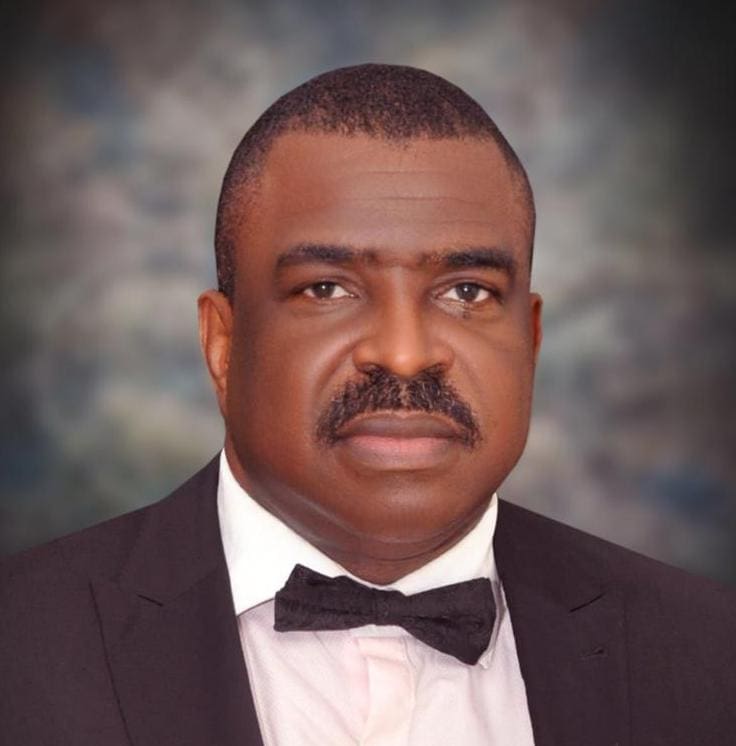
- Magnus Onyibe, an entrepreneur, public policy analyst, author, democracy advocate, development strategist, an alumnus of the Fletcher School of Law and Diplomacy, Tufts University, Massachusetts, USA, a Commonwealth Institute scholar, and a former commissioner in the Delta State government, sent this piece from Lagos.

