
The meeting was convened against the backdrop of a series of recent articles by stakeholders, which sought to interrogate the widening disconnect between the promise of the newly renovated Wole Soyinka Centre for Culture and the expectations of its primary stakeholders. To his credit, Mr. Holloway did not retreat behind the walls of bureaucracy. Instead, he opened the doors to conversation—a gesture that is becoming increasingly rare in public service.
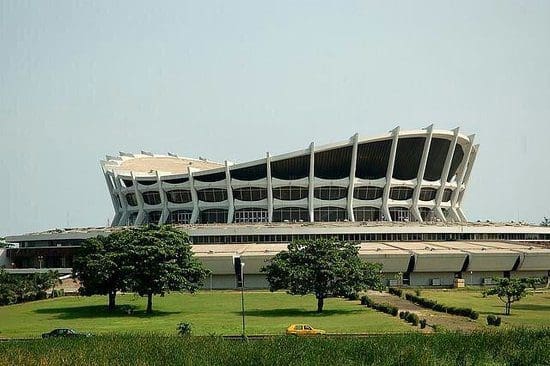
What emerged from that engagement was a shared understanding that the National Theatre’s greatest challenge may not be political or administrative, but structural. The Wole Soyinka Centre for Culture is an architectural masterpiece reborn, yet its sheer scale presents an enormous maintenance burden. The cost of powering, cooling, securing and preserving such a massive edifice is, by every measure, humongous. This is not a challenge created by the current leadership; it is one embedded in the very design and operational philosophy of the building itself.
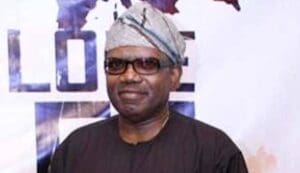
THERE are moments in the life of a nation when dialogue becomes more consequential than protest. Such moments remind us that institutions are not merely bricks and mortar; they are living expressions of collective aspiration. One such moment occurred recently when the Chairman of the Board of the National Theatre, Mr. Disun Holloway, hosted a meeting attended by the General Manager of the National Theatre, Mrs. Tola Akerele, the President of the National Association of Nigerian Theatre Arts Practitioners (NANTAP), Makinde Adeniran, Joseph Edgar of the notable Duke of Shomolu Foundation, and veteran actor, Bimbo Manuel. The atmosphere was cordial, candid and, perhaps more importantly, hopeful.
The meeting was convened against the backdrop of a series of recent articles by stakeholders, which sought to interrogate the widening disconnect between the promise of the newly renovated Wole Soyinka Centre for Culture and the expectations of its primary stakeholders. To his credit, Mr. Holloway did not retreat behind the walls of bureaucracy. Instead, he opened the doors to conversation—a gesture that is becoming increasingly rare in public service.
What emerged from that engagement was a shared understanding that the National Theatre’s greatest challenge may not be political or administrative, but structural. The Wole Soyinka Centre for Culture is an architectural masterpiece reborn, yet its sheer scale presents an enormous maintenance burden. The cost of powering, cooling, securing and preserving such a massive edifice is, by every measure, humongous. This is not a challenge created by the current leadership; it is one embedded in the very design and operational philosophy of the building itself.
For decades, Nigeria’s cultural infrastructure has suffered from a lack of sustainable business models. We build monuments and then struggle to programme them. We celebrate renovations without adequately planning for maintenance. The National Theatre is now confronted with the difficult task of generating sufficient revenue without losing its cultural soul. It is a mountain that must be surmounted.
Encouragingly, programming featured prominently in our discussions. There was broad agreement that a cultural institution of this magnitude cannot survive on venue rentals alone. A theatre breathes through activity. It lives through audiences. It finds relevance through consistent programming. From festivals and stage productions to literary engagements, music performances, children’s theatre, film screenings and international cultural exchanges, the Wole Soyinka Centre must become a destination rather than an occasional event space.
The conversation also extended to branding and audience development. In an era where attention is the most valuable currency, the National Theatre must intentionally cultivate new audiences. Young Nigerians, many of whom have never experienced live theatre, should see the Centre as their creative home. Schools must be integrated into its programming calendar. Tourists should find compelling reasons to visit. Communities must feel a sense of ownership.
Equally important is the idea of developing creative hubs around the Theatre. Around the world, successful cultural institutions do not operate in isolation. They are supported by thriving ecosystems of cafés, galleries, rehearsal spaces, bookshops, creative markets and innovation centres. The National Theatre precinct presents a unique opportunity to create a cultural district capable of generating employment, attracting investment and nurturing the next generation of creatives. If properly conceived, these hubs could become the economic lungs that help the Centre breathe easier.
Perhaps the most reassuring outcome of the meeting was Mr. Holloway’s unequivocal commitment to ensuring that the newly renovated edifice remains inclusive and responsive to the needs of its stakeholders. His assurance was not merely rhetorical. He shared plans and perspectives that suggest an appreciation of the concerns being raised across the sector. Mrs. Tola Akerele equally demonstrated an understanding of the operational realities confronting management, while Bimbo Manuel brought the wisdom and perspective of a practitioner who has witnessed several chapters in the evolution of Nigeria’s creative industry.
No one left the room under the illusion that the challenges had suddenly disappeared. The mountain remains. Maintenance costs will not diminish overnight. Audience development requires patience. Branding demands consistency. Programming requires resources. Creative hubs need investment and policy support.
Yet, there was something profoundly important about the meeting: it reaffirmed that solutions are possible when stakeholders choose engagement over antagonism.
The National Theatre has travelled a long road—from neglect to rehabilitation, and now to reinvention. The task before us is to ensure that the Wole Soyinka Centre for Culture becomes more than a beautifully restored building. It must become a living institution—one that reflects the diversity, creativity and ambition of Nigeria itself.
For now, there are still possibilities for the National Theatre to breathe better in the days ahead. The conversations have begun. The commitments have been made. The stakeholders are listening to one another.
And so, as the curtain rises on this new chapter, perhaps all that remains is for us to do what every audience does before a great performance begins: keep our fingers crossed.
* Adeniran Makinde, fta. National President- NANTAP