

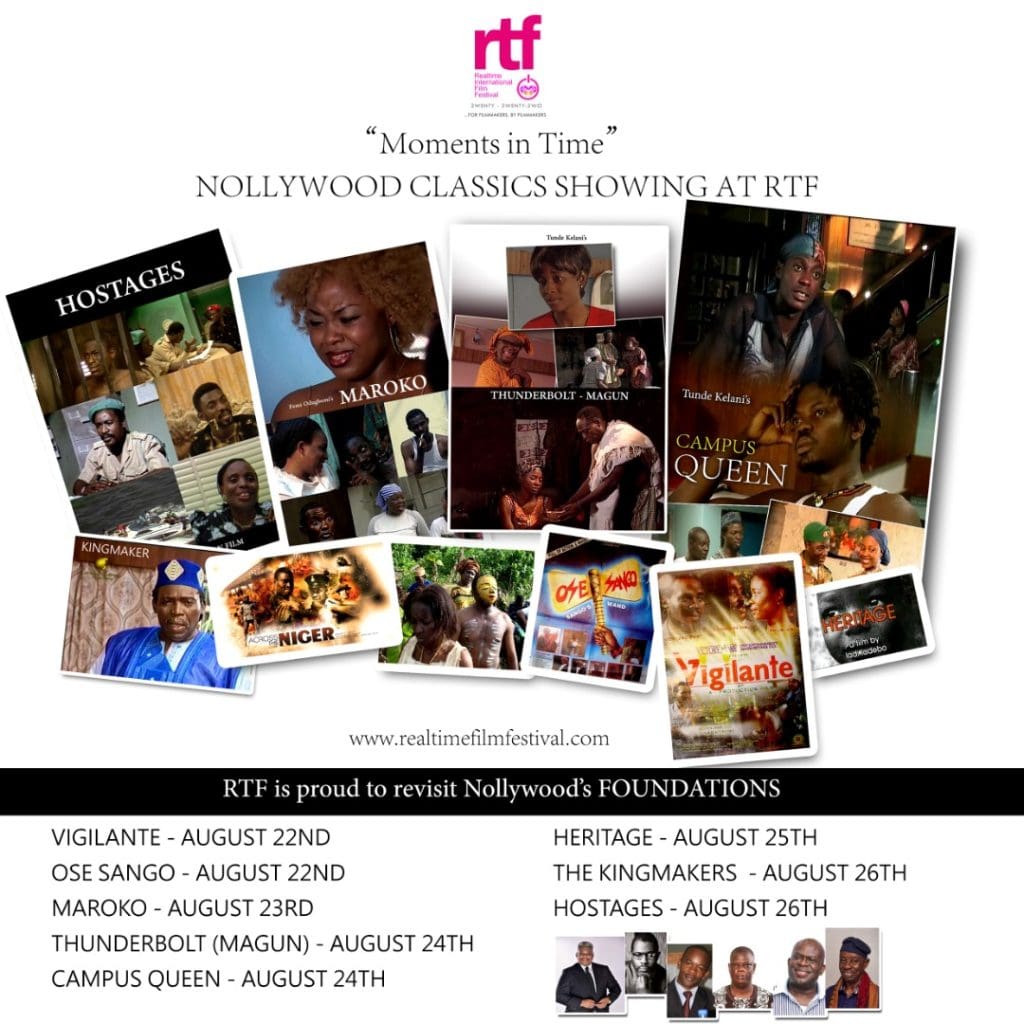
MONDAY, August 22, from 7pm at the Freedom Park, Broad Street, Lagos, two films by the popular filmic Adesanya brothers – VIGILANTE (106 mins, 1988; directed by Adedeji Adesanya) and OSE SANGO (Sango’s wand) (104mins; 1991; directed by Afolabi Adesanya) – both for A-Productions – will flag-off the 7-day showcase of “classics” Nigerian films that predate the birth of Nollywood at the 8-day Realtime International Film Festival, RTF.
The Festival which began yesterday, Saturday, August 20 with a formal opening that was pomped with glamorous activities that included a Red Carpet reception and screening of short and feature films at the Space Hub in Lekki, enters its Day 3 on Monday, and will end 27th, havjng featured over 100 films in both short and featured formats.
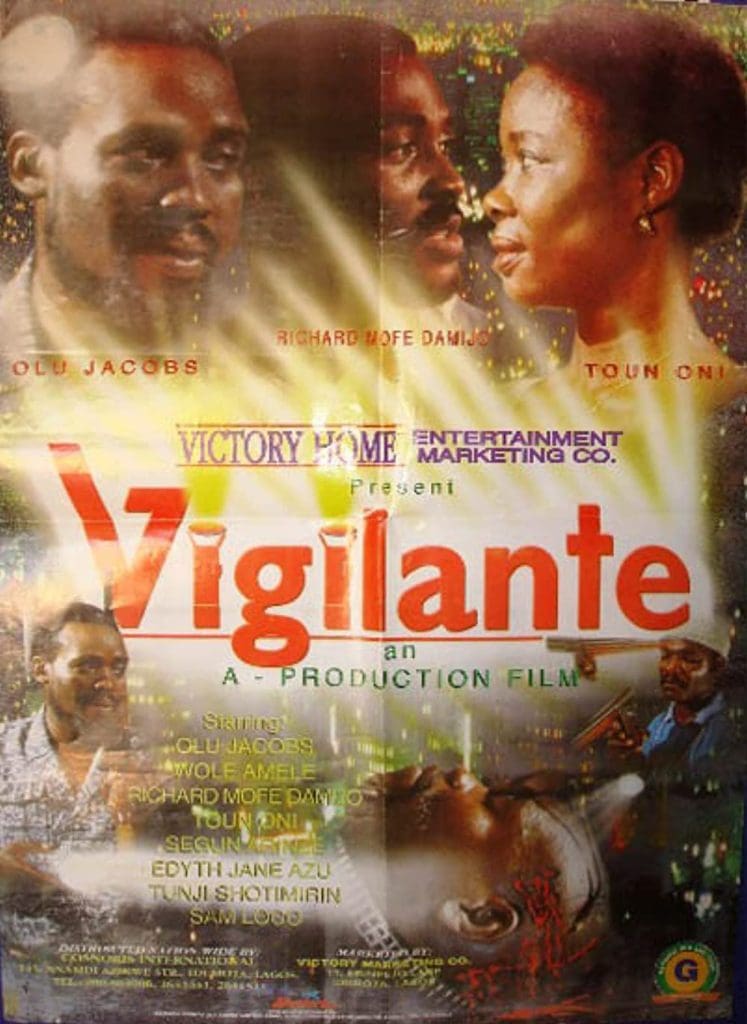
Vigilante, the 106mins celluloid film, jointly written by Adedeji and Afolabi, in the words of its producer, Afolabi Adesanya, who is personally attending the screening of the film tomorrow, and fielding questions from the audience, “takes a look at the contemporary Nigerian society gripped with the fear of and cowed by the terror and horror of ared robbers, and their nefarious activities. Consequently, the society is forced to live “behind bars,” a prisoner of its own environment and socio-economic disparity. However, a people pushed to the wall fight back to break the strangle-hold of the Armed Robbers by forming a VIGILANTE group.”
The synopsis reads: “A group of residents in an urban (metropolitan) neighbourhood who have been victims, individually and collectively, of Armed Robbers constitute themselves into a VIGILANTE group to defend and protect their life and property, and complement the efforts of the Nigerian Police Force (NPF) in the nationwide crusade to stem the unceasing wave of armed robbery.

“It is a letter received from the leader of a gang of Armed Robbers by the residents of the neighbourhood that actually gave birth to VIGILANTE. Initially, the residents were hesitant, divided and confused. Reason, however, prevails and the residents rally round to beef up security in the neighbourhood.
“After several weeks of anticipation, sleepless nights and days of worry, the gang of Armed Robbers finally call at dawn on a weekday. The Robbers’ operation almost succeeds but for the courageous challenge of a resident which thwarts their escape. Inspired by his bravery, other residents stand up to the gang. One of the Armed Robbers is caught and mobbed.
Vigilante featured in its lead cast among other top players: Olu Jacobs, Wole Amele, Sam Loco, Henry Foluso, Edyth Jane Azu, Toun Oni, Evans Richard Mofe-Damijo, Segun Aina Arinze, et al.
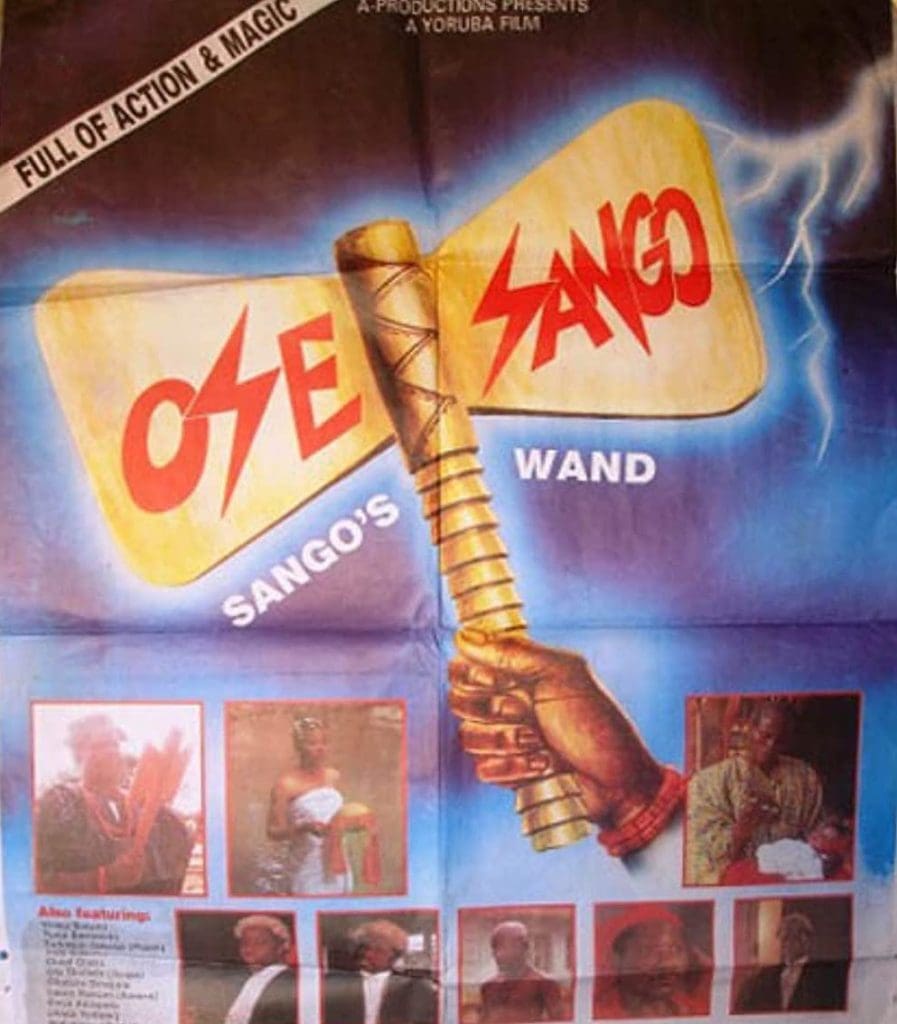
OSE SANGO (Sango’s Wand), written and directed by Afolabi Adesanya, produced by Adedeji Adesanya, featured a sterling cast, including Kola Oyewo, Tajudeen Oyewole (Abija), Sunday Omobolanle (Aluwe), Adebayo Salami (Oga Bello), Lanre Hassan (Iya Awero), Isola Ogunsola (I-Show Pepper), Karimu Adepoju (Baba Wande), Charles Olumo (Agbako), Jide Kosoko, Moji Ogunsola, M.A. Oloko, Tobsun Odunsi, Sam Loco, Iyabo Ogunsola, Yinka Salami, Dayo Akinpelu (Alabi yellow), Oludare Omojola, et al.
The film narrates the story of a middle-aged couple, Chief and Mrs. Adeleke, while shopping for home decors in Oyo come across a young hawker of sculptures and gourds, which includes a facsimile of Sango’s wand. Chief Adeleke buys the wand. Back home in Lagos, the wand becomes part of his dressing; he swears and curses in the name of Sango, the Yoruba deity of thunder and lightning. His prowess and fearsome reputation precedes him anywhere he goes. Eventually, this engenders an acrimonious rivalry between him and Magba, the reigning High Priest of Sango. Magba covets Adeleke’s ose (wand), which is said to possess omnipotent power, in order to reign supreme. The resultant battle between them is an epic duel of wit, juju, thunder, rain, storm, lightning and sorcery.
Funded by Debenture Stock of N1m raised by Rims Merchant Bank, Lagos, Ose Sango won the Hubert Ogunde Foundation Award for the Best Nigeria Film of the year (1992 maiden edition).
Speaking on the Nollywood Classics’ segment of the RTF, Stanlee Ohikhuare, founder and Director of the festival, in a statement, said the 7th edition of the festival has been designed to act as a “connector between generations of filmmakers”, and as well “bridge the gaps often seen within several film traditions and ethnicities”. As such the selection of films have been deliberately curated to reflect the different cultures and styles of storytelling.
A special feature of the festival in its 7th iteration is the desire to pay due attention to the “labours of our heroes past”, says Ohikhuare.
“RTF is proud to revisit Nollywood’s foundations as we Nollywood Classics that are no longer in the gaze of younger practitioners or film patrons,” he said.
“The films have been specially selected to show the various tendencies of the basis of what is today known as the Nollywood film production aesthetics”, stated the multi-skilled filmmaker and festival director.
Importantly, the selected films are to serve as educational and mentoring tools for the pool of young filmmakers who may never have encountered them or their makers, and who form the bulk of the festival’s participants and patrons.
Continued Ohikhuare: “The plan is to use the edition to pay tribute to “labour of the heroes past”, by showcasing high points of the glorious moments in the chequered journeys of the Nigerian cinema.
“This will be done through the showcasing of some of the films that made a huge and impactful impression in the 90s through the 2000s before the now famous ‘Nollywood’ came to formally acquire its name and current character.”
The classic films will be showcased mostly at Freedom Park, the old historical colonial prison, which has become the most important centre for cultural production and expression in the city of Lagos. This is a deliberate move by the organisers to properly locate the films in the glorious past of then Nigerian films.
Other “classic” films featuring in the RTF are:
- Maroko, (120 mins; 2006), written, and produced by Yinka Ogun; directed by Femi Odugbemi
- Heritage, (89mins; 2003); written, directed, and produced by Ladi Ladebo for Ladi Ladebo Productions
- Hostages, (1 hr. 56 mins; 1997); directed by Tade Ogidan for OGD Pictures;
- The Kingmaker, (2002; ) directed by Fred Amata, produced by Olu and Joke Jacobs, for Lufodo Productions
- Also showing are two films — Campus Queen and Thunderbolt from the rich stable of the ace filmmaker, Tunde Kelani.
*****
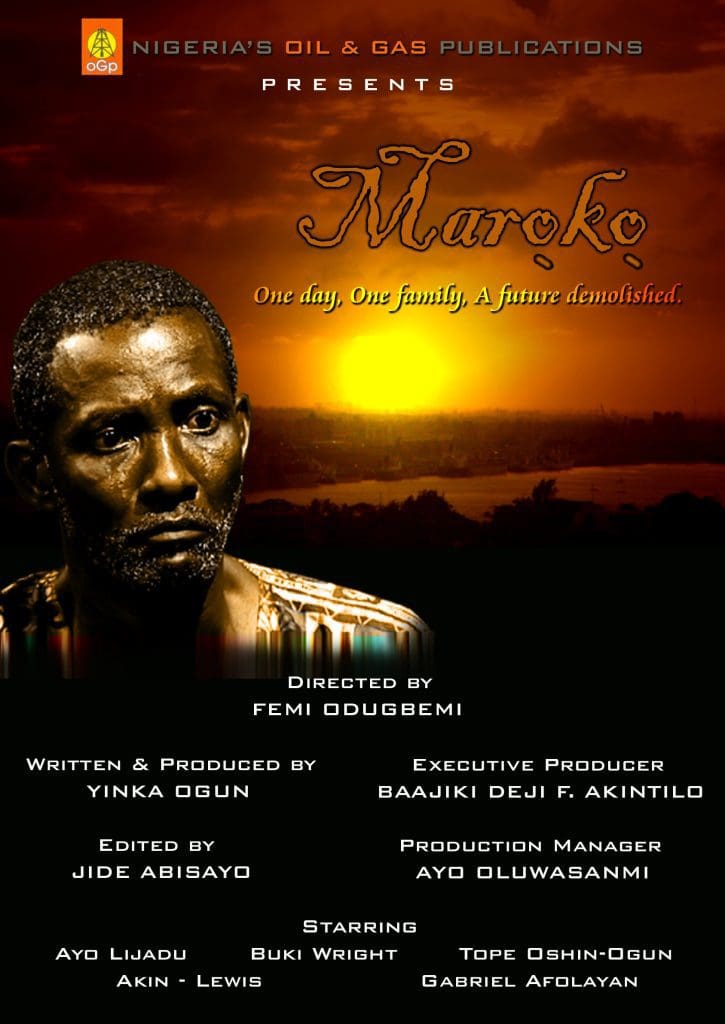
MAROKO
Duration: 111minutesYear of Release: 2006
Written & Produced by: Yinka Ogun
Directed by: Femi Odugbemi
Production company: Nigeria’s Oil & Gas Publications
Synopsis: In July 1990 Maroko a bustling slum settlement in the heart of Lagos faced a mass eviction by the government. Over 300,000 people were rendered homeless at dawn by roaring bulldozers. With nowhere to go a family must find desperate means for their survival.
******
HOSTAGES
Duration: 116 mins)
Year of Release: 1997
Directed by: Tade Ogidan
Produced by: OGD Pictures Ltd.
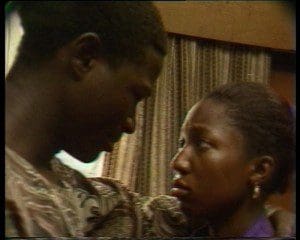
Shot in the early ‘90s Hostages featured extensive police action and a great story line full of chair-edge suspense. A story with great twists and turns, it stars Tope Idowu, Ofuafo Otomewo, Richard Mofe Damijo, Yomi Obileye, Ebele Okaro, Bimbo Manuel, Lanre Balogun, Antar Laniyan, Tunji Sotimirin, Danjuma Mohammed, Layi Ashadele, Tunji Olugbodi and Zainab Buky Ajayi. It won several awards at the Nigerian Movie Awards, including BEST FILM, BEST ACTOR, BEST ACTRESS, BEST SUPPORTING ACTOR & ACTRESS, BEST DIRECTOR, BEST SCREENPLAY, etc. The film has featured in a number of international film festivals. The TV serial version has also been broadcast on TV in and outside Nigeria.
Year: Produced in 1990-1991. Released in 1996.
********

HERITAGE
Duration: 89mins
Year of Release: 2003
Writer & Directed by: : Ladi Ladebo
Produced by: Ladi Ladebo Productions
David, a young Métis researcher arrives from England to study the archaeological treasures of Nigeria at the University of Ibadan. He tries to get in touch with the old professor Fatu, imprisoned following the theft of sacred objects from the tomb of the Yoruba hero Oduduwa. Professor Fatu refuses to deliver the heavy secret because of which traffickers of works of art succeeded in having him imprisoned by corrupting judges and policemen.