
Through rich imagery, poignant language, and a seamless interplay of diverse perspectives, the poets navigate the complex terrain of societal decay, environmental distress, and existential crises. As the apocalyptic visions unfold, each poem contributes a unique hue to the overarching narrative, leaving the reader with a profound reflection on the fragility of humanity in the face of its unravelling
The 5 Nigerian poets Lenient Amadu, Sunday Saheed, Adetola Jerry-Adesewo, Seyi Ojenike, Chidiebere Sullivan Nwuguru

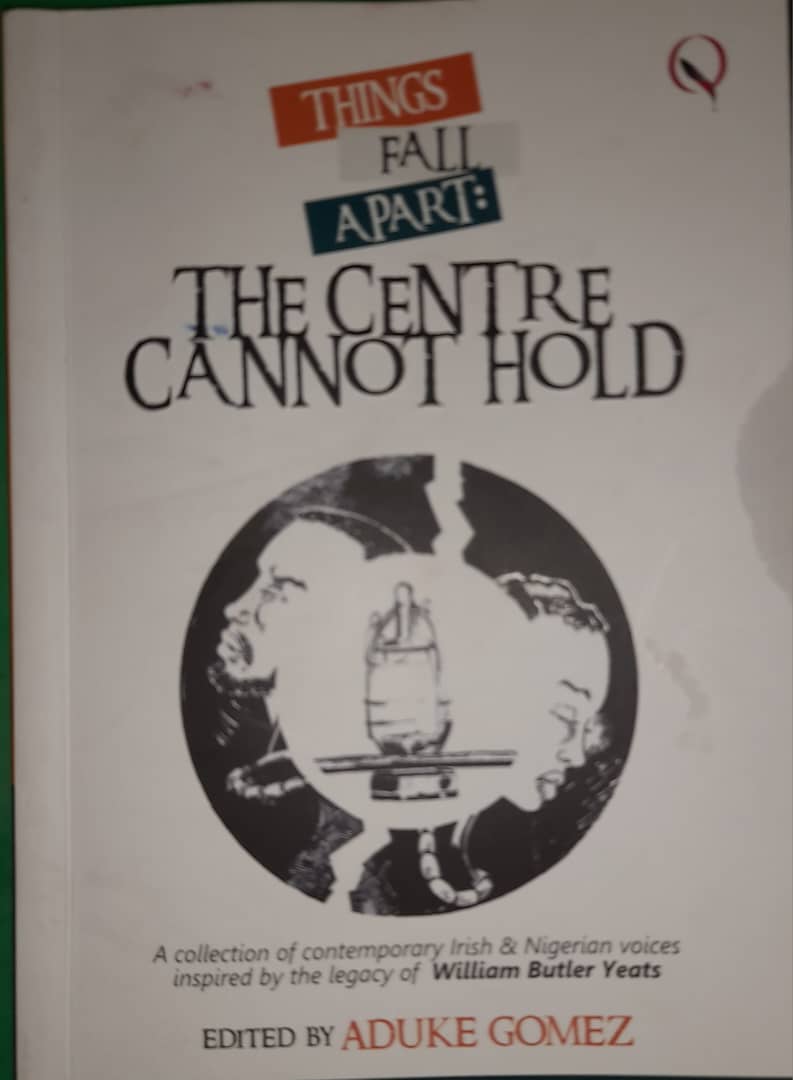
IN this poignant collection, titled ‘Things Fall Apart: The Centre Cannot Hold,’ edited by Aduke Gomez, a group of young Irish and Nigerian poets christened ‘Friends of Ireland’, engaged in a profound dialogue with W.B. Yeats’s classic poem, “The Second Coming.”
The book project is part of activities put together by the Zacchaeus Onumba Dibiaezue Library (ZODML), Poetry Island, Quramo Publishing, and the Embassy of Ireland in Nigeria, to commemorate W.B. Yeat’s winning of the prestigious Nobel Prize, in 1923. Each response adds layers to Yeat’s apocalyptic themes, delving into societal turmoil, cultural identity, and the fragility of humanity.
In Adetola Jerry-Adesewo’s “Surely, The Second Coming Is Upon Us,” the poet adeptly captures the chaos and decay within society, painting a vivid depiction of a world tethering on the brink of collapse. The utilisation of potent imagery, exemplified by phrases such as “tsunami of ruins” and “violent night,” effectively communicate the tumultuous atmosphere. This likely serves as a reflection of the prevailing state in Nigeria and the broader global disorder, viewed through the lens of the teenage poet. The poem skillfully resonates with Yeats’s apocalyptic vision, seamlessly merging it with the contemporary struggles of the present era.
In Chidiebere Sullivan Nwuguru’s compelling poem, “The Harvest of Nightmares,” the reader is transported to a chilling and dystopian realm, skillfully crafted through the intricate use of rich and evocative language. The poem delves into a nightmarish landscape where economic struggles, political upheavals, and the gradual erosion of societal foundations intertwine, creating a multi-faceted narrative that resonates with contemporary societal challenges. The poet masterfully weaves together the threads of economic woes, vividly portraying the strains of financial hardship that afflict the populace. This economic strife becomes a palpable force within the verses, contributing to the overall sense of dread and instability.

Dagogo Hart intertwines personal reflections with broader themes of distance, loss, and the passage of time, in her poem “Excerpts from Lantern Smoke”. The nostalgic tone in recalling childhood games and the poignant longing for a distant home resonates with universal emotions. The use of sensory details, like the smell of lantern smoke, adds a vivid touch.
In “Excerpts from Bloodlines”, FELISPEAKS delves into the complexities of heritage, identity, and the burdens passed down through generations. The poem’s exploration of being human, both in terms of gifts and curses, is thought-provoking. The language is potent, and the repetition of the phrase “To become a thing that” emphasises the weight of existence.
Jane Clarke’s poem, “Brigid,” acts as a calming interlude amid the prevailing apocalyptic themes within the collection. It offers solace by establishing a connection to nature and highlighting the cyclical patterns inherent in life. Through vivid imagery, including the thawing of nature, the unfurling of hedgehogs, and the diligent foraging of bumblebees, Clarke creates a serene and rejuvenating atmosphere that provides a stark contrast to the darker tones found in other responses.
However, this respite is short-lived as the poem seamlessly transitions into “A Birthing” by Lenient Amidu. Here, the imagery takes a stark turn, evoking the unsettling image of a rough beast’s birthing. This imagery draws explicit parallels to W.B. Yeats’s apocalyptic vision, creating a bridge between the tranquillity of “Brigid” and the foreboding nature of Amidu’s piece.
In “They Threw Themselves into the Sea” Nandi Jola powerfully addresses the historical trauma of forced migration and slavery. The fragmented structure and stark language mirror the harsh realities faced by those thrown into the sea. The poem serves as a reminder of the inhumanity endured by generations.
Nithy Kasa’s untitled poem delicately weaves a contemplative narrative that resonates with a contemporary issue, offering a poignant reflection on the universal theme of human connection. Amidst the metaphor of picking straws on opposite riverbanks, the poem subtly encapsulates the challenges posed by modern-day distances, symbolising the barriers prevalent in an interconnected yet physically distant world. This metaphor gains additional resonance when considering the global context, where geographical and cultural gulfs often hinder genuine understanding and connection.
Sunday Saheed probably has his mind cast in the Russia-Ukraine, Israeli-Palestine, and of course, the not-too-long-ago crisis across the African continent as his response delves into the impact of war on innocence, drawing a parallel between the children of the forest and the loss of faith in creation and history. The repetition of “Until today” in his poem “Children of the Forest” emphasises the sudden and irreversible change brought about by conflict.
Deliberately positioned as the concluding piece in the collection, Seyi Ojenike’s poem, “Armageddon,” serves as a powerful climax, intensifying the overarching themes of impending doom and apocalyptic visions explored throughout the compilation. Positioned strategically, perhaps by the editor, this poem elevates the collection to a crescendo of foreboding intensity. It stands as a fitting conclusion to the collection, intensifying the apocalyptic atmosphere and concluding the thematic exploration with a sense of authority and inevitability.
In the intricate tapestry of “Things Fall Apart: The Centre Cannot Hold,” the convergence of Irish and Nigerian voices creates a captivating dialogue with W.B. Yeats’s “The Second Coming.” From Adetola Jerry-Adesewo’s vivid depiction of societal chaos to Seyi Ojenike’s commanding vision of Armageddon, the collection masterfully captures the pulse of contemporary turmoil while maintaining a delicate balance with timeless themes.
Through rich imagery, poignant language, and a seamless interplay of diverse perspectives, the poets navigate the complex terrain of societal decay, environmental distress, and existential crises. As the apocalyptic visions unfold, each poem contributes a unique hue to the overarching narrative, leaving the reader with a profound reflection on the fragility of humanity in the face of its unravelling.