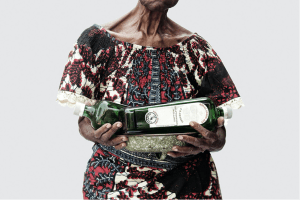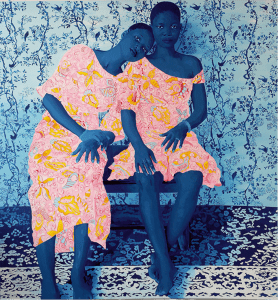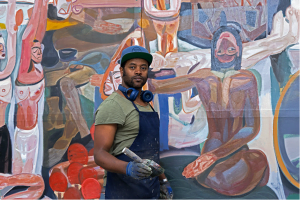

The pavilion exhibition, Everything Precious is Fragile, is organised by Lassissi and the Nigerian curator Azu Nwagbogu. The storied Beninese artist Romuald Hazoumè, as well as the younger Beninese artists Moufouli Bello and Ishola Akpo and the Franco-Beninese artist Chloé Quenum will be responding to a brief that considers four central themes: the Amazon or Agojie woman, the slave trade, the Gelede philosophy, and the Vodun religion. The four themes will be brought into conversation with each other through the thread of (Beninese) feminism and eco-feminism
Lead Photo: Boulette Béninoise (2004) by Romuald Hazoumè, one of Benin’s leading contemporary artists, who also works in sculpture, painting and videoPhoto: © Aurélian Mole; ADAGP courtesy October Gallery
By Chinma Johnson-Nwosu. Additional reporting by Alexander Morrison and José da Silva
THE African country of Benin is in a period of artistic renaissance. The revitalisation of its museum infrastructure—culminating in four new museum projects over the next five years—as well as investment in arts education and training and the repatriation of royal artefacts are all part of a wider mission by President Patrice Talon and his government to position the arts as a “second pillar” of the economy, after agriculture.
Indeed, the 2022 repatriation from France of 26 artefacts looted from the Kingdom of Dahomey gave the Beninese government “momentum” to revitalise the country’s cultural heritage and identity, the curator Yassine Lassissi says. This momentum will now see Benin head to the Venice Biennale for the first time.

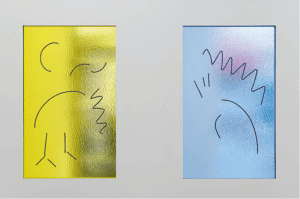 Les Allégories (2016) by Chloé Quenum, one of the four artists in the Benin pavilion exhibition Everything Precious is FragilePhoto: © Aurélian Mole