
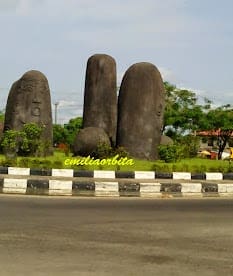
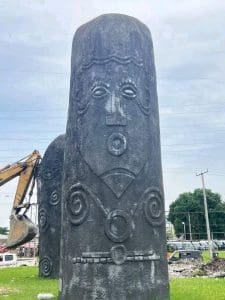
“It is heartbreaking to see such a valuable piece of art being ruined. The Monoliths roundabout held deeper significance beyond being just a sculpture; it represented our past, togetherness and legacy.”
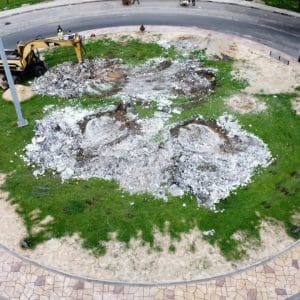
After the demolition
By Joseph Abasi-Abasi
RESIDENTS and art enthusiasts in Calabar, Cross River State capital, have expressed concern over the recent demolition of the iconic Monoliths sculpture at the Zone Six Roundabout.

Nigerian Tribune reports that the sculpture, which stood as a symbol of Calabar’s cosmopolitan identity and rich heritage, was designed and built by the late pastor of the Redeemed Christian Church of God (RCCG), Anthony Akinbola.
The Monoliths roundabout in Calabar was not only seen as an art installation by many but also symbolised the city’s importance as a hub of harmony in Cross River State. By highlighting the Monoliths from Alok and other regions in the north, the sculpture showcased Africa’s rich history and heritage.
The destruction of the Monoliths sculpture has caused residents who view it as the disappearance of a cultural icon and a part of their identity to lash the government over the action.
A resident said, “It is heartbreaking to see such a valuable piece of art being ruined. The Monoliths roundabout held deeper significance beyond being just a sculpture; it represented our past, togetherness and legacy.”
Some people were unhappy about not being consulted or informed properly about the decision to demolish the sculpture. Another resident wondered why the community was not involved in such an important decision and felt they should have been given the chance to share their views and opinions.
“While people around the world are starting to appreciate the importance of rock art, there is a lack of respect and understanding for the protection of rock art specifically in Cross River,” the resident lamented.
Responding, the Special Adviser to the governor on General Duties, Ekpenyong Akiba, emphasised that roundabouts are focal points in the city centre and clarified that the demolition was carried out after consultation with relevant stakeholders.
“The governor, after due consultations with experts and relevant agencies and in line with his reformative action to give the city centre a facelift for aesthetical view, the roundabout have to come down.
“Monolith is very unique because it represents our history. Demolishing it is because there is need for us to re-project that history in a better format not just by putting it by the roundabout. The Monoliths will be represented in other locations because it is in our tourism calendar.
Akiba observed that multiple roundabouts in the state capital were being renovated due to their age. He highlighted that the Monoliths on the highway roundabout were blocking drivers’ views, leading to frequent accidents.
“In an event to re-construct, there is the need to review certain artifacts or archeological re-presentation that is there. We are trying to seize the opportunity to bring back other histories and to put representation with the reality of the day.
Don’t forget that Calabar is the cradle of ancient civilization which it has to also appear in that light. The roundabout will not be left empty and something that will not completely block the view of road users will be erected, so it’s for good. The people will appreciate what the governor is trying to do in no distant time,” he said.
- https://tribuneonlineng.com/calabar-residents-groan-following-demolition-of-monoliths-roundabout/
*****
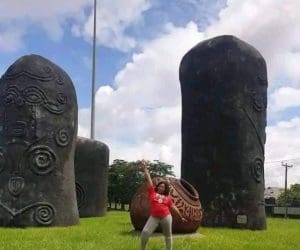
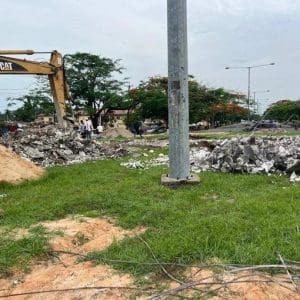
Calabar mourns the demolition of iconic Monolith sculpture
THE recent demolition of the iconic Monoliths sculpture at Zone 6 roundabout in Calabar has left residents and art enthusiasts in shock and disbelief. The sculpture, which stood as a symbol of Calabar’s cosmopolitan identity and rich heritage, was designed and built by the late Pastor Anthony Akinbola, a renowned Nigerian artist who has many works in other cities in Nigeria and has done exhibitions even in the United States NEGROIDHAVEN has confirmed.
For many, the Monoliths roundabout was more than just a piece of art; it was a testament to Calabar’s status as a center of unity for Cross River State. The sculpture celebrated the world-famous Monoliths found in Alok and other northern parts, showcasing Africa’s ancient civilization and cultural legacy.
The demolition of the Monoliths sculpture has sparked outrage and sadness among residents, who see it as the loss of a cultural landmark and a piece of their identity. “It’s a tragedy that such a precious work of art has been destroyed,” lamented one resident. “The Monoliths roundabout was more than just a sculpture; it was a symbol of our history, unity and heritage.”
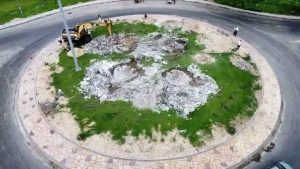
Zone 6, Murtala Mohammed Highway, Calabar
Others expressed frustration over the lack of consultation and transparency surrounding the decision to demolish the sculpture. “Why wasn’t the community consulted before such a drastic action was taken?” questioned another resident. “We should have been given the opportunity to voice our opinions and express our concerns.”
The demolition of the Monoliths sculpture also reignited discussions about the importance of conducting Social Impact Analysis before embarking on such projects. Many believe that if proper consultations and assessments had been carried out, the demolition could have been avoided or mitigated.
Governor Donald Duke’s approach to public art projects was highlighted as a positive example. During his tenure, Duke made efforts to engage the public and raise awareness about the significance of art and culture in shaping the identity of Cross River state. The successful launch of the Cross River logo, preceded by a public awareness program, demonstrated the value of community engagement in public art initiatives.
In contrast, the recent fiasco surrounding Governor Ayade’s attempt to change the colors and symbols of the state emblem served as a cautionary tale. The lack of public consultation and the abrupt nature of the decision led to widespread confusion and backlash from residents.
As Calabar mourns the loss of the Monoliths sculpture, residents are calling for greater transparency, accountability, and community involvement in future public art projects. They hope that lessons will be learned from this incident and that steps will be taken to preserve and celebrate the cultural heritage of Cross River for generations to come.
*******
Wetin our Roundabouts do na?
By Agba Jalingo
The idea behind the Monoliths roundabout was to show that Calabar is a cosmopolitan city and center of unity for the entire Cross River State, by celebrating the world’s iconic and famous Monoliths found in Alok in Ikom LGA and other northern parts… These Monoliths are a heritage, cherished by the whole world, and demonstrate that Africans had a civilization which developed its own writing and kept records more than 3000 years ago.
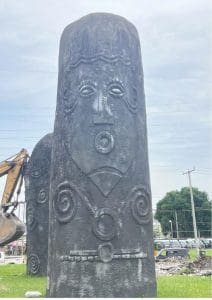
AFTER the demolition of the vaults at the Eleven-Eleven roundabout in Calabar, Cross River State, which was named after the Armistice Day when World War I (1914-1918) ended at the 11th hour on the morning of the 11th day in the 11th month of 1918, and replacing same with a statue of the Holy Bible, the replica of the monoliths at the Zone 6 Roundabout in Calabar have become the latest victim. They have been demolished and sources say they will be replaced with another “church image.” But our people need to have an idea of what thinking was behind these treasures that are going down.
The monolith sculpture at Zone 6 roundabout was designed and built by RCCG Pastor Anthony Akinbola, a famous Nigerian artist who has many significant sculptural works in Abuja, Lagos, Kaduna, Abeokuta, Akure and Calabar. He also held exhibitions and was commissioned to do some works in the USA where he had relocated to and was a pastor in the New City Church, GA. He was contracted by the Duke administration.
He was one of few highly accomplished and celebrated artists invited to make proposals for the roundabouts in Calabar and eventually won the Commission to install the Calabar- Calabar Roundabout near Navy Hospital, the Monoliths near Zone 6, the Drummer by Efio Ette junction and Welcome to Calabar revolving sculpture at 8 miles roundabout.
The idea behind the Monoliths roundabout was to show that Calabar is a cosmopolitan city and center of unity for the entire Cross River State, by celebrating the world’s iconic and famous Monoliths found in Alok in Ikom LGA and other northern parts.
These Monoliths are a heritage, cherished by the whole world, and demonstrate that Africans had a civilization which developed its own writing and kept records more than 3000 years ago.
The Pastor died in America in February this year after a 2 year long battle with cancer. It is a tragedy that this precious work of art has again been destroyed and we don’t know which one is next.
Our eagerness to replace our history with church imagery smacks of striving to be more Catholic than the Pope and I humbly advise we slow down and have a rethink.
Yours sincerely,
Citizen Agba Jalingo is the Publisher of CrossRiverWatch and a rights activist, a Cross Riverian, and writes from Lagos.