
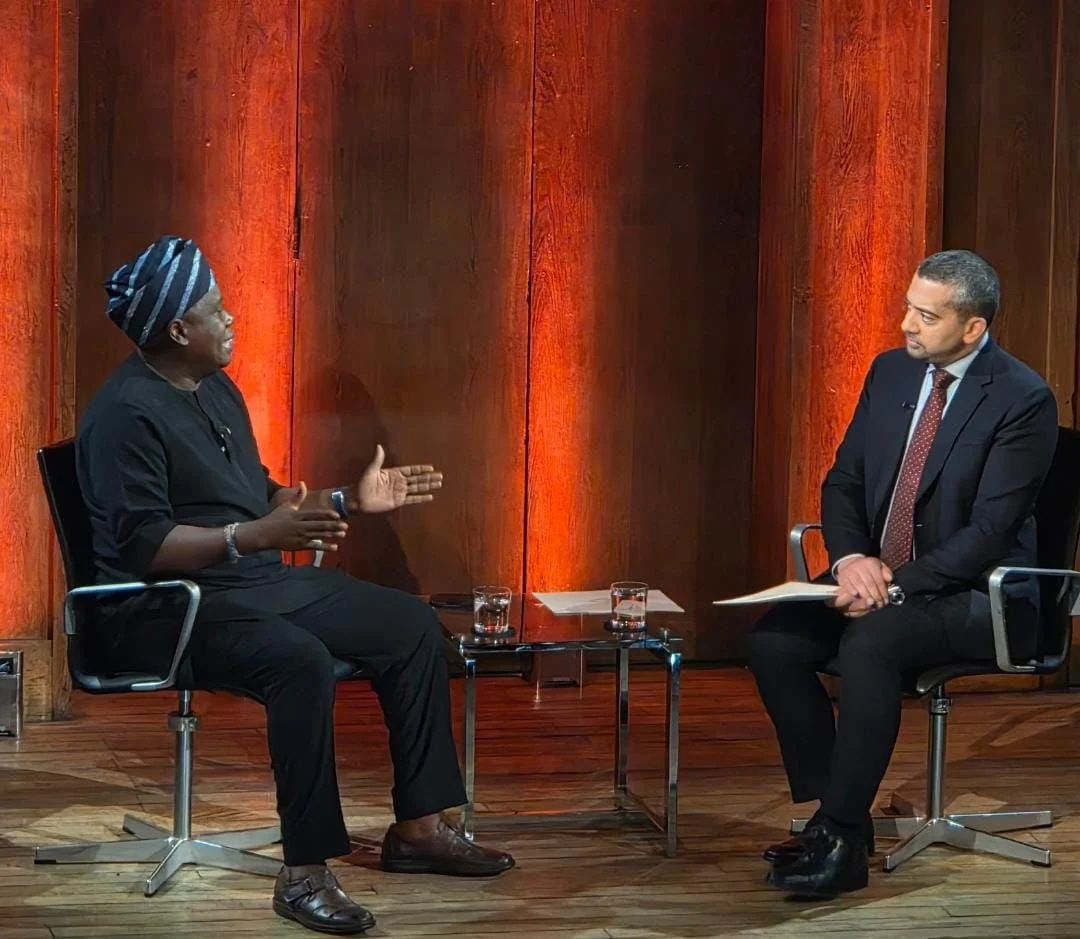
THE other night, Nigeria found itself under an unflattering global media spotlight following an appearance by the Special Adviser to the President on Media and Policy Communication, Daniel Bwala. What should ordinarily have been a routine engagement on Al Jazeera instead became a deeply uncomfortable moment for the country’s international image. Clips from the encounter have circulated widely across social media platforms, attracting commentary and jokes from audiences who expected a more assured representation of the nation’s voice. The appearance, on Al Jazeera’s Head to Head programme anchored by Mehdi Hassan, was meant to be an opportunity to engage robustly with difficult questions and to outline the impact of the Nigerian government’s policies and programmes. Instead, the exchange struggled to meet those expectations. The responses offered under intense questioning left much to be desired, particularly when the discussion turned to earlier remarks the spokesman had once directed at his own principal, President Bola Ahmed Tinubu.
From that point onward, the interview took a course that proved damaging to Nigeria’s image before a global audience. The episode underscores a basic reality: when a presidential aide appears on a global platform, the representation extends far beyond the individual or even a political party. Anyone who sits before an international audience to speak on behalf of the Nigerian President, in effect, speaks for Nigeria itself. It therefore becomes imperative for government to approach such moments with the seriousness they demand by ensuring that the country is represented with the highest degree of preparation and clarity. Many Nigerians have expressed profound disappointment that a nation which aspires to continental and global leadership could be represented in such a troubling manner in an international media conversation. Equally troubling was the reluctance to acknowledge previous public comments about the President when confronted with them during the interview.
Politics in Nigeria, as elsewhere, is often shaped by compromise and shifting alignments. Movements between political parties are not uncommon, and the current wave of defections by governors from opposition ranks to the ruling All Progressives Congress illustrates the fluidity of the political terrain. During the interview, acknowledging this reality might have provided an opening to move the conversation toward substantive discussions of policy. Such an approach could have created space for a richer engagement on governance and reform, offering value both to Nigerians and to the international audience watching the programme. Instead, the attempt to distance oneself from previously expressed views deepened perceptions that Nigeria struggles with credibility challenges. To do so before a global audience inevitably compounded the reputational difficulties the country already faces. The discomfort of that moment was evident even among Nigerians present in the programme’s live audience.
Confronted with rapid and adversarial questioning from the host, the exchange gradually lost its footing. The outcome was an appearance that risked undermining the widely held belief that Nigeria is home to some of the world’s most capable and intellectually vibrant citizens. For some observers, the performance left the country exposed to ridicule among international audiences and partners. Matters were not helped by the statement issued afterward in which explanations were offered for the difficulties experienced during the programme. In societies where public accountability carries real weight, moments such as these often prompt reflection on responsibility. In Nigeria, however, experience suggests that public controversies are frequently absorbed by the relentless flow of events.

Yet the implications of the episode extend beyond the fortunes of any individual spokesman. The larger brand affected by that night’s appearance was Nigeria itself. For decades, successive governments have travelled widely in search of foreign investment and international partnerships. A moment on a major global broadcast, therefore, becomes more than a conversation; it is a window through which the world observes the country’s institutional character. Investors and partners naturally pay attention to signals of credibility, competence and transparency. When such opportunities are not fully utilised, efforts to diversify the economy and attract global capital risk being undermined. And yet, within every crisis lies an opportunity for renewal.
Much has already been said about the interview itself. The more important question now concerns how Nigeria can strengthen the processes that produced this moment. The first requirement is sincerity of purpose in governance. Where governance processes genuinely align with the needs and aspirations of the Nigerian people, there is little need for evasion or defensiveness in explaining policy choices. The second lesson is the recognition that anyone who serves as a spokesperson on an international platform represents more than an administration. On that night, the world was watching Nigeria.
Nigeria, like every nation, has its imperfections. Yet the scale of reputational damage that can arise under the glare of global media attention should not be underestimated. From this experience, several lessons emerge. Political communication is a delicate craft capable either of eroding reputational capital or strengthening it. It demands a clearly articulated philosophy, a coherent strategy and disciplined tactics. The events of that Friday night should bring to an end any tendency toward episodic or discretionary communication management within the presidency. Since these engagements are funded by taxpayers, they must be guided by clearly defined goals, measurable outputs and discernible outcomes, just like any other aspect of governance.
Preparation, above all, remains the most reliable safeguard against poor performance. Effective preparation requires the careful curation and internalisation of knowledge on key governance themes. The programme’s host employed a rapid and probing questioning style, yet there existed numerous datasets and policy references that could have anchored a stronger response. Resources from institutions such as ACLED, the National Bureau of Statistics and the National Human Rights Commission contain information capable of enriching public discussions about governance, security and development. Mastery of such materials could have enabled a more confident and credible engagement with the issues raised.
Ultimately, political communication, like governance itself, must remain rooted in the needs and aspirations of the Nigerian people. Where sincerity of purpose exists, acknowledging errors or limitations in understanding should not be interpreted as weakness but as evidence of transparency. Global media appearances must therefore be approached in a manner consistent with the constitutional vision for the press. Section 22 of Nigeria’s 1999 Constitution entrusts the press with the responsibility of holding government accountable to the people. It follows logically that when a communications official attends international media programmes, the expectation is clear: the engagement must deliver value and strengthen the nation’s standing. Anything less risks projecting the impression that Nigeria is a country where standards are optional, an impression the nation can ill afford.