
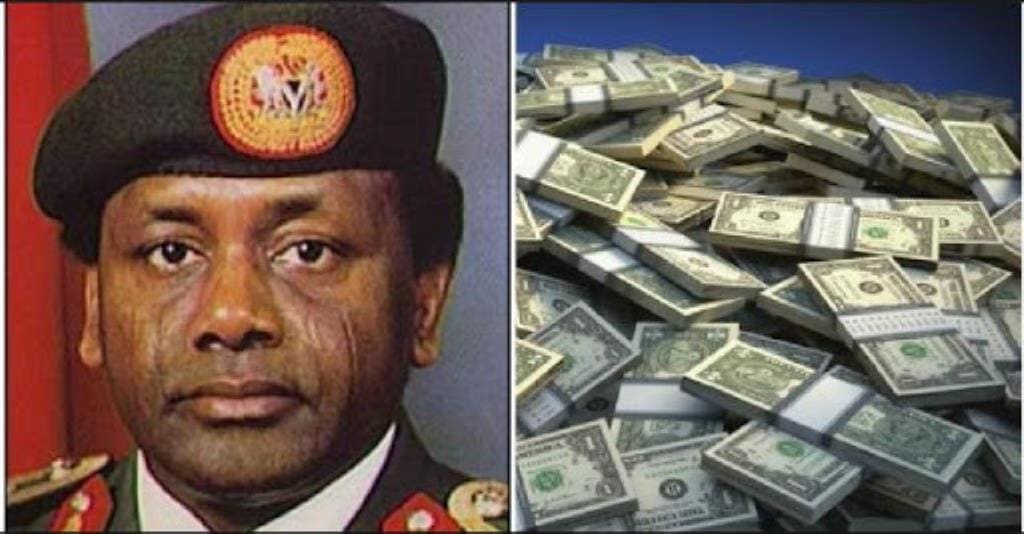
IN January, Nigeria received communication that it will be receiving $9.5 million inflow from the Island of Jersey. The money is the latest from the proceeds of public funds discovered to have been stashed in offshore accounts by the late Nigerian dictator, General Sani Abacha. The money will now be spent on major infrastructure projects, which will directly benefit Nigerians. Abacha ruled Nigeria with an iron fist between November 17, 1993 and June 8, 1998. Not only was his regime responsible for a brutal human rights record during his five years in power, but his reign led to international sanctions being imposed on Nigeria, effectively making it a pariah State. The Abacha junta also perpetrated mind-boggling acts of corruption, the proceeds of which the country is still struggling to trace and recover. In short, Nigeria’s governance and human rights fared badly in the hands of the late despot.
His regime’s bloodlust, political assassinations and relentless persecution of journalists and pro-democracy activists forced many to flee into exile. Little wonder, upon his death in June 1998, citizens in parts of the country poured into the streets to celebrate the demise of the dictator. According to data from various think tanks, Abacha, in concert with his family members and close associates, stashed away more than US$5 billion from the Nigerian treasury. Various datasets indicate that out of the estimated amount taken out, about US$3.5 billion has been traced, recovered and repatriated to Nigeria so far. There have been questions about the levels of transparency and accountability in the use of these repatriated funds. When the first set of recovered funds was returned, concerns were variously expressed that the monies were being “re-looted” by government officials. This concern prompted Western governments, from whose jurisdiction monies were brought back, to insist on various conditionalities.
Some of those conditions include third-party civil society monitoring of expenditures. Western governments also wanted Nigerian officials to sign off on specific projects as a safeguard to protect the money from being diverted. Nigerian officials were generally unhappy with these conditionalities, but they had no choice but to sign off to fulfil the conditions, which would ensure transparency and accountability in relation to the recovered funds. Several countries repatriating funds also wanted to ensure the recovered monies were used to fund legacy projects, which would impact the living conditions of Nigerians.
It was for this reason that one of the sets of recovered packages, known as the Abacha II, had a proviso in the repatriation agreement, including participation of the civil society in monitoring how the funds were to be used. This was one of the key outcomes of the memorandum of understanding (MoU) signed between the government of Nigeria, the Swiss Government and the World Bank to repatriate $322.5 million Abacha Loot to Nigeria. Frontline civil society organisations, such as the Africa Network for Environment and Economic Justice (ANEEJ), led the process of field monitoring and data collection for the component of the fund earmarked for Conditional Cash Transfers (CCT) to the poorest of the poor beneficiaries. Nonetheless, everyday Nigerians still struggle to feel the impact of both recovered loots and current financial resources in the hands of government at all levels.

Unfortunately, the crux of the matter remains that the management of public funds in Nigeria is not focusing on the delivery of social goods and services. This goes to show that not enough key lessons have been learnt from the grand-scale stealing of the Abacha years. The establishment of anti-corruption agencies notwithstanding, the public finance culture appears to favour opaqueness. The result is that monies, which should have been spent to address the social conditions in areas like education, healthcare and infrastructure, hardly end up being used for the stated purpose. The recent revelation in the National Assembly that no releases have been made from over one trillion in the capital component of the federal budget bears out this assertion.
In the days of Abacha, what was in place was a military dictatorship, wherein political and administrative power flowed from the barrel of the gun. The impunity of military rule and its tendency to undermine transparency and accountability safeguards ensured the large-scale theft of monies belonging to Nigeria as a country. However, since the return of the current civilian dispensation, which aspires to be democratic in character, the same problem of corruption and treasury looting persists. Estimates from the African Union Illicit Financial Flows Report note that Africa is losing nearly US$50 billion annually through profit shifting by multinational corporations. About 20 percent of this figure is reportedly from Nigeria alone. IFFs have thus been identified as a major threat to the achievement of the Sustainable Development Goals or the Agenda 2030. It has thus been argued that the resources lost to IFFs are enough to fund public services and initiatives, and other critical investments, revamp the economy, create job opportunities and alleviate poverty on the continent.
There can therefore be no mistaking the fact that all funds illicitly sent out of the country precipitate consequences in terms of lack of education, housing, healthcare, jobs and many more social goods and services. As such, whether it is repatriated funds or current government revenues, transparency, accountability and value for money should be the watchword. If any lessons have been learnt from the grand-scale corruption represented by the unending loot recoveries, the Nigerian state should view corruption of all shades as an existential threat. Corruption, including IFFs, will continue to undermine the capacity of the State to deliver its mandate and shore up its legitimacy. For effective anti-corruption outcomes to be achieved, there has to be a synergy between the Nigerian State and its society. While anti-corruption agencies can be strengthened to deliver better on their mandate through legal reform and their insulation from political influence, behaviours fuelling corruption at the level of society have to be changed. The media and civil society equally have their tasks cut out for them in this regard.
There is a high possibility that more funds stashed away by Abacha and his enablers will be returned to Nigeria. In addition, current revenues being generated by the Nigerian government need to be used for the benefit of the long-suffering people of this country. Government at all levels needs to ensure these resources are utilised in ways that are transparent and provide real benefits and advantages to the Nigerian people. Similarly, Nigeria needs to have a sense of memory and consequence if it intends to deter future unethical behaviour. Leaders who have engaged in the looting and wasteful spending of national resources should not have national monuments named after them. All of these align with the constitutional imperative explicitly contained in Section 15(5) of the 1999 Constitution as amended: “The State shall abolish all corrupt practices and abuse of power.”