
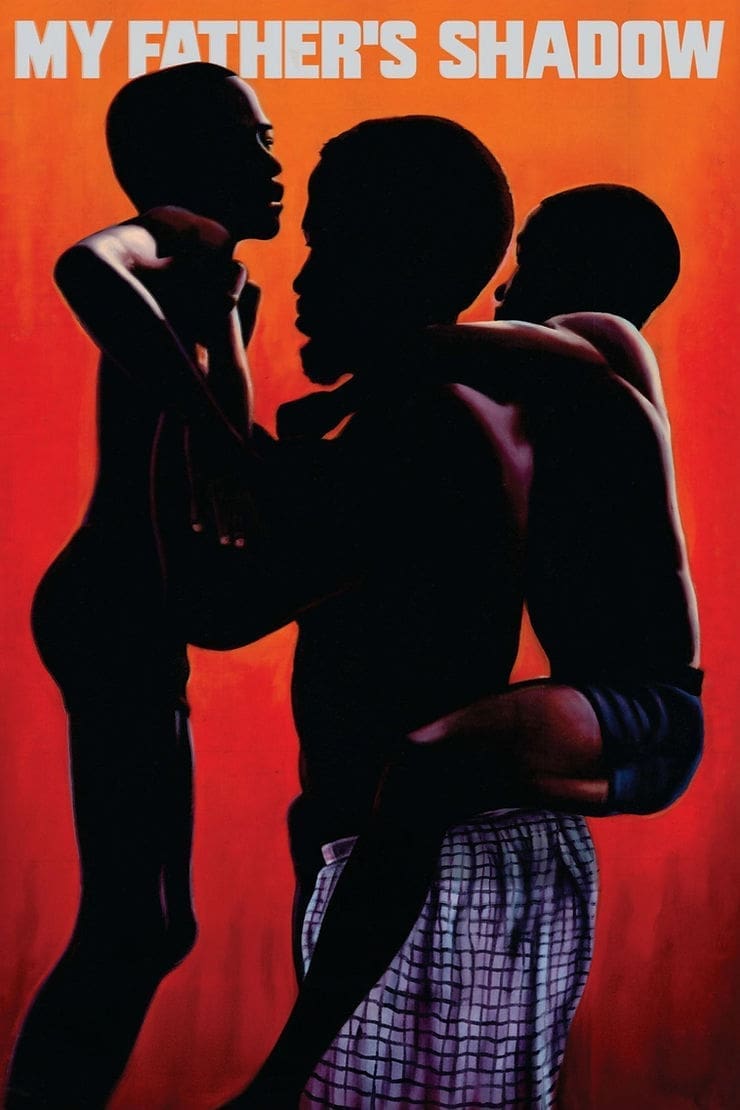
Home MoviesThe shadow that belongs to everyone…

The shadow that belongs to everyone…

...Why 'My Father's Shadow' is the most important Nigerian film of this generation

by Agency Report
0 comments 14 minutes read

  • 2 days ago

My Father's Shadow

My Father’s Shadow
 

What This Film Is Actually About (And Why It’s Bigger Than You Think)


Let’s start from the beginning, because too many people are still reducing My Father’s Shadow to its logline, two brothers, a father, Lagos, 1993, and missing the whole point. Yes, on the surface, this is a day-in-the-life film. Folarin, played with devastating restraint by Sope Dirisu, is a man who has failed his children in the slow, quiet way that Nigerian men of his generation were trained to fail, not through cruelty, but through absence. He takes his two young sons, Akin and Remi, played by real-life brothers Godwin Chiemerie Egbo and Chibuike Marvellous Egbo, on what should be a simple trip into Lagos to collect unpaid wages. But the city, on that specific day, June 24, 1993, is holding its breath. The results of Nigeria’s first democratic presidential election in ten years are being awaited. The streets are tense. The military is watching. And a father is trying, quietly and clumsily, to love two boys who barely know him. That is the story. But here is what the story is really about: the weight of unfulfilled potential, in a man, and in a nation. Director Akinola Davies Jr. is not making a political film in the traditional sense. He is not making a family drama in the way Nollywood usually makes one. He is doing something far more precise and far more difficult: he is showing you how history lives inside ordinary people, in their posture, their hesitation, their love that cannot find the right words. The 1993 election annulment is not background. It is the emotional DNA of the film. Because Folarin is MKO Abiola in miniature, a man who did everything right, who showed up, who tried, and still had his victory taken from him. When the results are annulled at the end of that day, it doesn’t just break a country. It breaks something in the air of that father-son relationship that can never quite be repaired. That is the genius of this film. That is why it is bigger than its 93-minute runtime. That is why, when the credits roll, you don’t feel like you’ve watched a movie. You feel like you’ve remembered something you forgot you had lost.


The Men Who Made It, Fatherland, and the Architecture of a Masterpiece
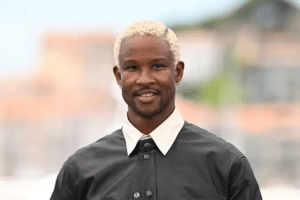
 
Akinola Davies

Akinola Davies
 

Every great film has a story behind its story, and in the case of My Father’s Shadow, that backstory is the story. Akinola Davies Jr. and Wale Davies are brothers who lost their father when they were still toddlers. They grew up with no real memories of him, only fragments, impressions, the shape of a person they couldn’t quite see. This film is, in the most literal sense, the movie they made so they could spend a day with their father. Wale Davies, the writer, brought that aching need into the screenplay with a discipline and emotional honesty that is rare in any film industry. His dialogue is not showy. There are no monologues designed for the awards clip reel. Instead, Wale writes the way grief actually works, in silences, in half-sentences, in things that are said sideways because they are too big to say directly. When Folarin looks at his sons and cannot quite reach them, you feel that Wale Davies has been inside that exact moment. Because he has.

 
Wale Davies

Wale Davies


 

The script, co-written with Akinola, captures Lagos in 1993 not through a history book but through the texture of a memory, which means it is incomplete in the right places, vivid in unexpected corners, and emotionally true even when the facts are approximate. Akinola Davies Jr., the director, is a different kind of animal entirely. This is his feature debut, and the confidence on display is borderline unreasonable. The cinematography gives you the feeling of a memory rather than a recording. It says: this is not trying to look like a Nollywood film, and it is not trying to look like a Hollywood film. It is trying to look like the truth. And then there is Funmbi Ogunbanwo, the producer and CEO of Fatherland Productions. She did not just produce this film. She shepherded a vision that was deeply personal, culturally specific, and commercially unconventional, and she got it made to a standard that competed at Cannes. She co-founded Fatherland with the Davies brothers as a production company designed precisely for this kind of storytelling, ambitious, African, and uncompromising. Her work on this film represents the kind of producing intelligence that Nollywood has always had but rarely gets to express in this kind of framework. Together, these three form something close to a cinematic collective, a creative unit that understands what they are making and why it must be made exactly this way.

 
Funmbi Ogunbanwo

Funmbi Ogunbanwo
 

The Question Nobody Wants to Answer: Is This a Nigerian Film or a British One?


Here is the honest answer: it is both, and the discomfort that question produces tells you more about the state of Nigerian cinema than it does about this film. My Father’s Shadow is a UK-Nigeria co-production. Its primary funders are BBC Film and the British Film Institute. Its production companies include Element Pictures, an Irish outfit behind films like Room and The Favourite, alongside Fatherland Productions, the Lagos-born company of Ogunbanwo and the Davies brothers. The director was born in Lagos and lives in London. The story is set in Lagos. The screenplay is about a Nigerian family. The film was shot entirely in Nigeria. The UK selected it as its submission for the Best International Feature Film category at the 98th Academy Awards. Nigeria could not, practically speaking, have submitted it, because Nollywood’s submission process does not yet have the institutional framework to claim a film like this as its own. So who does it belong to? It belongs to the story. That is the only fair answer. The Nigerian press, Akinola Davies himself has said, frequently asks him whether the film is Nollywood or not. His answer, that it is a Nigerian story, told by Nigerians, for everyone, is not a diplomatic dodge. It is a challenge to a conversation that Africa’s film industries have been having for decades, from Yaaba to Timbuktu to Atlantics, all of which were African stories that needed European money to reach the world. Compare this to the Korean film industry, where Parasite was unambiguously Korean despite its international co-production elements, because South Korea had built the infrastructure to claim and export its own films. Or compare it to the French film industry, where the CNC, the national film centre, funds, protects, and distributes films that might otherwise have no commercial pathway. Nigeria does not yet have that equivalent. The NFVCB, Nigeria’s film regulatory body, has neither the budget nor the mandate of France’s CNC. So films like My Father’s Shadow exist in a grey zone, too Nigerian to be fully British, too British-funded to be fully claimed by Nollywood’s existing structures. The conversation should not be about who owns the film. It should be about what the film’s existence reveals: that Nigerian stories, told with craft and intention and the right structural support, can travel the world. The question is whether Nigeria will build the architecture to ensure that the next My Father’s Shadow can be produced entirely within Nigeria’s own ecosystem.

 
‘We do not have to choose between being commercial and being excellent. We do not have to choose between being Nigerian and being global. My Father’s Shadow shows that the shadow of our fathers, the weight of what was promised and not delivered, in families and in nations, can be transformed into art that the whole world wants to sit inside. And proof, in cinema, is everything.”
 

Why the AMVCA Wins Were Not a Surprise, They Were a Verdict (I Predicted It)


When My Father’s Shadow swept the 12th Africa Magic Viewers’ Choice Awards in May 2026, walking away with five categories, Best Movie for producers Funmbi Ogunbanwo and Rachel Dargavel, Best Director for Akinola Davies Jr., Best Writing in a Movie for Wale Davies, Best Score/Music for Duval Timothy and CJ Mirra, and Best Sound Design for Pius Fatoke and CJ Mirra, the response in some quarters was that this was the international crowd overriding the popular vote. That reading is wrong. What the AMVCA jury did was something juries are supposed to do but often fail to: they looked at what was actually on screen and rewarded excellence without apology. Best Movie was not given to the film that made the most money or featured the biggest stars. It was given to the film that most completely realised its own ambition. And that film was My Father’s Shadow. The Best Director award for Akinola is almost self-explanatory to anyone who has seen the film. Consider the challenge: you are shooting on 16mm, on the streets of Lagos, with two child actors who are real-life brothers and not professional performers, with a narrative that relies almost entirely on mood and subtext rather than plot and incident, and you have to make it feel both intimate and epic. The Egbo brothers, Godwin and Chibuike, deliver performances so natural that you forget they are performing. That does not happen by accident. That happens when a director has built a set where children feel safe enough to simply be. The Best Writing award for Wale Davies is a recognition of restraint as a craft, the hardest thing in screenwriting. In an industry where dialogue is often used to over-explain and under-trust the audience, Wale Davies wrote a script that trusts you to feel what it doesn’t say. The AMVCA’s recognition of the score and sound design speaks to something else entirely: My Father’s Shadow sounds like no other Nigerian film. Composers Duval Timothy and CJ Mirra created a soundscape that is textured, unhurried, and emotionally complex, closer to what you might hear in a Lynne Ramsay film than anything in the conventional Nollywood palette. The sound design, similarly, uses Lagos as a sonic character, the bustle, the heat, the argument of the city, in a way that deepens the film’s atmosphere rather than simply filling space. These awards, in other words, are a verdict: that craft is craft, that excellence is excellence, and that a film does not need to be the loudest in the room to deserve the most attention.


Why Nigerian Cinemas Were Not Ready, And Why the World Was


Here is a truth that will make some people uncomfortable: My Father’s Shadow was, initially, not built for a Friday night in a Nigerian cinema. Not because it is a bad film, it is the opposite of that. But because the Nigerian cinema-going experience is currently dominated by a specific kind of film: high-energy comedies, ensemble romantic dramas, and big-budget action films with familiar faces. Films you watch with a crowd of people who are reacting loudly and feeding off each other’s energy. My Father’s Shadow is a film that asks you to be still. It asks you to sit inside silence and understand what the silence is carrying. It asks you to bring your own experience of fathers, of absence, of cities that felt too big and too dangerous when you were small. For audiences who grew up in the era of Nollywood blockbusters, Chief Daddy, A Tribe Called Judah, and Brotherhood, the grammar of this film can initially feel foreign. Not because the story is foreign, it is profoundly Nigerian, but because the cinematic language is operating in a different register. This is not a criticism of Nigerian audiences. It is an observation about what happens when an industry’s distribution infrastructure prioritises certain types of stories for so long that audiences develop specific expectations. Compare this to what happened when the film was released on MUBI in the UK and played in arthouse cinemas across Europe and North America. International audiences, already trained on the slow cinema tradition, the films of Hirokazu Kore-eda, Abderrahmane Sissako, Celine Sciamma, immediately understood the film’s language. They knew how to sit inside it. They read the close-ups of Sope’s face the way they had learned to read silence in Like Father Like Son or Moonlight. They brought different tools of spectatorship. This is not Nigeria’s failure. It is a gap that Nigeria’s cinema education and curatorial culture has not yet closed. Tellingly, the film’s second theatrical run in Nigeria, in June 2026, timed to Democracy Month and powered by AMVCA momentum, found a different, more prepared audience. Young Nigerians who had tracked the Cannes premiere, the BIFA wins, the BAFTA, and finally the AMVCA sweep came in ready. They had done their homework. They had heard the conversation. And they found a film that gave them exactly what great cinema is supposed to give: a feeling of being seen. The film initially made $1 million at the global box office against a $3.4 million budget, modest numbers that do not reflect its cultural footprint. But cultural footprint is the metric that matters here. My Father’s Shadow is the kind of film whose meaning compounds over time.


Why This Moment, And Why This Film, Changes Everything for Nollywood


Let’s zoom out and see the full picture. Nollywood is the second or third largest film industry in the world by output. It produces thousands of films a year. It has survived without government subsidy, without a strong guild system, without the institutional infrastructure that Hollywood, Bollywood, or the French film industry takes for granted. It has survived on hustle, on talent, and on a domestic audience that has always loved to see itself on screen. But volume is not the same thing as visibility. And for all of Nollywood’s extraordinary productivity, very few of its films have been able to compete at the highest level of global cinema culture, not because the talent wasn’t there, but because the structural pathways, film school training, festival strategy, international co-production, and critical infrastructure, were not yet developed enough to send those films where they needed to go. My Father’s Shadow changes that conversation permanently. Not because it is the first good Nigerian film, it is not. But because it is the first Nigerian film to enter the Cannes Official Selection, to win a BAFTA, to be selected as the UK’s Oscar submission, to sweep the AMVCAs, and to do all of this while being unmistakably, irreducibly Nigerian in its soul. It proves, with receipts, that Nigerian cinema can operate at the level of world cinema. It proves that Sope Dirisu, who has been delivering performances for years that placed him among the finest actors working in the English-speaking world, was right to believe in this material. It proves that Jermaine Edwards, shooting on 16mm in the streets of Lagos, can produce images that belong in the same conversation as the greatest cinematography of the festival circuit. And it creates, or should create, a blueprint. Fatherland Productions is not just a production house. It is a proof of concept. It shows what happens when you combine Nigerian storytelling instincts with international production structures, without losing the soul of the thing in the translation. The hope is that this film inspires other producers, other directors, other writers within Nigeria’s ecosystem to say: we do not have to choose between being commercial and being excellent. We do not have to choose between being Nigerian and being global. My Father’s Shadow shows that the shadow of our fathers, the weight of what was promised and not delivered, in families and in nations, can be transformed into art that the whole world wants to sit inside. That is what the best films have always done. And Nollywood, at its best, has always been capable of it. This film is proof. And proof, in cinema, is everything.

You may also like

Leave a Comment

Adblock Detected

Please support us by disabling your AdBlocker extension from your browsers for our website.