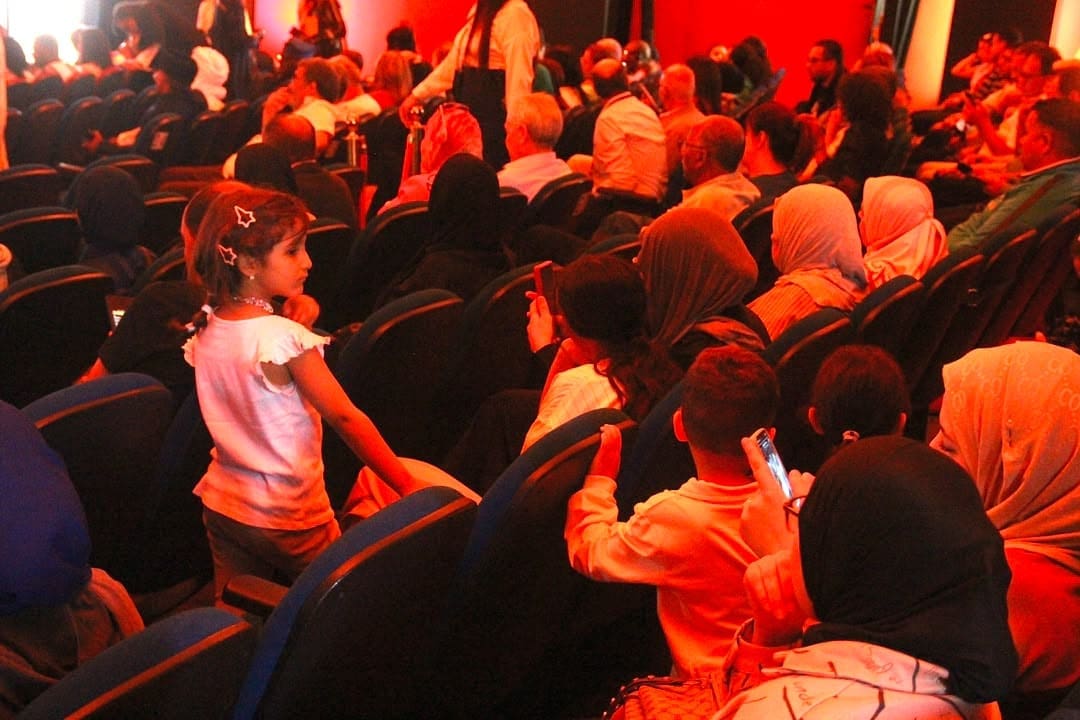
… over the course of the festival I had mostly observed the presence of kids with their parents coming to see films and also engaging in the festival activities, a practice I admired and enjoyed watching a lot because it is somehow not a very common practice to find kids attending film festivals from where I come from…. Looking at the kids, I reflected on how they will grow up someday to become great storytellers, filmmakers, artists, writers, and cinephiles, just like their parents.
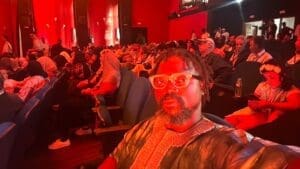
Kagho Idhebor at the festival
Days of my life – Children of Cinema
THE Festival International du Cinéma Africain de Khouribga was packed with so many inspiring and emotional moments of cinema, discovering and meeting great thinkers and players of African cinema, mostly from the Arab and Francophone regions. But one encounter stood out for me and it was very special and humbling, making it a significant moment for me during my one-week sojourn in the beautiful city of Khouribga.
During the closing ceremony of the festival, I previewed a selfie I had just taken and noticed a little girl sitting behind me with her father. Instinctively, I picked up my camera and took a photograph of them. Her father noticed and smiled. It was an impressive moment because over the course of the festival I had mostly observed the presence of kids with their parents coming to see films and also engaging in the festival activities, a practice I admired and enjoyed watching a lot because it is somehow not a very common practice to find kids attending film festivals from where I come from.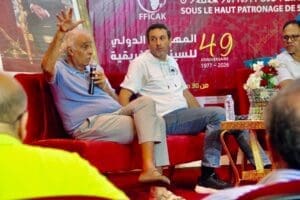

An example was an important moment for me during the festival when I shared the stage with cinematographer/director Ali Benjelloun, the son of veteran Moroccan filmmaker Hassan Benjelloun, as our films were introduced at the same time. The film Goundafa – The Cursed Song was the directorial debut from Ali Benjelloun, produced by his father Hassan Benjelloun, a film which later won the jury prize for Best Director for feature-length films at the festival. Like the children of cinema running around the festival hall, watching films and also being present in festival discussions, you can tell that being the son of a celebrated filmmaker like Hassan Benjelloun, Ali must have been brought up in similar experiences and would probably be highly influenced by his father before going ahead to find his own voice in cinema.
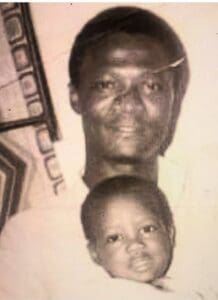
Caesar kagho and son Idhebor ,kagho
LIKE me me, at the age of 18, I was completely clueless when it came to anything about filmmaking or cinema. Though as a child growing up, my father engaged us in watching a lot of films, many of which I can look back on today as high cinema classics. Films like Bedknobs and Broomsticks (1971), Quo Vadis (1951), Oliver Twist (1968), The Wizard of Oz (1939), The Good, the Bad and the Ugly (1966), and many more.
After high school, I was tricked by my father into enrolling in a tertiary film institution, not with the intention for me to be a filmmaker, but to be in a place closer to him in the northern part of the country where he worked and also had friends to keep a close eye on me and my younger brother. Although before I was born, my father was a very active and respected entertainment journalist of repute in his prime, widely known for his storytelling by readers of his entertainment column when he worked as a roving reporter.
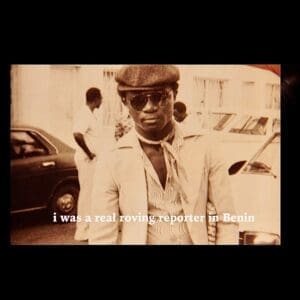 When I became aware of cinema and started practising as a filmmaker, by chance I revisited his first published book Bendel Deejays, a pictorial book which he wrote from archival photos he collected from the deejays he had interviewed from 1977–1981 as a journalist. From rereading the book, I intentionally exposed myself to and indulged in reading my father’s newspaper publications from the late 1970s, which he had archived as cut-out pages in a scrapbook. I also read his two autobiographical memoirs, which chronicle his early life as a child up until university, as a young Nigerian boy in Fleet Street, London, studying journalism and his working adventures as a roving reporter.
From reading about my father’s life and adventures, I discovered that indirectly and unconsciously my father had constantly influenced and guided me greatly into being the kind of artist I am today, because what I do now mirrors how he lived his art, only through a different medium. Truly they say the apple does not fall far from the tree.
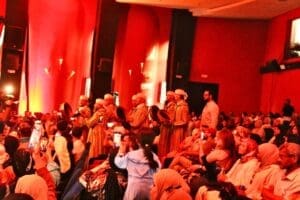 BACK at the Festival International du Cinéma Africain de Khouribga, the crowd was getting bigger as the show was about to start. The hall was saturated with red lights, music, and friendly chatter from the occupants that made up the ambiance of the room. Cinema is a very important tool that can be used to retell and reshape the African story, strengthen cultural perspective, and position the African continent on the world map as the giant it truly is. If the children are truly the leaders of tomorrow, the consciousness we feed them at this foundational stage will determine what they will contribute to society in the future.
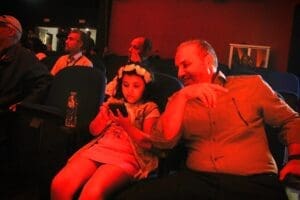 Looking at the kids, I reflected on how they will grow up someday to become great storytellers, filmmakers, artists, writers, and cinephiles, just like their parents. Still reflecting, a tap on my shoulder brought me back, and I saw the little girl’s father, Slim Louahi, looking at me with his daughter who had a big, excited smile on her face. He brought out his phone and asked me to type in my number. As I did, I assumed, just like everyone whose photographs I had taken, that he wanted to collect my contact so I could send him the pictures. I mentioned he should not worry, I would send him his photos when I got back home, and he responded, still smiling, saying that was not the reason he was collecting my contact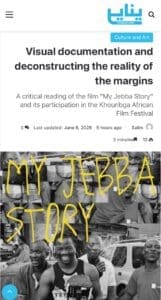
He had watched my film with his daughter during the screening and it really inspired him, so he had published a paper about my film and wanted to send it to me.
As I sat there reading his words, I found myself thinking about fathers and children, about Hassan and Ali Benjelloun, about the little girl sitting beside him, and about my own father. It struck me that long before I ever called myself a filmmaker, my father had already been teaching me cinema without knowing it.
Long live the cinema of Africa.