
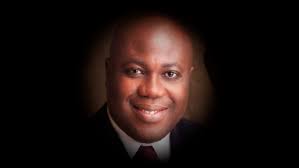
The most difficult test came in 2004, when the judges of the Nigeria Prize for Literature declared that there would be no winner… The decision was principled… The entries did not meet the standard the prize had set for itself… But the public reaction was fierce… Writers felt wounded… Commentators accused the prize of arrogance. The media turned the moment into a crisis… The architect understood the situation differently… He had studied prize history. He knew that serious prizes are sometimes strengthened, not weakened, by refusing to reward work below standard… The scandal did not appear to him as defeat. It appeared as an opportunity to affirm integrity… He allowed the right people to respond… But he stoutly defended the judges.
BEFORE a prize can be born, someone must understand what prizes are, where they come from, and why they matter.
Before the first call for entries was written, before the first judge was approached, before the first shortlist was debated in a quiet room by serious people, there was reading.
There was study.
There was the patient, unglamorous work of learning from those who had gone before — and learning, equally, from what had gone wrong.

The man who would become the unseen architect of Nigeria’s great intellectual prizes was, above all else, a student of prizes.
He understood that nothing lasting is built in ignorance of history.
To create something new, one must first understand, deeply and honestly, what has been built before: its strengths, its failures, its fractures, and the ways it nearly collapsed.
He kept this knowledge mostly to himself. That was the point.
The Library Before The Prize
There is a particular kind of preparation that never shows.
It does not announce itself in meetings.
It does not appear in the minutes.
It lives instead in the margins of books, in the memory of a well-read man who has learned to ask the right question at precisely the right moment — and then to sit back and let others believe the answer was their own.
The study of prizes revealed an uncomfortable truth: nearly every great prize had, at one point, nearly died.
The Pulitzer Prize began with most of its categories unfilled, because the world was at war and no one was paying attention.
The Booker Prize spent its early years learning how to survive through controversy.
The Neustadt endured because an endowment arrived when it was most needed.
The Caine Prize for African Writing, which seemed at first so close to home, carried within it the burden of difficult questions about origin, geography, and identity.
Each of these stories offered a lesson.
The question was how to apply them without being seen to apply them.
What The Booker Taught About Survival
The Booker Prize was not born great. It was made great — through excellence, yes, but also through the deliberate cultivation of attention.
Inspired by the French Prix Goncourt, Tom Maschler and Graham C. Greene secured support from Booker McConnell and launched the prize in 1968.
At first, it attracted little public excitement.
Then came the machinery of controversy, and with it, visibility.
Long-time administrator Martyn Goff helped shape the prize into a public event, one that could not be ignored.
Arguments, disruptions, and outrage followed.
Writers protested.
Judges disagreed.
The prize learned, very early, that a literary award no one argues about is often a literary award no one remembers.
Or cares about.
But the Booker also taught a quieter lesson: sustainability matters.
In 2002, after decades of corporate sponsorship, the prize nearly lost its footing when Booker McConnell withdrew.
It survived only because it had evolved into a foundation with independent charitable status.
What had once depended on a sponsor became, at least in principle, something more enduring.
The architect noted this carefully. He said little. He was storing the lesson.
What The Pulitzer Taught About Governance
The Pulitzer Prize was born from foresight and public duty.
Joseph Pulitzer, newspaperman and press baron, set aside part of his estate for a school of journalism and prizes to honour excellence in letters, drama, music, and public service.
Columbia University did not accept the gift quickly.
It took years of negotiation, and Pulitzer himself did not live to see the prize established.
When it finally began in 1917, several categories went unawarded.
Even in its early years, the Pulitzer was not free of tension.
Juries and boards clashed.
Decisions were challenged.
But the legal architecture Pulitzer had built into his will gave the prize a durability.
Over time, even its internal crises became part of the prestige that surrounded it.
The lesson was plain: governance outlasts enthusiasm.
Institutions endure when their foundations are sound.
This was the lesson the architect carried into every conversation about the future of the Nigeria Prize.
What The Caine Prize Taught About Identity
The Caine Prize for African Writing arrived with strong intentions and serious patrons.
Wole Soyinka, Nadine Gordimer, and J. M. Coetzee lent it immediate authority.
It was launched to honour African writing and to bring African literary talent into greater view.
Yet, over time, its contradictions became impossible to ignore.
Its administrative base was in London.
Its ceremonies migrated to Oxford.
Critics began to ask whether an African prize so deeply rooted in England could ever fully speak for Africa.
Others worried that the prize encouraged a narrow kind of narrative—one shaped too often by what Western audiences expected Africa to be.
The lesson here was sharper than the others: the sins of a prize are often original.
They are not accidental.
They are built into its structure, its geography, its assumptions.
If those first choices are weak, the future is forced to carry their burden.
The architect understood this well.
He knew that the beginnings of an institution matter more than its later speeches.
What Money Cannot Do Alone
At the commercial end of prize culture stood the Premio Planeta de Novela, a reminder of what money can accomplish and what it cannot.
Founded in 1952, it grew into one of the world’s richest literary prizes. But wealth alone does not guarantee legitimacy.
Around it gathered complaints of manipulation, commercial influence, and the quiet capture of literary prestige by corporate interests.
The prize became a symbol of scale, but also of the dangers of allowing money to outgrow meaning.
That lesson sharpened the architect’s thinking. He began to see more clearly that the Nigeria Prize needed to be generous enough to command respect, but not so disconnected from cultural seriousness that the award itself became the story.
He also returned, with new respect, to a view once expressed by Emeritus Professor J. P. Clark. Clark, one of Africa’s pre-eminent poets, had been uneasy about excessive prize money.
He feared that too much money might distort the literary field and encourage the wrong motivations.
At the time, some regarded this as excessive caution.
The architect did not dismiss it so easily.
He had seen enough to know that Clark’s concern was not baseless.
A prize must be large enough to matter, but it must also be housed within a structure strong enough to keep the money from becoming its own purpose.
The Question of Belonging
Two important questions arose early and had to be resolved with care.
The first concerned eligibility.
The prize was initially limited to Nigerians resident in Nigeria.
The idea seemed practical, even defensible at first glance.
But it created a wound.
Many of the country’s finest writers and scholars lived abroad.
To exclude them from a national prize was to weaken the very idea of national excellence.
The architect knew this and worked, quietly but firmly, to change it. The rule was eventually removed.
Nigerians everywhere could now be considered.
It was a necessary correction, and one that restored dignity to the prize.
The second question was more symbolic: what date should carry this award?
That answer came from Professor Femi Osofisan, who suggested October 9 — the anniversary of Nigeria’s first shipment of liquefied natural gas in 1999.
It was a brilliant choice. The date transformed a corporate milestone into a cultural one.
It said that Nigeria’s wealth was not only beneath the ground, but also in the minds and imaginations of its people.
The architect recognised the power of the suggestion immediately. He ensured it was adopted.
The No-Winner Verdict
The most difficult test came in 2004, when the judges of the Nigeria Prize for Literature declared that there would be no winner.
The decision was principled.
The entries did not meet the standard the prize had set for itself.
But the public reaction was fierce.
Writers felt wounded.
Commentators accused the prize of arrogance. The media turned the moment into a crisis.
The architect understood the situation differently.
He had studied prize history. He knew that serious prizes are sometimes strengthened, not weakened, by refusing to reward work below standard.
The scandal did not appear to him as defeat. It appeared as an opportunity to affirm integrity.
He allowed the right people to respond.
But he stoutly defended the judges. The BBC and the International Association of Business Communicators IABC, rewarded him for that effort. BBC praised him for courage. IABC awarded him a Gold-Quill for Excellence in Crisis Communication.
Emeritus Professor Ayo Banjo brought scholarly authority and calm. Professor Femi Osofisan organised a writers’ workshop in Ibadan. The response widened into a gathering of generations. Madam Phebean Ajibola Ogundipe, author of Brighter Grammar, brought the authority of an earlier era. Gabriel Okara, Mabel Segun, Eddie Iroh, and Professor Ezenwa Ohaeto joined the conversation.
So did newer voices such as Onukaba Adinoyi-Ojo, Chuks Iloegunam, Uzoatu Maxim Uzoatu, Jude Idada, Ikeogu Oke, Ahmed Yerima, Akachi Adimora-Ezeigbo, Kaine Agary, Esiaba Irobi, Tade Ipadeola, Chika Unigwe, and Adeleke Adeyemi.
What had seemed like a setback became a national literary reckoning.
The prizes had forced the country to think seriously about standards, about value, and about the place of literature in public life.
The architect had not engineered the outrage. But he had prepared, through study and discipline, to recognize its usefulness when it came.
The Board and the Economics of Vanity
The case for endowment was presented formally to the NLNG Board.
The architect had assembled the argument with care. He pointed to the Pulitzer, to the Booker, to the Nobel Foundation.
He showed how prizes survive when they are protected by serious institutional structures.
He showed that the money already spent on the prizes could, by now, have been creating a permanent endowment.
Dr. Chima Ibeneche, then Managing Director, supported the proposal.
He understood the logic.
But there was resistance from the General Manager, Finance, and from others around the board table.
That resistance was not, in truth, economic.
It was about presence.
About access.
About the front-row seats at the award nights, where ministers, governors, and board members gathered in ceremonial splendour.
An endowment would not destroy the prizes. But it would shift the centre of gravity.
It would move the focus from corporate spectacle to institutional permanence.
That was, for some, too great a loss.
The Board decided that NLNG would continue to fund the prizes directly.
Endowment would wait.
The architect accepted the outcome without bitterness.
He knew history well enough to know that postponed ideas are not dead ideas.
Four Genres, One Vision
One of the most graceful decisions in the prize’s design was its four-genre rotation.
The Nigeria Prize for Literature would not honour only the novel. It would move across prose fiction, poetry, drama, and children’s literature.
This was a quietly radical gesture.
It gave equal dignity to forms often treated unequally.
Children’s literature, in particular, received the respect it deserved.
The judges later described it as one of the most exacting literary forms, and one with deep value for family life and nation-building.
The architecture of the prize did not announce its fairness. It simply embodied it.
That, perhaps, was the deepest strength of the unseen hand.
To strengthen the position of Children Literature, NLNG invited Africa’s first Nobel laureate, Prof. Wole Soyinka as guest speaker when it organised a public reading for secondary school students at Nigeria Institute for International Affairs (NIIA). It was a thought-provoking session listening to pupils ask “Mr. Soyinka” why he has not written any books explicitly targeted at children’s literature.
What History Made Possible
By the time the prizes were fully shaped, the architect had drawn from many sources of wisdom.
From the Booker, he learned that controversy can give a prize public life.
From the Pulitzer, he learned that governance matters more than praise.
From the Caine Prize, he learned that identity must be built into the foundations, not added later.
From the Premio Planeta, he learned that money without institutional depth is never enough.
From J. P. Clark, he learned to hold ambition and restraint in the same hand.
Out of all this came a prize system rooted in seriousness, literary fairness, national pride, and institutional care.
None of it happened by accident.
None of it happened quickly.
It was the work of patience, judgment, and quiet leadership.
The heaviest lifting, after all, is often the lifting nobody sees.
- To be continued…
- Ifeanyi Igwebike Mbanefo, CEO, Museums and Monuments Academy lives in Montreal Canada.