
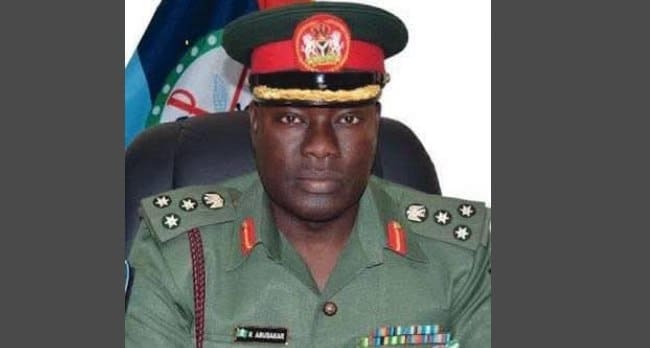
RETIRED military officers and associates of late Major General Rabe Abubakar have called for sweeping reforms to Nigeria’s security system following the former army officer’s death after being abducted by bandits in Katsina State.
The appeal was made during a press briefing held in Kaduna, where Brigadier General Isma’ila Abdullahi (rtd) spoke on behalf of colleagues, friends, and associates of the deceased.
Among those present at the briefing were Brigadier General Abubakar Abdulqadir (rtd), Brigadier General M.I. Tsiga (rtd), Air Commodore Yusuf Anas (rtd), Ambassador Ibrahim Usman Gafai, and Ambassador Ahmed Muhammad Musawa.
Speaking at the event, Abdullahi described General Abubakar’s death as a painful reflection of the worsening security situation across the country.

He said the retired officer’s passing after being kidnapped by armed bandits in the Matazu area of Katsina State had left his associates devastated.
He expressed gratitude to both the Federal Government and the Katsina State Government for efforts that led to the rescue of the deceased’s wife, Hajiya Amina Rabe Abubakar, but stressed that the incident underscored the urgent need for more effective measures against banditry, terrorism, and kidnapping.
According to him, the tragedy goes beyond the loss of one individual and highlights the broader security challenges confronting Nigerians daily.
Abdullahi noted that increasing cases of abduction, terrorism, and armed attacks have become a source of concern for citizens, adding that the death of the retired general should serve as a reminder of the need to strengthen national security mechanisms.
The retired officers warned against viewing insecurity through political, ethnic, or regional lenses, insisting that the menace is a national challenge that requires a collective response from all stakeholders.
They called for stronger security institutions, enhanced cooperation among security agencies, improved intelligence gathering, and tighter border controls to stem the flow of illegal arms into the country.
While welcoming international support in the fight against terrorism, the group maintained that the responsibility for securing Nigeria ultimately lies with Nigerian authorities and institutions.
Responding to questions from journalists, Abdullahi advocated greater support for organised community-based security initiatives, particularly in rural areas that frequently come under attack from criminal groups.
He argued that properly trained and supervised local security volunteers and vigilante groups could play a complementary role in safeguarding vulnerable communities.
However, he cautioned against the uncontrolled spread of firearms, stressing that any community defence arrangement must be strictly regulated.
The retired officers also urged state governments to establish and adequately equip forest guard units to improve security operations in remote and forested regions often used as hideouts by criminal elements.
On the ongoing debate over state policing, the group expressed support for the idea but emphasised that only states with the financial resources and institutional capacity to recruit, train, equip, and sustain such outfits should be permitted to operate them.
They further appealed to governments at all levels to provide assistance to families affected by kidnapping, terrorism, and bandit attacks while intensifying efforts to secure the release of victims still in captivity.
According to the group, the death of Major General Rabe Abubakar should serve as a catalyst for stronger political will and a coordinated national strategy aimed at restoring public confidence in the country’s security institutions and improving the safety of citizens nationwide.