
I
The Fork in the Road — Nigeria’s 2023 subsidy choice, revisited
This essay does not advocate for the indefinite retention of the subsidy… The fiscal argument against a universal, leakage-prone consumption subsidy remains compelling… Nor does it claim that any alternative pathway would have guaranteed a painless transition… Each carried risks, and each would have tested the resilience of Nigeria’s institutions… Its argument is narrower, but more exacting: that alternatives existed; that they were known; that they were demanding, but not beyond reach; and that they were not meaningfully explored in public before the decision was made.
A Question Worth Asking Properly
ON May 29, 2023, beneath the solemn weight of national expectation, President Bola Ahmed Tinubu stood before the nation and pronounced a sentence that would echo across markets, motor parks, and kitchen tables alike: “subsidy is gone.”
Few declarations in Nigeria’s recent history have carried such immediate and far-reaching consequence.
Within days, pump prices surged to more than three times their previous levels.
Within months, the tremors spread—transport fares climbed, food prices rose, and the cost of living swelled across a country whose economic life depends, profoundly, on movement.

Three years later, a particular narrative has settled into near certainty within Nigeria’s political establishment: that there was no alternative.
The subsidy, it is said, had become an unbearable fiscal burden; the treasury was hemorrhaging; responsible governance demanded its swift removal.
This essay does not dispute the gravity of the numbers. By 2022, petrol subsidy payments had reportedly reached ₦4 trillion—nearly a quarter of the national budget.
Projections for 2023 rose as high as ₦6.7 trillion.
No state attentive to its own survival could indefinitely sustain such a weight.
Yet there is a quiet but crucial distinction that has too often been blurred: between the claim that the subsidy had to go, and the assertion that it had to go exactly as it did.
Over the past three years, Nigeria’s leadership has treated these as one and the same.
They are not.
This essay seeks, with care and without the distortions of hindsight, to revisit that moment in May 2023 and examine the paths that lay before the nation—asking whether the route taken was the most defensible, or simply the most expedient.
What the Subsidy Actually Was
Clarity demands precision.
Nigeria’s fuel subsidy was not akin to the targeted transport subsidies common in parts of Europe, where governments directly support bus and rail systems through structured, ring-fenced mechanisms. France’s Versement Mobilité, for instance, is a payroll levy dedicated to sustaining public transit infrastructure.
Nigeria’s model was altogether different.
It imposed a universal price cap on petrol—a globally traded commodity—regardless of who consumed it or to what end.
The same subsidized fuel powered the modest minibus ferrying workers at dawn, the luxury vehicle navigating city boulevards, and, in troubling instances, the tankers diverting supply across porous borders.
In the language of public finance, this was a universal consumption subsidy—broad, untargeted, and deeply vulnerable to distortion.
Such subsidies, by their nature, tend to be regressive.
Those who consume more—often the relatively affluent—capture a disproportionate share of the benefit, while the working poor, who rely more heavily on public transport, receive less direct advantage.
This distinction matters.
It affirms that the case for removal was not merely ideological, but grounded in economic reasoning.
Yet it also sharpens the central question: not whether the subsidy should end, but how.
The Pathways Genuinely on the Table
If one sets aside the noise of politics, at least four distinct pathways were available to Nigeria in 2023.
None promised ease.
All required trade-offs.
But each lay within the realm of possibility.
The first was abrupt, total removal—the path ultimately chosen.
Its appeal was immediate and visible.
It offered fiscal clarity, aligned neatly with international financial expectations, and allowed a new administration to act decisively.
Yet its cost was equally stark: a sudden, concentrated shock that rippled through every sector of the economy, leaving households, transport systems, and even the state itself scrambling to adjust.
The second was phased removal.
Under this approach, prices would rise gradually—perhaps in increments of 10 to 15 percent over eighteen to twenty-four months—allowing families, businesses, and institutions time to adapt.
It would have provided the government with a crucial window to build support systems before the full weight of reform was felt.
Countries such as Indonesia and Egypt have pursued such paths, imperfectly but instructively.
This was no theoretical abstraction; it was a tested, orthodox policy option.
The third pathway was targeted retention.
Rather than abolishing the subsidy universally, the state could have preserved it for sectors that sustain daily life—mass transit, commercial vehicles, agricultural production—while withdrawing it from private consumption.
Admittedly, such an approach would demand administrative rigor: reliable data systems, transparent distribution channels, and vigilant oversight.
Yet it aligns more closely with how transport subsidies function in advanced economies—supporting mobility as a public good, rather than subsidizing consumption indiscriminately.
The fourth pathway was removal preceded by preparation.
This would have required stabilizing the exchange rate, expanding public transit capacity, developing compressed natural gas infrastructure, and strengthening targeted cash transfer systems before announcing subsidy removal.
In essence, it was a question of sequencing—laying cushions before delivering the blow.
The Path Actually Taken
Nigeria chose none of the latter paths.
Instead, it embraced abrupt removal—and then, in rapid succession, compounded its effects.
Within months, the naira was floated, leading to a sharp depreciation against the dollar.
Two profound shocks—one to the cost of fuel, the other to the cost of imports—arrived almost simultaneously.
For a country that imports vast quantities of vehicles and depends heavily on imported goods, the consequences were immediate and severe.
Households faced rising transport costs and escalating prices across nearly all sectors.
The impact was not merely economic; it was deeply human, reshaping daily life with unsettling speed.
Palliative measures did emerge.
- Cash transfer programs were expanded
- Compressed natural gas initiatives were introduced
- State-level interventions, particularly in Lagos, sought to soften the blow through subsidized transport.
Yet these measures followed the crisis; they did not precede it.
They were responses to visible hardship, not shields prepared in anticipation of it.
Why the Easiest Path Was Chosen
It would be simplistic to attribute this choice to indifference or ill intent.
A more measured reading suggests something quieter but equally consequential: the path chosen required the least institutional strain.
Or efforts.
Phased removal would have demanded sustained discipline—careful calibration, repeated public communication, and a willingness to absorb political pressure over time.
Targeted retention would have required data integrity and administrative systems that Nigeria has historically struggled to build.
Preparatory buffering would have called for patience, sequencing, and the political restraint to delay decisive action until the groundwork was complete.
Abrupt removal, by contrast, required only a declaration.
Its execution lay in the immediacy of the announcement itself.
The reform, in effect, was treated as synonymous with its proclamation.
This pattern—where the act of announcing substitutes for the labor of implementation—will resurface in the next essay in this series.
What This Essay Does Not Argue
This essay does not advocate for the indefinite retention of the subsidy.
The fiscal argument against a universal, leakage-prone consumption subsidy remains compelling.
Nor does it claim that any alternative pathway would have guaranteed a painless transition.
Each carried risks, and each would have tested the resilience of Nigeria’s institutions.
Its argument is narrower, but more exacting: that alternatives existed; that they were known; that they were demanding, but not beyond reach; and that they were not meaningfully explored in public before the decision was made.
The assertion that there was no alternative was not an economic inevitability—it was a political convenience.
It shifted the burden of hardship entirely onto inherited circumstances, leaving the choices of execution largely unexamined.
The second essay will turn to what followed: the strategic missteps in sequencing and management, and the broader pattern—visible across multiple policy domains—of mistaking the declaration of reform for the reform itself.
*******
II
The Announcement and the Deliverable
Nigeria’s governing class, across administrations, has tended to treat public criticism — from economists, civil society, journalists, and ordinary commentators — not as information to be weighed before a decision, but as a political threat to be managed after one… What was missing was not information… What was missing was a government posture willing to engage with that information before announcing, rather than defending the announcement after the fact as though it had been inevitable all along.
THIS is the second of three essays examining Nigeria’s 2023 fuel subsidy removal, the strategic choices that followed, and the path forward to 2027.
Part One examined the pathways available to government in 2023 and argued that abrupt, total removal was the path requiring the least institutional capacity to execute — not necessarily the path requiring the least harm.
A Government That Announces Well
Nigeria’s political class, across party lines and across decades, has developed a genuine competence: the well-delivered announcement.
The May 2023 inaugural address removing the fuel subsidy was, as theater, effective — decisive, internationally legible, and politically framed in a single memorable phrase.
The naira float that followed months later was similarly announced as a bold unification of a fractured exchange rate system, ending years of arbitrage between official and parallel markets.
Both announcements were, in narrow technical terms, correct policy directions. And both were followed by an extended period in which the actual machinery of implementation — the palliatives, the sequencing, the institutional safeguards against capture — visibly lagged behind the speech that had announced them.
This essay is about that lag, and about why it happened twice in close succession rather than once.
Error One: Stacking the Shocks
The clearest, least disputable strategic error was sequencing. Subsidy removal landed on Nigerian households in May 2023.
The naira float followed within months.
Each of these, on its own, would have demanded a period of adjustment.
Together, they meant that the price of fuel and the price of everything imported — including the vehicles that move people and goods, of which Nigeria imports hundreds of thousands annually — moved sharply in the same direction at nearly the same time, with no interval in which households or businesses could absorb one shock before the next arrived.
There is a reasonable defense of this sequencing: delaying either reform risked giving entrenched interests time to organize resistance, and a government acting decisively in its first year carries more political capital than one that telegraphs reform for eighteen months.
This defense deserves to be stated fairly, because dismissing it outright would be its own kind of intellectual laziness.
But it is also true that no parallel, comparable effort was made to pre-build the cushioning — mass transit capacity, targeted cash transfers, fuel-distribution transparency — that could have absorbed even a portion of the combined shock.
The sequencing decision was defensible.
The absence of preparation alongside it was not.
Error Two: Palliatives as Reaction, Not Preparation
Cash transfer schemes, Compressed Natural Gas bus conversions, and state-level fare subsidies did eventually materialize.
Lagos State’s support for its Bus Rapid Transit system and rail lines is a genuine example of structured relief.
But the timeline matters enormously here, and it is the timeline — more than the existence or absence of palliatives — that constitutes the strategic error.
These measures arrived as visible responses to hardship that was already public, already painful, and already eroding the government’s credibility.
They did not arrive as infrastructure quietly assembled in the run-up to a planned, telegraphed transition.
This is not a small distinction.
A palliative announced before a price shock signals a government that has thought through consequences.
A palliative announced after a price shock, in response to visible suffering and mounting criticism, signals a government managing its image rather than managing the transition.
Nigerians experienced the second pattern, repeatedly, across both the fuel subsidy removal and the currency float.
Error Three: The Smuggling Argument as a Substitute for a Transition Plan
Cross-border fuel smuggling was real, and the evidence for it is not merely anecdotal.
Studies using cross-border fuel-movement data found significant declines in fuel volumes reaching border states after subsidy removal — strong evidence that a meaningful share of subsidized fuel had been leaving the country illegally rather than being consumed domestically.
This is a legitimate part of the case against the old subsidy regime: a government cannot indefinitely subsidize fuel that disappears across its borders before a single Nigerian commuter benefits from it.
But smuggling was deployed publicly less as one input into a sequencing decision and more as a totalizing justification — a way of saying the entire subsidy was illegitimate, rather than a way of saying the subsidy’s design needed to change.
This distinction matters because it forecloses a question that should have been asked seriously: could a better-administered, harder-to-smuggle subsidy — geofenced distribution, closed-fleet tracking for buses and commercial transport, retained support narrowly for mass transit and goods movement — have addressed the smuggling problem without imposing the full universal-removal shock on every Nigerian household at once?
The honest answer is that this was technically achievable but administratively demanding, and demanding solutions lost out to the totalizing argument that no alternative existed at all.
Error Four: Aviation, Mid-Stream Capture, and Government’s Silence
A smaller but instructive example sits in Nigeria’s aviation sector, and it is worth including here precisely because it shows the pattern recurring in a completely different part of the economy.
Nigeria’s Dangote Refinery has, in 2026, become the world’s single largest exporter of aviation fuel and now supplies the overwhelming majority of Jet A-1 consumed domestically, at ex-depot prices the refinery has voluntarily cut more than once this year to ease pressure on Nigerian airlines.
And yet airline operators report fuel costs to them rising by multiples of that ex-depot price, attributing the gap not to scarcity but to practices within the downstream distribution chain — middlemen, in plain language, capturing margin that has nothing to do with the actual cost of supply.
This is the same disease that afflicted the petrol subsidy for decades, recurring in a sector with no subsidy at all: a transparent, well-functioning point of supply, followed by an opaque, poorly regulated middle layer where price discipline disappears.
The appropriate government response is not a new subsidy — that would simply hand a second pool of money to the same capture mechanism — but transparent regulation: mandated, public ex-depot-to-retail price ladders, scrutiny of distribution-chain markups, and enforcement against artificial scarcity.
As of this writing, no such regulatory intervention has been seriously pursued, despite the pattern being publicly named by the airlines themselves.
The Pattern Beneath the Pattern
Four distinct errors, across two distinct macro-reforms and one distinct sector, share a single underlying shape: the visible, public-facing act of policy — the announcement, the price cap removal, the float, the refinery’s own voluntary price cut — consistently outpaces the quieter, harder, less photogenic work of building the systems that make a policy survivable for ordinary people.
The announcement becomes the deliverable.
The transition plan, the safeguard against capture, the pre-built cushion — these remain perpetually pending, assembled only under the pressure of visible public hardship rather than in anticipation of it.
It would be convenient to attribute this entirely to corruption, and corruption is certainly part of the story — money disappearing into smuggling networks, distribution-chain margins disappearing into the pockets of marketers rather than reaching consumers or government coffers.
But corruption explains leakage: funds and value disappearing somewhere they should not.
It does not, by itself, explain design failure: the absence of a competent transition plan in the first place, the repeated choice to announce before preparing, the consistent silence in the face of public warnings that the sequencing was wrong.
That design failure has a different root, and it is worth naming plainly, because without naming it, the same pattern will recur in whatever reform comes next.
Nigeria’s governing class, across administrations, has tended to treat public criticism — from economists, civil society, journalists, and ordinary commentators — not as information to be weighed before a decision, but as a political threat to be managed after one.
Warnings about sequencing risk, about the absence of pre-built palliatives, about the predictability of smuggling responses to a poorly designed transition, were not in short supply before May 2023.
They existed in the public record, in policy circles, in the very kind of comparative analysis this essay series draws on.
What was missing was not information.
What was missing was a government posture willing to engage with that information before announcing, rather than defending the announcement after the fact as though it had been inevitable all along.
This is not a uniquely partisan observation, nor is it specific to one administration.
It describes a longer-standing feature of how power has been exercised in Nigeria: a discomfort with visible deliberation, a tendency to treat the appearance of certainty as a precondition for legitimacy, and — beneath both — something that resembles a defensive reflex more than confident leadership: the sense that engaging publicly with critics is an admission of weakness, rather than the normal, healthy friction of governing a large and complicated country.
Whatever its source, the effect is measurable.
It is visible in the gap between the May 2023 speech and the palliatives that arrived a year later.
It is visible in the gap between Dangote’s falling ex-depot price and the airlines still paying triple.
It will be visible again, in whatever reform Nigeria’s next government chooses to announce, unless the posture itself changes.
The third and final essay in this series turns to where Nigeria stands now — a stabilizing currency, a genuinely transformed domestic refining capacity, and a set of concrete, narrower policy options for the road to 2027 — and asks what would actually need to change, not just in policy, but in how government relates to the public it governs, for the next transition to be better than this one.
*******
III
What Would Actually Have to Change
Nigeria heading toward 2027 has more structural strength than it had in 2023: a steadier currency, a transformed refining sector, and three years of hard, costly experience that should not be allowed to go to waste… Whether that strength translates into a better-managed transition the next time one is needed will depend less on which party or individual wins in 2027, and more on whether Nigeria’s governing class — whoever comprises it — is willing to treat preparation, sequencing, and public engagement with criticism as the actual work of governing, rather than as an optional supplement to the announcement.
THIS is the third and final essay in a series examining Nigeria’s 2023 fuel subsidy removal and the road to 2027.
Part One examined the pathways available to government in 2023.
Part Two traced the strategic errors that followed — sequencing, reactive palliatives, a totalizing smuggling argument, and mid-stream price capture in aviation — and argued that all four shared a common root: a governing posture that treats public criticism as a threat to manage rather than information to use before deciding.
This essay asks where Nigeria stands now, and what would have to change, in policy and in posture, for the next transition to go better than this one did.
Where Things Actually Stand
Any honest assessment of the path forward has to start by acknowledging that some of the ground has genuinely shifted since 2023, and shifted in Nigeria’s favor.
Two changes in particular deserve more credit than they typically receive in public debate, because both cut against the instinct to treat the post-2023 period as one of unrelieved decline.
The naira has stabilized.
Through the first half of 2026, the official exchange rate has held within a narrow band — broadly ₦1,355 to ₦1,375 to the dollar — with the gap between official and parallel market rates considerably narrower than the wide divergence that characterized 2023 and 2024.
This is not a minor technical detail.
A stable currency does more to control the cost of imported vehicles, imported spare parts, and imported refined fuel than almost any other single policy lever available to government, precisely because so much of Nigeria’s transport cost burden — recall the estimated $8 billion spent annually importing vehicles — is currency-exposed rather than fuel-price-exposed.
A government operating from a stabilized currency base in 2026 has materially more room to design a careful, well-sequenced intervention than the government of 2023 did, which had to reckon with subsidy removal and currency chaos arriving almost simultaneously.
Domestic refining capacity has been transformed.
The Dangote Refinery, having reached full operational capacity in early 2026, has become the world’s single largest exporter of aviation fuel and now supplies the overwhelming majority of Nigeria’s domestic Jet A-1 demand.
It has voluntarily cut its own ex-depot aviation fuel price more than once this year specifically to ease pressure on Nigerian carriers, and has begun pricing in naira rather than dollars to reduce foreign exchange exposure for domestic buyers.
This is, by any measure, a structural asset Nigeria did not have in 2023: a domestic refining capacity large enough to meaningfully reduce the import-dependence that made fuel prices so directly hostage to global crude markets and currency swings in the first place.
Neither development resolves the underlying argument of this series.
A stable currency and a productive refinery do not, by themselves, fix a governing posture that treats criticism as a threat.
But they do mean that the constraints facing policymakers heading toward 2027 are meaningfully different — and in some respects more favorable — than the constraints facing the government that announced removal in May 2023.
Any forward-looking proposal has to be built on this more favorable ground, not on a repetition of 2023’s crisis conditions.
The New Leakage Frontier
The aviation example from the previous essay deserves to be carried forward here, because it identifies where Nigeria’s next leakage problem is actually located — and it is not where most public debate is currently looking.
Nigerian airlines, despite Dangote’s falling ex-depot prices, report fuel costs to them rising by as much as 300 percent during periods of global supply stress, and they attribute this explicitly to practices within the downstream distribution chain rather than to any genuine shortage.
This is the same pattern that defined the old petrol subsidy regime — a reasonably transparent point of supply, followed by an opaque middle layer where price discipline disappears and value is captured by intermediaries rather than reaching either the consumer or the public purse.
The lesson generalizes well beyond aviation.
As Nigeria’s refining capacity grows and its currency stabilizes, the principal threat to ordinary Nigerians’ cost of living is shifting away from the dramatic, single-event shocks of 2023 — subsidy removal, currency float — and toward the quieter, harder-to-see problem of distribution-chain opacity.
A subsidy poured into an opaque distribution system simply creates a new pool of capturable value; transparency regulation, by contrast, makes existing supply actually reach the people it was meant to reach.
This reframes what kind of intervention is actually worth pursuing now.
A Narrower, More Defensible Proposal
Given this, the most defensible policy intervention available to government before 2027 is not a return to the old universal fuel subsidy, and it is not — despite the genuine hardship in that sector — a subsidy for aviation fuel, which would primarily benefit a passenger base far removed from the median Nigerian commuter and would, in any case, be capturable by the same distribution-chain intermediaries already implicated in the Jet A-1 price gap.
The more defensible intervention is a targeted diesel subsidy for buses and freight trucks, paired with closed-fleet tracking as a condition of access to subsidized fuel.
This proposal is narrower than the 2023 subsidy in every dimension that matters.
It targets diesel rather than petrol, concentrating support on commercial mass transit and goods movement rather than private vehicle use — closer, in structure, to how France or Spain actually subsidize transit, by funding the service rather than the commodity universally.
It is gated: subsidized diesel would be released only to a licensed, telematics-equipped fleet — government-, Dangote-, or NNPC-contracted trucks and buses — making smuggling and diversion structurally harder, not because the technology tracks every tanker in Nigeria (it cannot), but because access to subsidized product itself becomes conditional on participating in a trackable, closed system.
And it is fiscally bounded in a way the old universal subsidy never was, because the population of qualifying vehicles is countable and licensable, unlike the open-ended universe of private petrol consumption.
This is not a costless proposal, and it should not be presented as one.
It requires real administrative capacity to build and maintain a licensing and telematics system, real political discipline to resist pressure to expand eligibility once the principle of subsidized diesel is re-established, and real vigilance against the same distribution-chain capture that has compromised aviation fuel pricing.
But these are the kinds of demands a government with a stabilized currency and three years of hard-won experience should be far better positioned to meet than the government of 2023 was.
What Would Have to Change in Posture, Not Just Policy
A better policy design, however, will not by itself prevent a repeat of 2023 if the underlying governing posture remains unchanged.
The deeper argument of this series — that announcement consistently outpaces preparation, and that criticism is treated as a threat rather than information — points to changes that are institutional and cultural as much as they are technical.
Three changes would matter most heading into whatever comes after 2027.
First, sequencing discipline as a public commitment, not an internal preference.
Any future major economic reform — whether it concerns fuel, currency, tariffs, or taxation — should be accompanied, at the moment of announcement, by a published, dated timeline showing what cushioning measures will be in place before each stage of the reform takes effect, not after.
This would not prevent hardship, but it would convert palliatives from a reactive concession extracted by public pressure into a pre-committed, auditable promise — one civil society and the press could hold government to on a known schedule, rather than negotiating for in real time amid a crisis already underway.
Second, institutionalized engagement with pre-decision criticism.
Nigeria has no shortage of competent economists, civil society organizations, and policy analysts capable of identifying sequencing risk before a reform is announced — the warnings ahead of May 2023 existed and were public.
What Nigeria lacks is a governing convention that treats engagement with that criticism, before a decision is locked in, as a normal and expected part of policymaking rather than a sign of weakness or hesitation.
This is a cultural change more than a procedural one, and it is the hardest item on this list to legislate into existence.
But it is also the one from which the other failures in this series most directly flow.
Third, transparency regulation as the default response to mid-chain price gaps, rather than subsidy as the default response to public hardship.
The aviation example shows why this matters: a subsidy responds to a price-gap symptom by adding money to a system that has already demonstrated it can capture money without passing the benefit through.
Mandated, public ex-depot-to-retail price ladders, scrutiny of distribution-chain markups, and credible enforcement against manufactured scarcity address the actual mechanism of harm, rather than papering over it with public funds that the same opaque layer will likely capture again.
A Closing Word, Without Triumphalism
None of this is offered as a verdict on any individual politician, and it should not be read as one.
The pattern traced across these three essays — abrupt rather than prepared transitions, palliatives that arrive after rather than before hardship, totalizing justifications standing in for genuine transition planning, and a persistent discomfort with public engagement before decisions are made — long predates the current administration and will likely outlast it unless something more fundamental changes.
Corruption is part of this story, and a serious one, but it is not the whole story; design failure and a defensive governing posture toward criticism have done as much damage as outright theft, and they are, in some ways, harder to fix, because they cannot be prosecuted — they have to be changed.
We must now ask, with sobriety and reverence for our nation: does such a polarizing culture truly serve the higher interest of Nigeria?
Nigeria heading toward 2027 has more structural strength than it had in 2023: a steadier currency, a transformed refining sector, and three years of hard, costly experience that should not be allowed to go to waste.
Whether that strength translates into a better-managed transition the next time one is needed will depend less on which party or individual wins in 2027, and more on whether Nigeria’s governing class — whoever comprises it — is willing to treat preparation, sequencing, and public engagement with criticism as the actual work of governing, rather than as an optional supplement to the announcement.
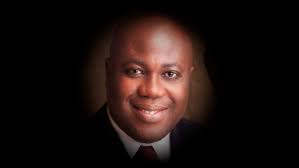
- Ifeanyi Igwebike Mbanefo CEO Museums and Monuments Academy lives in Montreal Canada