
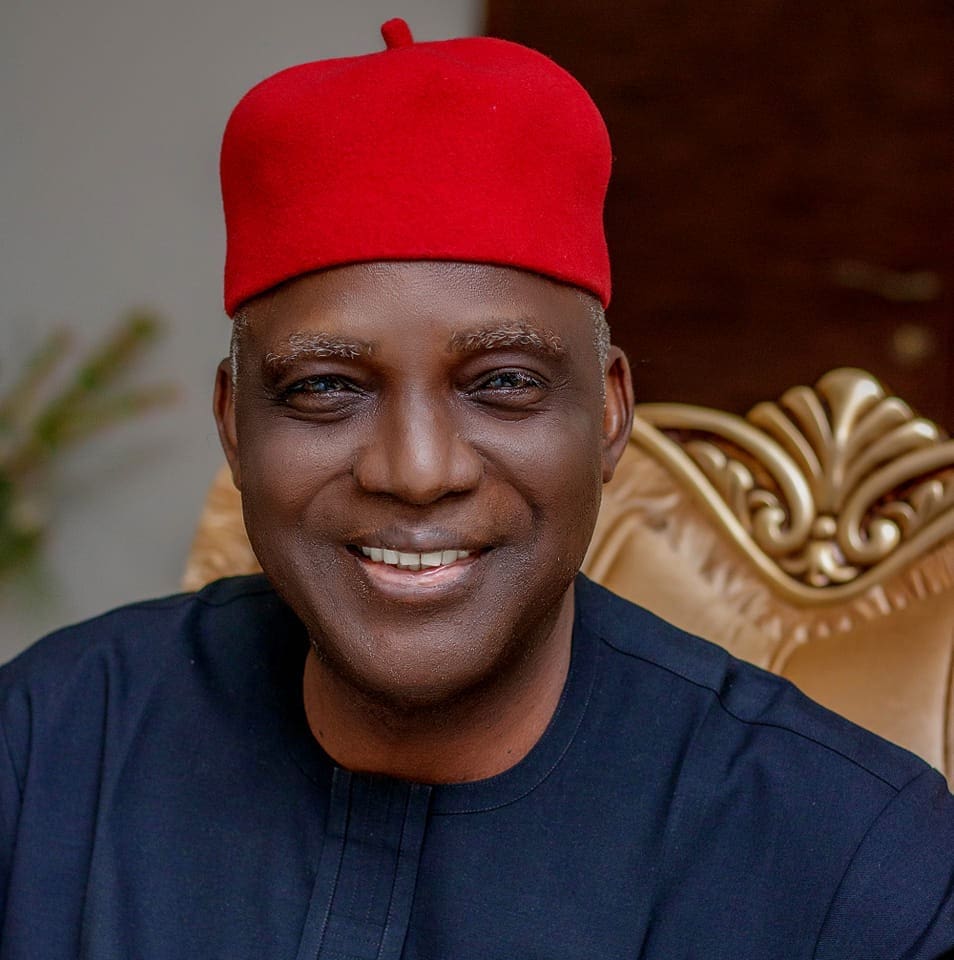
THE MAN WHO ANSWERS HIS PHONE
Nnaji’s story begins in Enugu State, in a household that clearly prized the mind. He went first to St John’s University in New York for a first degree in physics — already an unusual path for a young Nigerian of his generation — before Virginia Tech, where he took both a Master’s and a doctorate in engineering… MIT gave him a postdoctoral grounding in artificial intelligence and robotics at a time when almost nobody in Nigeria was thinking in those terms at all… What he did with that training was not simply accumulate credentials.
THERE is a particular kind of greatness that announces itself — titles read out at the top of programmes, chieftaincy drums, motorcades.
And there is another kind, rarer and more durable, that reveals itself only in the small, unwitnessed moments:
a phone that gets answered when the caller has nothing to offer in return;

a flight booked at personal cost to sit in a room where no cameras are rolling;
a door left open long after the office that made it worth knocking on has changed hands.
Professor Bart O. Nnaji, FAS, FAEng, CON, NNOM, has spent a public life accumulating the first kind of greatness — a professorship at the University of Massachusetts by his early thirties, a chair at Pittsburgh, a postdoctoral stamp from MIT, a ministerial portfolio, a company that lit up a corner of the Niger Delta.
But it is the second kind — the quiet, unwitnessed generosity — that I want to write about here, because I have been its beneficiary, twice, at two different hinges in my own working life, and I think Enugu State needs to understand what kind of man it is failing to fully use.
FROM ENUGU TO THE WORLD AND BACK AGAIN
Nnaji’s story begins in Enugu State, in a household that clearly prized the mind. He went first to St John’s University in New York for a first degree in physics — already an unusual path for a young Nigerian of his generation — before Virginia Tech, where he took both a Master’s and a doctorate in engineering.
MIT gave him a postdoctoral grounding in artificial intelligence and robotics at a time when almost nobody in Nigeria was thinking in those terms at all.
What he did with that training was not simply accumulate credentials.
At UMass Amherst, where he joined the faculty in 1983 and became a full professor within a decade, he built an Automation and Robotics Laboratory and developed what he called “geometric reasoning” — the insight that nearly everything engineers design has an underlying geometric logic that can be captured and manipulated computationally.
He is also credited as one of the originators of “e-design,” the idea, startlingly prescient for the pre-broadband era, that engineers scattered across continents could design, assemble, and test a single product together over a network. Pittsburgh later made him the William Kepler Whiteford Professor of Engineering and the founding director of a five-university National Science Foundation Center for e-Design.
By any reasonable account, a career like that would have been a fine place to retire a résumé. Nnaji instead came home — first briefly, as pioneer Minister of Science and Technology in 1993, and then more permanently after 2007, when he founded Geometric Power Limited, Nigeria’s first fully indigenous independent power company, and later served as Special Adviser to the President on Power and, from 2011 to 2012, as Federal Minister of Power, where he built the roadmap that carried Nigeria’s power sector through privatisation.
That last chapter did not end gently.
When he resigned in August 2012, commentary at the time suggested his departure had less to do with performance than with the fact that his reforms were inconveniencing entrenched interests — a man who had gotten in the way of other people’s arrangements.
I mention this not to relitigate 2012, but because it is a pattern worth noticing: Nnaji has a long, well-documented history of being the most capable person in a room whose incentives are not built for capability.
That is exactly the pattern I want Enugu State to reckon with now.
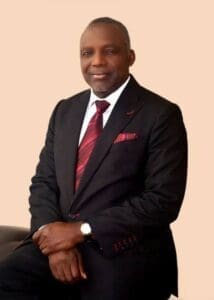 “YOU CAN’T BE IN THE SEA OR FOUNTAIN AND DYING OF THIRST”
Enugu State holds two of Nnaji’s traditional titles — Onwa Nkanu and Echeribe na Nkanu — recognitions of light and stewardship among his own Enugu East people.
He chairs the Advisory Board of the Nigeria Prize for Science. He sits as Pro-Chancellor of Bells University of Technology. He has seven honorary doctorates and a shelf of national honours: OON, CON, NNOM.
And yet the state that could most directly claim his labour — the one whose name is on his traditional titles — has not, to my knowledge, seriously asked him to come and run anything.
This is the long shadow I mean.
Enugu, the old Coal City, has every reason to want the kind of prosperous, planned, industrially serious future that Nnaji has spent forty years building elsewhere — in Massachusetts labs, in Pittsburgh research centres, in Aba’s power grid.
A state with a genuine claim on a mind like this, sitting idle on the sidelines of its own governance, is a state dying of thirst while standing in a fountain.
If Enugu wants a prosperous, well-governed future, the Lion Building should be inviting Professor Nnaji in — not merely to a ceremonial board seat, but to the work of building. Few Nigerians alive have his combination of engineering rigor, institution-building experience, and international credibility. Fewer still have shown, repeatedly and at personal cost, that they will actually answer the phone when the work gets hard.
THE FIRST CALL: Building the Nigeria Prize for Science
I want to be specific about what I mean by that, because I have seen it twice, up close.
The first time was when I was Head of Media and Public Relations at Nigeria LNG Limited, working to set up what would become the Nigeria Prize for Science. This was not a simple task — it meant persuading serious people, in Nigeria and abroad, that a Nigerian company could set up a scientific prize with real credibility, and that scientists of standing would trust it enough to compete for it. I reached out to Professor Nnaji, then still building his career in the United States, with no more than an email and a request.
He did not simply reply. He came to Nigeria, at his own expense, to guide the process in person, and he delivered the first keynote address at the award gala. There was no contractual obligation binding him to any of this. He did it because he believed in what the Prize could become for Nigerian science, and he gave his time and his name to a fledgling idea before it had proven itself to anyone. That is not a small thing. Institutions are usually built by people willing to lend their credibility to something unproven, and Nnaji lent his freely.
THE SECOND CALL: Bonny Island and the Weight of Old Men
The second time was years later, when I had moved into the role of Community Relations Manager for Nigeria LNG, with oversight for Bonny Kingdom and over 110 communities in Rivers State. Amongst the facilities under my purview is Bonny Utilities Company which supplies water and electricity to Bonny and Finima.
By then, Nnaji was Minister of Power. I visited him — more than once — for advice on how to actually run BUC, and he was, in the truest sense, generous and gracious. He kept his door open to me and assigned his personal assistant, George Ugwu, to attend to whatever I needed. That kind of access, offered to a mid-level manager with no ministerial standing of his own, is not something busy men typically extend.
I needed it, because Bonny was proving to be one of the hardest rooms I had ever tried to move. We had built something close to a complete plan: a twenty-five-year masterplan for the Kingdom, a pipeline for training indigenous manpower to eventually take over technical roles held by non-indigenes, blueprint for commercial airlines into Finima Airstrip bringing corporate and tourism passengers, agreement by Joint Industries Committee – NLNG, SPDC and ExxonMobil) to hand over assets worth billions of naira and fund the masterplan for a 25 years.
Under Managing Director Dr Babs Omotowa, the Bonny–Bodo road project had been initiated. We had secured commitments from United Nations Agencies and Bank of Industry to participate in the development of Bonny. NLNG vendors operating in Bonny Island had agreed in principle, to pay annual development levies — ranging from ₦100,000 to ₦50 million — in exchange for peace and the rule of law. Accenture was engaged as technical partner.
On paper, everything that mattered was in place.
But the Amanyanabo had quietly told me what the real obstacle was: he had been warned that if the community grew more prosperous than the throne itself, the throne’s authority would shrink with it.
The chiefs began summoning me to Council, urging me, in increasingly pointed terms, to drop the twenty-five-year plan.
Members of the Bonny Kingdom Development Committee grew uneasy too.
Everyone agreed, in principle, that rapid development, new jobs, and an indigenous workforce trained to replace expatriate labour were good things.
In practice, the old men wanted their share now, not in twenty-five years, and had no patience for a masterplan whose dividends would mostly be paid to people not yet born.
This is where I called on Professor Nnaji again, and he agreed, without hesitation, to meet the Amanyanabo and the chiefs himself. I flew them to Abuja, and we spent a genuinely enlightening evening together. He called Bonny “a diamond in the rough” and promised to guide and shepherd its progress.
The chiefs, for their part, spoke in the coded language such conversations often take — veiled anxieties about NLNG “walking away and leaving Bonny stranded,” which was really a euphemism for a much simpler question: what’s in this for us, right now?
Nnaji listened to all of it patiently. He spoke about history, about patriotism, about the responsibility of laying a foundation for young people whether or not the elders currently in the room would live to see it completed.
They softened enough, that evening, to commit to signing the MOU — and then, not long after, quietly set it aside in favour of far smaller, more immediate asks: a consulate building in a town that had no embassy to house, and other such low-hanging fruit that let a few individuals play rainmaker, speak “on behalf of the people,” and pocket the proceeds.
It was a disappointing outcome, but not one that reflects on what Nnaji offered. He gave Bonny his time, his credibility, and an honest diagnosis. What Bonny’s leadership did with it afterward was its own choice to make.
There is a third, smaller story worth telling in the same breath: a friend of mine, once stranded and struggling in the United States, whom Nnaji — again on my word alone — offered a job and a path back to Nigeria. No press release accompanied that one either. It is simply the kind of thing he does.
 WHAT THIS ADDS UP TO
None of these stories are about a saint. They are about a man who, across four decades and at least three very different registers of power — academic, corporate, ministerial — has behaved consistently: he picks up the phone, he shows up in person when showing up costs him something, and he tells the truth to people even when they would rather hear something more convenient.
That consistency is rarer than any of his degrees.
Enugu State’s leadership should take note of exactly this pattern before they take note of his CV. A twenty-five-year masterplan is difficult in Bonny because entrenched interests fear losing relative standing. It would be difficult in Enugu for exactly the same human reasons.
The state does not need another ceremonial appointment for Professor Nnaji. It needs the version of him that showed up in Abuja on his own initiative to talk sense to a room of frightened chiefs, and the version that showed up in Nigeria, unpaid, to lend his name to a prize that did not yet exist.
If Enugu wants that man’s engineering rigor and institutional patience turned toward its own future, someone in the Lion Building needs to do what I did twice: simply call him, and ask.
I am glad, publicly and on the record, that both times I called, he answered.
- Ifeanyi Igwebike Mbanefo, CEO, Museums and Monuments Academy, lives in Montreal, Canada