
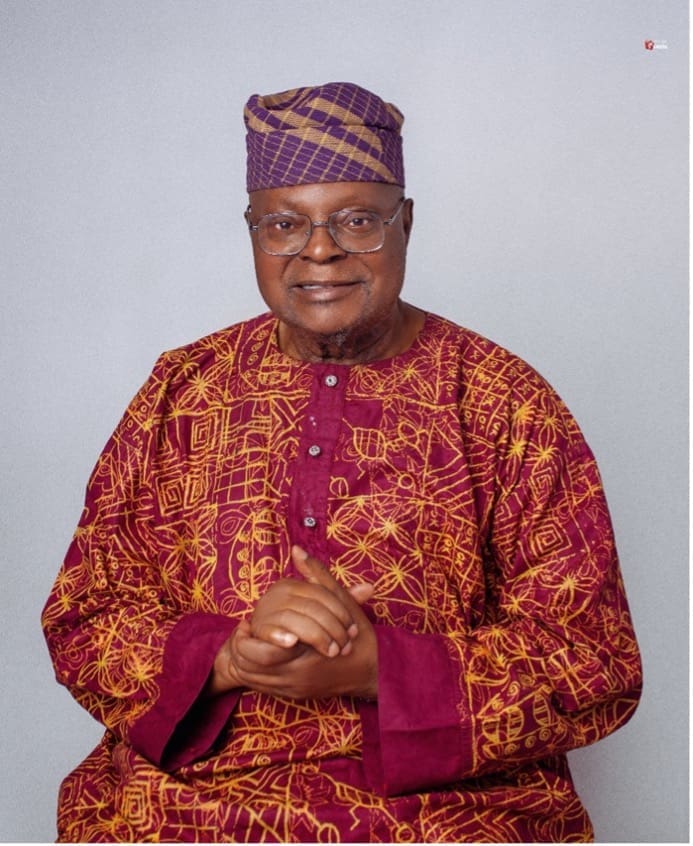
WHEN Femi Osofisan won the ANA Prize for Literature for his poetry collection Minted Coins in 1987, it was not simply another award for a writer already celebrated as a dramatist and novelist. It was a recognition of a quieter, more reflective voice that had long accompanied his theatre and his public commentary. Under the pen name Okinba Launko, Osofisan had been writing poetry for decades, crafting verses that spoke to the same moral urgency and social insight that marked his plays. The prize confirmed what many readers already knew: that behind the dramatist’s public voice was a poet of rare discipline and depth.
The name Okinba Launko carries its own story. It is a Yoruba pseudonym that says “Peacock, open your mouth and sing [the truth].” He introduced the name in that collection as the priest of renewal:
Coins, freshly minted

drop them
into the bowl
Let them dance down
the loins of the water
to the foaming cries of birth…
And your eyes, let them
ripple the skin
of water:
Then the first prayers:
call his name
the priest is waiting…
Swollen like a poet
surrendered to his muse
prayers descend
into the loins of history:
Let his name be the season’s
first rain, flush of joy
call: Okinba, let my name be well!
Into the bowl, coins
freshly minted like wishes…
The name allowed Osofisan to write with a certain freedom, to step aside from the public figure and speak as a private citizen, albeit in the revered independent position of a priest, an interlocutor. Through this name he explored the inner life of the nation, the quiet sorrows and small triumphs that often escape the stage. His poetry, though less theatrical than his drama, is no less political. It is the work of a man who believes that language can still redeem the world.
The Poet Behind the Playwright
Osofisan’s reputation as a playwright sometimes overshadows his poetry. Yet his poems reveal the same disciplined intelligence and moral clarity that define his theatre. They are written in a voice that is both lyrical and direct, combining the rhythms of Yoruba speech with the precision of English verse. They speak of hunger, injustice, memory and hope. They speak of the ordinary people who fill his plays and populate his imagination.
As Okinba Launko, he wrote not for applause but for reflection. His poems are meditations on the condition of the nation and the endurance of its people. They are also personal, filled with the tenderness of memory and the ache of loss. In Minted Coins, he writes of the passage of time, of the erosion of ideals, and of the persistence of beauty even in decay. The collection is both elegy and celebration, a record of what it means to live and write in a country that constantly tests the limits of faith.
Minted Coins and the ANA Prize
When Minted Coins appeared, it was immediately recognised as a major work. The poems are spare and disciplined, written with a clarity that makes their emotion more powerful. The title itself is a metaphor for value and endurance. Coins are small, ordinary objects, yet they carry the imprint of authority and history. In Osofisan’s hands, they become symbols of memory and exchange, of the ways in which art and experience circulate through time.
The ANA Prize for Literature placed Osofisan among the foremost poets of his generation. It was a moment of affirmation for a writer who had already transformed Nigerian theatre. The prize acknowledged that his poetry was not an afterthought but a central part of his creative life. It also reminded readers that Osofisan’s art has always been about more than performance. It is about language as a tool of conscience.
In Minted Coins, the poet speaks of the fragility of hope. He writes of the ordinary people who bear the weight of history. He writes of the small acts of kindness that survive amid cruelty. His lines are simple but resonant. They carry the rhythm of Yoruba oral poetry and the restraint of modern English verse. The poems are filled with images of light and shadow, of coins that glimmer even when tarnished. They remind readers that meaning persists even when surfaces fade.
The Voice of Okinba Launko
Okinba Launko’s poetry is marked by a distinctive voice. It blends irony with compassion, anger with tenderness. It refuses despair even when it recognises suffering. In his poems, Osofisan often speaks as a witness, observing the world with both empathy and scepticism. He writes of the poor, the forgotten and the displaced. He writes of the artist’s duty to remember.
Take for instance, the first poem in the collection:
Love’s always the starting point
Till the season insists on corpses.
On memories of the dead…
But life re-affirms itself in new beginnings;
And suddenly, it is morning again!
And the stories we tell,
of our meeting, and parting,
and returning,
are
minted coins…
The poem moves from darkness to renewal, using the shift from corpses to morning as a compressed emotional arc. Love begins the cycle, death interrupts it, yet life insists on returning, and the stories we tell become the means through which meaning is restored. The final image of “minted coins” suggests that memory and experience are continually re forged, given new value each time they are told.
It is also Minted Coins that teaches us about ambition, about never giving up, about the value of perseverance:
Rise:
Take your dream to the end of the street.
Then stretch the street,
Take it to the end of your dream.
His language is rich with Yoruba imagery. He draws on proverbs, songs and rituals, weaving them into modern verse. He uses repetition and rhythm to create a sense of incantation. His poems often begin with quiet observation and build toward moral insight. They are precise, measured and deeply humane.
In one of his most quoted lines, he writes:
PUSH:
till the wall falls—
just keep on pushing
and the wall will fall.
It is a sentiment that captures the essence of his poetry. For Osofisan, art is a form of endurance. It is a way of keeping the light alive in a world that often prefers darkness.
The Full Arc of the Poet’s Work: A Survey of his Poetry
Osofisan’s poetry extends far beyond Minted Coins. His body of work as Okinba Launko forms a rich and varied landscape that spans more than four decades. Each collection marks a stage in his evolution as a poet and citizen.
Minted Coins (1988) established him as a major poetic voice but Dreamseeker on Divining Chain (1993), a collection that deepens his exploration of fate, choice and the uncertainties of national life, marks him as a committed poet. The poems are filled with images of divination, crossroads and ancestral memory. They show a poet grappling with the moral weight of history and culture.
In 1996, several of his poems appeared in New Poetry from Africa, including “Separation” and “End of the War.” These poems reveal his ability to compress political insight into brief, resonant lines. They also show his commitment to writing for younger readers, offering them language that is both accessible and profound.
Ire! & Other Poems for Performance (1998) reflects his theatrical sensibility. These poems are written to be spoken aloud. They draw on chant, rhythm and communal energy. They show how poetry can become a form of collective expression. I remember performing the poems on the University of Ibadan Arts Theatre (now Wole Soyinka Arts Theatre) stage in the early 1990s, with a full accompaniment of drums. The poems were set to music by Osofisan’s musical collaborator, Tunji Oyelana.
Pain Remembers, Love Rekindles (2001) is one of his most intimate collections. It explores grief, healing and the persistence of affection. The poems are tender without being sentimental. They show a poet reflecting on the emotional costs of conflict and the possibility of renewal. “Twelve Canticles to a Master” (2004), published in a Festschrift for Ayo Banjo, is a sequence of poems that honours mentorship and intellectual lineage. It reveals Osofisan’s respect for scholarship and his belief in the continuity of knowledge.
Commemorations (Ire Ni Temi) (2007) is a collection that blends personal reflection with civic meditation. The poems mark public events and private milestones. They show a poet attentive to the rhythms of national life. Seven Stations Up the Tray’s Way (2013) is a reflective collection that traces the poet’s journey through age, memory and the shifting landscapes of experience. It shows a writer who has lived long enough to see ideals tested and renewed.
His two recent volumes, Remember Tenderness (2023) and The Jeweller of Night (2023), gather poems from across his career. They reveal the full range of his voice, from political critique to lyrical meditation. They confirm his place as one of the most accomplished poets of his generation.
The Citizen Poet
Osofisan’s poetry is inseparable from his sense of citizenship. He writes as someone who believes that art must serve society. His poems are not private musings. They are public reflections. They speak to the collective experience of a people struggling to define themselves. They ask what it means to be Nigerian, what it means to live with hope in a country that often disappoints its citizens.
In Dreams at the Crossroads, he writes of the tension between idealism and reality. The poems are filled with images of roads and journeys. They reflect the uncertainty of a nation searching for direction. Yet they also affirm the possibility of renewal.
The Poet and the Nation
Osofisan’s poetry is deeply Nigerian. It reflects the country’s contradictions, its beauty and its pain. He writes of the landscape, the people and the politics. He writes of the hope that refuses to die. His poems capture the texture of everyday life and the moral complexity of national experience.
The Legacy of Okinba Launko
The legacy of Osofisan’s poetry lies in its honesty. It is the work of a writer who refuses to look away. It is the work of a citizen who believes that words can still make a difference. His poems have influenced younger writers who see in his example a model of integrity and discipline.
The Celebration of Eighty Years
As Nigeria prepares to celebrate Osofisan’s eightieth birthday this June, his poetry will take centre stage alongside his plays and novels. Readings from Minted Coins, Dreamseeker on Divining Chain and the new selected volumes will accompany performances and film screenings. The events will remind audiences that his poetry is not a relic of the past but a living voice in the present.
The Enduring Light
At the core of Osofisan’s poetry is faith in humanity. He writes of suffering but also of resilience. He writes of loss but also of renewal. His poems are filled with light, even when they speak of darkness. They affirm the possibility of goodness in a world that often seems indifferent.
As Okinba Launko, he speaks softly but carries truth. His poems are minted coins of memory and conscience. They circulate through time, passing from reader to reader. They retain their value because they are forged in honesty.
At eighty, Femi Osofisan stands as one of the most complete writers of his generation. His poetry remains a testament to the enduring power of language and the unbroken faith of a writer who refuses to look away.
- Dr Adeyemi, an Osofisan scholar, is Associate Professor of Drama at the University of East Anglia, United Kingdom.