
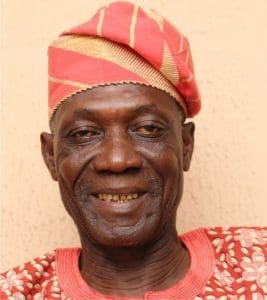
THE news came like a bolt to many of his associates and friends in the film and Television production section of the creative industry.
But, yes, Wale Fanu, the head of the Cinekraft Studios – family really — which for decades, helped many practitioners realise their professional dreams, is gone. He left June 11.
A terse message circulated to his close circuits on Saturday, June 11, by his first daughter, Bunmi reads:
“This is to announce that our Father, Grandfather, Brother and Uncle Wale Fanu , has transitioned into glory. He passed on the 11th of June, 2022.

“We appreciate and thank the industry for acknowledging and appreciating his contributions.
“The family will officially communicate the funeral arrangements as soon as possible. We thank you all for your kind support, words of affection and concern. Ojo a jinna sira o”
Signed
f: Fanu Family
Uncle Wale Fanu, as he was known to many of his younger associates, was indeed an enigma. And this reflected in both his personal and professional life. Though many in the industry, especially those who worked or related to him, knew that he was living with the Sickle Cell anaemia condition, many had taken it for granted that he could one day succumb to the constant pain that come with such ailment.
Uncle Fanu lived life to the fullest in spite of the said condition. He spoke often frequently about the pain and struggle he was going through, but he always also gave thanks to God, while expressing his luck that he had lived well beyond the predicted terminal age (21) of those with the condition.
Wale Fanu is indeed a man of many wonders – first about the magic he created in his professional calling; next about his life and struggles with the Sickle Cell, the wonder of which was the fact that he lived to the septuagenarian stage.
At age 13, the doctor discovered his condition and ruled him out of surviving beyond the age of 21. He lived to be 72.
******
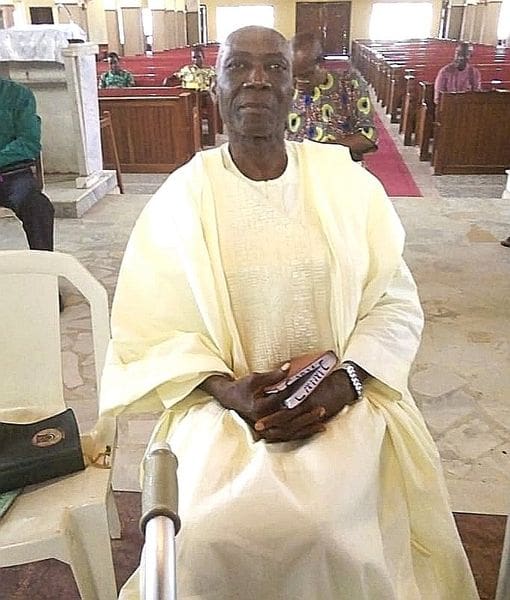
TRIBUTES
SINCE the announcement of his passing, there has been a torrent of tributes from his friends, associates, and members of the media production industry where he was an eminent practitioner.Some of these are captured below:
“He was a Jolly Good Fellow, Past President of Men’s Christian League, Honourable Member of The Progressive Christian League, Patrons of many Church Societies, a great supporter of the Men’s Fellowship and Wesley Guilder. He was the Chairman of the PMC for so many years and personally maintained church properties with his resources. The entire church will miss his friendly and jovial disposition. May God console and comfort the entire family and give them the fortitude to bear the irreplaceable loss. SCS” — Revd’ Bola Oyeledun,
*******
A warrior departs. He was indeed a jolly good fellow — Taiwo Obe, journalist, media manager
******
This is heartbreaking!!! That’s a chunk of our industry history right there! Uncle Wale did a lot for this industry in its nascent period — Femi Odugbemi, storyteller, content creator
********
Another tree has fallen. Adieu dear Uncle Wale. Rest on — Steph Ogundele, actor, arts manager
*******
Wow, we lost a gem. A very good man indeed. Rest in peace kind man — Seyi Fasuyi, actor
******
Uncle Wale was a quiet gentle giant in the industry. May his soul rest well — Lookman Sanusi, theatre producer, Media entrepreneur
*******
Wow! Uncle Wale was every good thing said about him…and much more! The last time I saw him was when I went to pick a copy of Muritala Sule’s at that same Adeniyi Jakande close. He gave me this ‘you too?’ look when I told him I almost missed my way… Yes, Uncle Wale was ever available to help many upstarts to stand on their feet! May his soul find rest in the bosom of his creator. —Dele Morakinyo, producer, art manager
*********
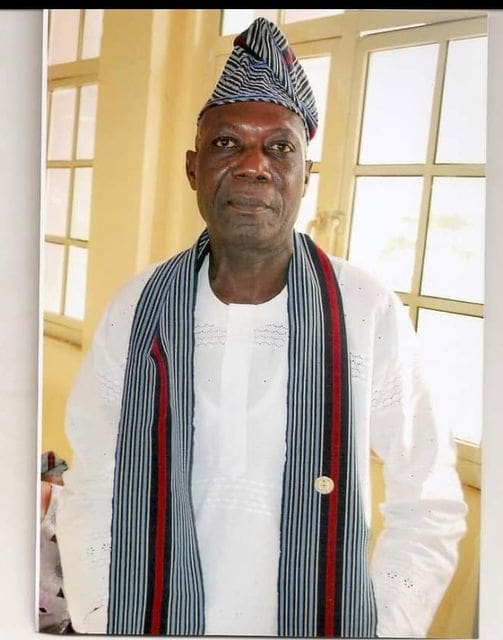
‘…A champion of discipline and culture of excellence’ – Onwochei
UNCLE Wale as we fondly call him was one of the foremost Nigerian filmmakers.
A long standing associate of our dear Tunde Kilani (TK) and Lola Fani-Kayode (LFK).
He was founder and CEO of Cinekraft , the go-to studio at the time. Beyond post production, Cinekraft was top of the range in grip, tracks, jib, car mount, heavy duty generators and all manner of production equipment.
Cinekraft maintained some of the best trained crew with tested experience in celluloid film projects.
Uncle Wale’s Cinekraft partnered with LFK to make the hugely impactful “Mirror in the Sun”. A few years later, I was privileged to star in his film project OWOBLOW directed by Tade Ogidan; sometime in 1993.
Uncle Wale Fanu, Tunde Kilani, Lola Fani-Kayode and Tade Ogidan had their production offices on the famous Adeniyi Jakande Close in Surulere.
Uncle Wale Fanu was a sickle cell carrier. Doctors informed that he may not survive after age 30. But he lived up to 72.
To friends and close associates he used to making morbid self-deprecating joke that he was on the brink every day of his life after he was 30..
He is a champion of discipline and culture of excellence expected of motion picture practitioners.
If you have practised long enough in the creative industry, particularly a back camera operative, you must have encountered the business-conscious yet friendly, supportive and jovial Uncle Wale.
He was very active in Men’s fellowship of his church in Surulere. He often invited me to speak to their young graduates for skill development in the creative sector.
May God console and comfort his family for this irreplaceable loss.
* Francis Onwochei, actor, producer and Film activist
*******
…A true giant has passed
YES I remember uncle Wale so vividly as if saw him yesterday, instead of many many years ago.
He was unforgettable bcos he made a particular dream of mine come true.
You see, for reasons I don’t really know, I wanted to see myself on TV modelling a product/brand. That desire was so searing, so important to my life back then 😂😂.
I can’t now remember if the casting was done at Cinekraft in Surulere or elsewhere.
But what I do remember was that uncle Wale shot the commercial.
What was striking & unforgettable to me was the quickness of the shoot.
My natural creativity & especially uncle Wale’s technical know-how made the shoot a piece of cake & it was done in a jiffy. A few shots & he announced “we’re done” or something like that.
Gbam! I saw myself on TV modelling a product!! My dream has come true!! It was a popular ad, everyone saw it!! My mom was so proud of me, I walked on air!!! Come & see posing!!
I felt a deep sense of fulfilment.
The brand?
“Gestid”.
Thank you uncle Wale for helping to make my dream come true.
May your kind and gentle soul rest in perfect peace, amen.
*Femi Durojaiye, actor, producer
*******
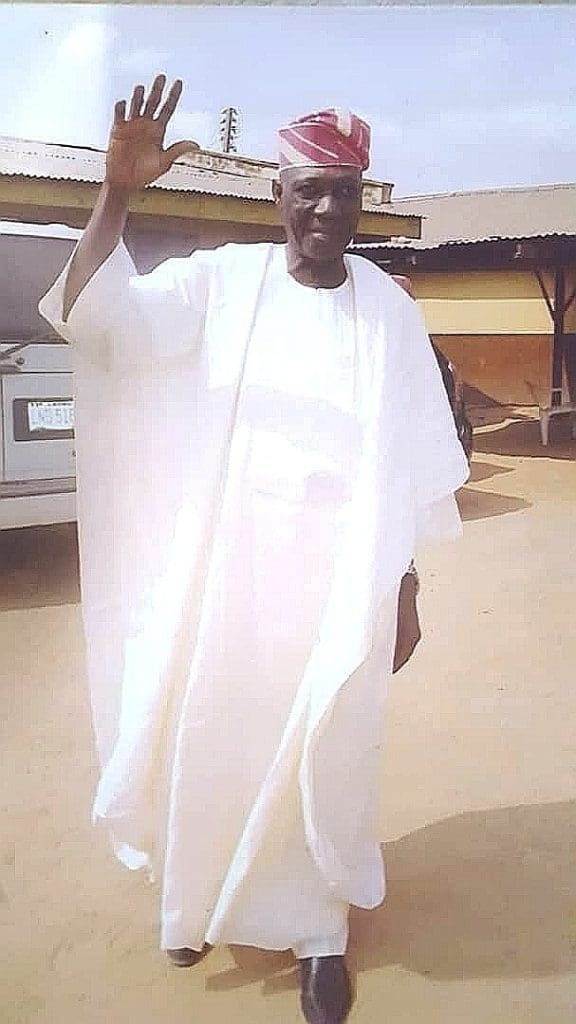
INTERVIEWS
‘October 1, 1963, when Nigeria became a republic was the first day I experienced death…’
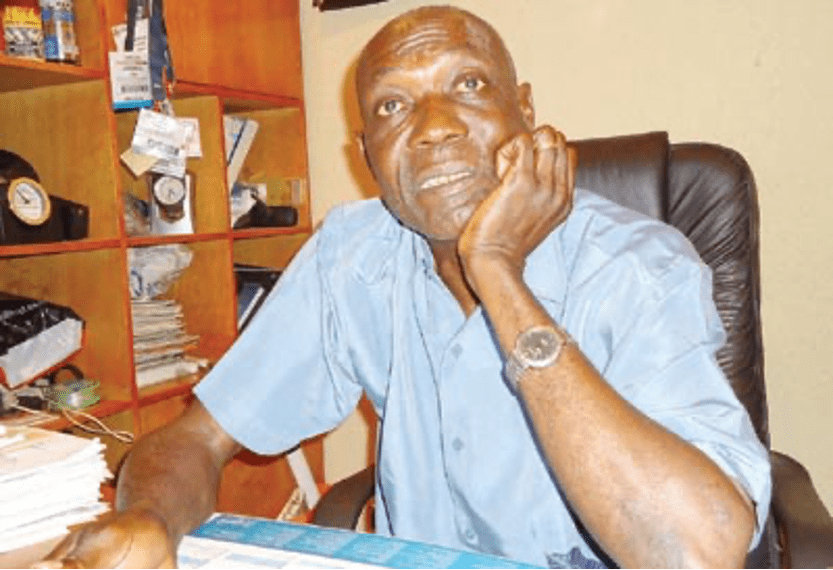
Wale Fanu is a TV and Film producer and the CEO of CINECRAFT. He was born into the Fanu family in Lagos State. His late father was a civil servant who worked with the P & T. He is the third child of his mother but unfortunately, the only one born with the sickle cell anemia. He has been managing sickle cell crisis since he was born and for 13 years, nobody could tell him what the problem was, not even his mother until he was thirteen years.According to medical terms, he wasn’t supposed to live more than 21 years but miraculously, he survived. On occasion of his 61st (April 21) birthday anniversary, he spoke about his survival with Ebub Babalola of Vanguard newspaper (Article first published June 17, 2011 was originally titled, “Sickle Cell gives me opportunity to meet good people – Wale Fanu”.
His story:
OCTOBER 1, 1963, when Nigeria became a republic was the first day I experienced death. That day, I learnt another lesson on sickle cell crisis that I had to beg God to take my life. I was thirteen years old, my mother didn’t know what was wrong.
The pain was too much that I couldn’t bear it. Luckily, the family me doctor came around and examined me and discovered that I’d not been to the toilet for one week. He purged the waste out of my system and I went into a deep sleep.
I woke and felt the pain no more. Another sad side of this crisis is that it takes me unawares and anytime it comes, I’d to go into coma for days.
In 1969, during the Christmas period, I went into coma for four days and our neighbours who were Muslims couldn’t convince my daddy that I was dead and therefore should be buried. Before then, my father had already taken to me to Dr. Ajayi’s Hospital at Apapa. Unfortunately, he rejected and referred me to Lagos University Teaching Hospital, LUTH, Idi-Araba, Lagos. So, when people were celebrating Christmas, I was on sick bed in LUTH.
At that time, it was God’s grace that was sufficient for me. It was God’s intervention that brought a young doctor who was able to read my mind. Suddenly, he started pumping out the excess codeine I’d taken. That was another experience of divine rescue.
My father felt bad because it was my first major crisis that he witnessed. While I was in Ibadan, I used to trek a lot and I never saw the crisis as a barrier but anyone who was close to me knew I had a weakness. There was a friend in my class when I was in the Polytechnic who was very concerned about my condition and whenever I went into crisis, she offered to let me share her room, took care of me and made sure I go to school. So, I’ve been opportuned to meet people who became my friends on genuine reasons.
I had a classmate who designed the Polytechnic logo that the school uses till date. His name is Waheed. He celebrated his 60th birthday some months ago. He is a member of Institute of Civil Engineering and Town Planning. He and some other friends rescued me when I had crisis in Ibadan.
When I came alive after four days, my father and I became friends. He confided in me that he wouldn’t want to see me go through such a traumatic condition away from where he was. He said, “if you can go into coma for four days in my house, there is no tendency that you wouldn’t die in the campus”.
So he asked me to withdraw from the school and I obeyed. Unfortunately, I couldn’t sit down doing nothing because I was only 20 years old. And I didn’t believe that I was going to leave this world.
Unknown to him, I started struggling with life. I was looking for a job that was creative because I couldn’t afford to stay at home even though, I knew the implication. One day, I spoke with my father’s friend who came to our house. I told him that I saw him at Obalende and he asked what I was doing there. I confessed that I was in search of work.
Then, he asked me my area of specialisation and I told him that I needed a chemistry- based course. He interrupted and said, “you were doing Electrical Engineering in Ibadan”, and I answered that it didn’t work out. So, he offered me a job in their film laboratory in Ikoyi. An interview was conducted and that was how I joined the film industry.
One day, my boss called me and gave me a warning not to be coming to the office in shorts and that was another turning point. Out of my monthly salary, my father gave me one pound which covered my feeding and transport allowance. I didn’t need money for anything. I got a book called, “car driving in two weeks.”
I read the book and fortunately, I was using my father’s car for practical and became an expert, So, I started taking my father to his workplace and social gatherings. Driving became a hobby and my father and I became very close. I continued to manage myself in and out of the crisis.
Unknowingly, this sickle cell ailment had damaged my hip-joint on the left side. People continued to ask what was wrong with my leg but I didn’t know what to say. The excuse I gave was that, it was accident I had when I was young. At a point, I began to feel pain especially after a long walk. That was how, I continued my journey to life. One lesson I got from my experience is that a right attitude is the key to life. One elderly man offered me a job. I was the youngest amongst the people he employed.
This man and my father’s friend became my role models such that I was able to gather lots of experiences from them. Eventually, this man told me that the Nigerian Television Service wanted to start a laboratory because the film unit in the Ministry of Information was the body responsible for the Head of State Broadcast as there was no network at that time.
So, my immediate senior colleague and I were begged to come and work for them and process the work. We worked tirelessly and I learnt a lot although I was supposed to attend an interview at NBC the next day. The producer of that programme became my friend till date. In fact, he hosted me in his house in London when I celebrated my 50th anniversary.
I had the opportunity of interacting with the best hands in the film industry in and out of the country.
I’ve enjoyed both sides of sickle cell crisis. I don’t have any regrets in it. I have been able to tell others what I do to manage myself. The ugliest part of the sickle cell thing was when I heard that somebody died in the crisis. There was a particular family I met.
They had two teenagers who had sickle cell anemia. One of them attended a Polytechnic and within six months, this family lost the two children. I also lost a cousin to that crisis. Looking back at all the ugly side of the story, when I was about to celebrate my 60th birthday, something told me to share my experience with people who for whatever reason cannot tell their story.
I was encouraged to do that because of what I read about a woman who had sickle cell but was married to a doctor. She died at the age of 80. I wanted to meet that woman. I collaborated with the Sickle Cell Foundation and we organised a seminar.
By the grace of God, I don’t have regrets that I passed through that ugly situation, but I’m encouraged now because people are still talking to me. The dayI was invited to give a lecture on sickle cell in my church, a woman came with two kids.
I didn’t know what she came there to do until she said she wanted to enquire how to register her son who has SS. I talked to the boy and the mother and the mother said, “since we lost his elder brother, he is always scared that he was going to die whenever he was in crisis.” At that point, I remembered what my mother went through, having a child who has a disorder that wasn’t known to anybody. What this particular ailment did to me is that, whenever the attack is coming, I always know what to do although it takes four days of “terror” before one can finally recover.
The major challenge I had initially was the burden I was to my mother. It took my mother thirteen years to know what was wrong with me. At the age of 13, I was referred to Kano General Hospital because we were based in Zaria. That was where it was discovered that I had sickle cell after medical research. The doctor called my mother and told her that the information in the paper showed that I could only be lucky to live up to 21 years.
Playfully, I ignored that statement. It was a painful experience to tell a woman that her son was going to die at a particular age. But, the doctor was blunt because he was a family friend. The doctor gave me a letter to the school to exempt me from any manual work and to permit me to use mattress to sleep on the bed because we were using cardboard to sleep.
So, everything worked out for me in that school. At a point, I had an Irish house-master who brought me a bucket of water in my hostel when I was in crisis because I could not go and fetch water myself and the gardener wasn’t available. We had about 75 percent foreign teachers and everything was tutored to perfect upbringing.
Honestly, I’m happy I went to that school. The school was St. Paul’s College Zaria. It is located in a small village called Usasar, very close to Kofina hills. And we went to the rock for hacking. Along the line, we had an expatriate teacher who owned a bird called “Secretary Bird”.
This secretary bird, fed on lizards and snakes and after prep, the teacher would gather us to go in search of snakes and lizards for his bird. He thought us how to catch live snakes and lizards because the bird wouldn’t eat a dead thing. It liked the excitement of struggling with a living thing.We also provided live animals including frogs, birds for the mock examination.
We went into the swampy areas of the village in search of frogs which they used for their practical. It was odd when I came to the South to hear that some schools didn’t have laboratories. They were doing their experiments on paper. We had good laboratory with all species of animals.
A few days to my school certificate examination after all the preparations, we denied ourselves holidays and other exciting things to face our studies but unfortunately, I had another crisis. The head cook who was not in anyway related to me was the one who intervened and boiled water and unknown to me, he had arranged for an Hausa local massager.
It was that man that slashed me on my arms and drew out blood and massaged my body and I was able to do the exam.
I wouldn’t know why I had to go through such a traumatic experience. Perhaps, to understand the gravity of what that doctor told my mother in Kano thirteen years ago.
Recently, I was invited America for seminars. Unfortunately, the crisis came and I couldn’t finish up the programme. I had to rush back to Nigeria.
The lesson in this crisis is that people should be able to control any pain relief around a sickle cellar. He or she doesn’t know what pain relief to take when in crisis. It’s painful and kills. You should be able to know your body chemistry.
Understand what you should take, understand how to manage yourself. The industry I work with is strenuous but I know my limit and I try to stay within that limit. If everybody can take time to understand his or her body chemistry, such individual will survive it.
A sickle cell patient needs trust. He or she must be able to trust his or her friends and family. It is that trust that will give way for better understanding. They will take over the responsibility of providing things that will make you feel comfortable.
A sickle cellar must know that he or she cannot get constipation. You must make sure he goes to toilet at within two days. He must be able to sleep well and there are other things he or she must take precautions for. Don’t over stress yourself.
When I ventured out of employment, I didn’t see as a risk but a challenge. I’d professional relationship with Tunde Kelani, we were traveling all over the country. We knew and trusted each other.
We were doing “Mirror in the Sun” for many years. But, when I’m tired I quickly tell the producer.
I’ve had crisis on one night. I was coming from Surulere to Alagbado. The clutch of the car broke down and the crisis had started, this time, it was my legs. I drove the car without clutch from Surulere to Alagbado. That day, God didn’t allow me to stop at any point until I got to the gate of my house in Alagbado.
I’d a custom that wherever I was going to stay for more than a month, I must register in a reputable hospital and have a cordial relationship with the doctor. He or she must know my condition because when the crisis comes, it might be difficult to explain to anybody.
I do not want people to see a sickle cell as a liability. Doctor said, I only had 21 years to live on the planet earth. Now I am 61 years by God’s grace and right now, I don’t plan to die.
I thank God that I’m able to live one year after sixty.
Presently, people ask me how I managed to survive but the more they ask me that question, the more I feel for my mother how she managed not to know what my problem was.
Each time, this crisis comes, the only thing I cry is hot water. I don’t know gives that insight. I have nothing to hide and I don’t pretend, I’m 100 per cent well. No, I’m strengthened to tell people that I’m a sickler.
One of the residual thing caused by the sickle cell was my damaged hip of which medical experts both in and out of the country advised that I shouldn’t touch. The American Surgeon I met before 40 said, do not do it. But, when I can no longer work to earn money, I should come back, it will be done.
None of my parents told how I contracted this problem. I’ve never heard it from any of them when they were alive. Probably I contracted it from both of them. But, I never had the chance to think of how I became an SS.
The first friend I had in Lagos was SS. And he died two years after we knew each other. There is something peculiar about SS patients and that is, it is very easy to tell if an individual is SS. If this condition gives me another twenty years,
I will continue to do what I’m doing. I still drive myself. I’m only praying that God should strengthen me to work harder in finding solution to it.
https://www.vanguardngr.com/2011/06/sickle-cell-gives-me-opportunity-to-meet-good-people-wale-fanu/
**********
…The ‘struggle’ was his life
(Excerpt from an interview with FEMI SALAWU, of www.thenigerianvoice.com). Interview published May 7, 2010 was originally titled, “How I survived sickle cell anaemia–Wale Fanu”
‘I have lived on drugs all my life. I carry on with life as if unaware of my sickle cell status. In most cases, I like to remind myself of my limits especially when it comes to any physically exerting task or duty. My career is like a diversion for me and it is the best thing God has done for me. It is as if, I am nursing a baby which is taking so much attention that I do not remember anything else’
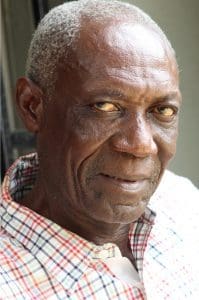
There is nothing in Wale Fanu’s countenance to suggest that the 60 year-old is a survivor of sickle cell anaemia. At age 13, the doctor took one look at him and ruled him out of surviving beyond the age of 21. His modest office which houses Cinecraft Limited, his TV production outfit in Surulere, Lagos, teems with legacies of an accomplished personality. Fanu has a long line of impressive TV credits dating back to 1970s such as Mirror In The Sun. He has worked with the likes of the late Ishola Ogunsola ( aka Isho Pepper), Dr Ola Balogun, Tunde Kelani, among others. Fanu spoke on several issues including his early life challenges, marriage, children, the role of his mother and friends as well as his vibrant social life.
My early life
I WAS born on April 21, 1950. Whether it is from my mother or father, nobody has told me anything and they are both gone. It was not until 1963 that my status was established. Since then, I have been in and out of hospital, managing the situation. Fortunately, none of my children is sickle cell carrier. We are four from my mother and my father has six children. Out of the four, I am the only one with sickle cell disorder. Three sons and one girl.
At the age of 13 and half years in 1963, a medical doctor who had treated me over the years to the point of confusion, subjected me to test and discovered what was wrong with me. That was when I learnt (or was told) that I was suffering from Sickle Cell Anaemia. Before then, I was used to being rushed to the hospital whenever this problem started but I wasn’t sure what it was.
It usually starts about one or two in the morning and they would rush me to the hospital and I would be given a jab or two of injection, and at least two days later, I would walk back home. The frequency is hard to recall but I stayed more often in the hospital than home and as a result, had more friends in the hospital than elsewhere. As a boarding student, my condition made me earn the support and understanding of my classmates and teachers such that they knew exactly what to do by the time the crisis began.
Dr Oshodi, a highly respected medical personnel, who was a family friend and personal physician of many years got tired of my sickness and gave my mother a letter to Kano. He was trained in Psychiatric Nursing and was a medical consultant to the late Sarduana, Sir Ahmadu Bello. We left Zaria for Kano to undergo the test and it was not until three days later, that we got to know the results. The result was in a sealed envelope. When he got it, he took a look at it and told my mother that if I was lucky, I would hardly last till my 21st birthday. At my age then, I was oblivious of their interaction but looking back now, I wish I knew the reaction of my late mother then.
Near death encounter in 1963
October 1, 1963, I saw the heavens. The pains I experienced was too severe that I begged God to call me home. I was stark naked and nobody could hold me. They had to call in the doctor only to discover that he simply need to empty my bowels and the pains dissipated. If God did not give him that knowledge at that point, I would have been forgotten.
My mother as my saviour
In retrospect now, I imagine how many sickle cell carriers would be alive if they had a mother like mine. First and foremost, my mother and I share the same birthday. Emotionally, during period of crises, I used to see both of us going through the pains together because she was always by my side. I think it was a big relief to her to know my status than when she didn’t know. It eliminated guess work and anxiety.
From then, her concern became that of me taking my drugs. I went to school with a box of assorted drugs and my classmates would have a good laugh at me. However, the drugs didn’t prevent me from occasional crises. At least, once in every two months, I found myself in the hospital. Whenever one knows he or she is a sickler, he or she should become conscious of dos and don’ts. It grieves me to know that several sickle cell induced death cases could have been prevented if properly taking care of. That is why I am coming out to speak about it now..
How I became a filmmaker
I FOUND myself in the Federal Film Unit where my love for filmmaking was fanned to flame. From there, I met Tunde Kelani with whom I forged a friendship that transcended business. Since then, I have been exploring ways of developing production technically. There is the artistic and technical part of filmmaking. I have blossomed in the latter. During the challenge on set of Mirror In The Sun, my technical skills came in very handy.
That was at a time when there was not much money to throw around during production, we invented other ways of minimizing cost. Some of my inventions are still around. For instance, when Dr Ola Balogun was shooting Orun Moru, we invented locally made dolly tracks. We sat down with filmmakers and developed the technical aspect. In Mirror In The Sun, we invented a Jib Arm when it became a challenge. I was involved in a lot of Yoruba film productions before the industry crashed.
What you see now is a ‘born-again’ industry. When we did something with Isho Pepper, we had to buy a small 1.5 generating set. I later moved to TV commercials like Omo, Close-Up, Lipton among others. One of the most popular ones then was Walls Ice Cream and Omo, the later lasted for so long. At the moment, I just finished something for Orange Drugs Pharmaceuticals. I have achieved so much now and I am contented but I feel a heavy burden that I am not complete without inspiring other people in my condition. That you are a sickle cell carrier doesn’t mean one should die early.
Sickle cell and filmmaking
The only thing that kept me and Kelani going was absolute trust. If I told him I was sensing a crisis, he knows exactly what to do about it. When I go abroad to work, I am always fully prepared with everything I need for myself. A white producer might feel guilty of over-bothering one when he sees one limping. One day, one of them got me a walking stick to ease the stress. He didn’t realise that it was a left-over of my condition. The head of my left femur and the hip started to fuse so much that it became difficult to walk.
At age 40, my doctors suggested I undergo operation but we later realized that it was manageable. The same thing happened at age 50, they said that there was no problem because I was still working. Now I am 60, I don’t know what they would say. At this age I am seeking to partner people with humanitarian heart to see what we can do about this disease. We don’t need to wait till things get out of hand. A family close to me lost two undergraduates within six months due to sickle cell but it shouldn’t have happened.
Marriage and children
My wife knew my status from the word go. I could have been that lucky in my case but in present realities, issues such as these should be properly checked and spelt out. I had two marriages with three children who are all AS so I was lucky not to have any SS offspring. The youngest one is 26. Today, people are advised not to gamble with their health, an SS should not marry an AS or a fellow SS for that matter.
My career as a diversion from pain
I am into film and television production. I work on different advertising techniques for different products. I have lived on drugs all my life. I carry on with life as if unaware of my sickle cell status. In most cases, I like to remind myself of my limits especially when it comes to any physically exerting task or duty. My career is like a diversion for me and it is the best thing God has done for me. It is as if, I am nursing a baby which is taking so much attention that I do not remember anything else.
My job has been a huge gamble which has consumed much capital that I can’t afford to sleep and watch my investment go away. So I had to be up and doing. There was a time I quarrelled with the British airline officials when I was told that the flight was fully booked. I reminded them that there was always a spare sit in the cockpit and they asked how I knew. I simply replied that I must get a job to London first thing the next morning. Those were times when Nigerians command respect anywhere in the world. A return ticket was 300 Naira only without the need of a visa.
My social life
My status didn’t affect my social life because I was surrounded by dependable friends at each point in my life, home and abroad. In that regard, I have been quite blessed. Wherever I went, I didn’t hide the fact from anybody that I might need their help at any point in time. During my early years in filmmaking, Tunde Kelani stood by me like a rock. At the moment, most of my best friends are at least ten years younger than I am. I must add that I don’t neglect them during their need.
Until Fela Anikulapo-Kuti began to run into problems with politicians, I never missed his shows every weekend. Then, I go visit Jazzville on Fridays, from there to Jazz 38 before I end up in Fela’s shrine. Last year, I was still attended Femi Anikulapo-Kuti’s shows. I love live shows a lot. But when I am tired, everyone knows that this guy has reached his limits. The same thing happens when I am at work, I move like a force. For instance, my house in Surulere was completed in 14 days.
It is 90 per cent wood unlike the one in Alagbado. I borrowed the idea from what I saw in America. In all, God’s grace has seen me through. If people saw me then and I was offered to them as a gift, they won’t accept. I was daku daji (always falling sick).
My dream sickle cell patient forum
My desire is to bring people who are carriers of sickle cell anaemia to discus their issues and seek relief for several people like them who are helpless. Perhaps if we have something like that, we can begin to take it up with the government and engage international agencies. For instance, in the United States now, there are solutions such as bone marrow transplant as well as blood test at pregnancy level to identify sickle cell children. One of the reasons I have decided to come out is that whether one is a carrier or not, a sickler is not supposed to die prematurely.
As Africans, we need to begin to explore alternative remedies. I have wondered why the sickle centre complex in Idi-Araba has taken so long to be completed. Does it mean sickle cell carriers are not reckon with in Nigeria? Dr Olu Ajayi and his team are doing a lot but the support they are getting is not enough. Kudos must however be given to corporate organizations like MTN Nigeria. The statistics of patients far outweigh the resources available.
https://www.thenigerianvoice.com/movie/22620/how-i-survived-sickle-cell-anaemia-wale-fanu.html
*******

*A tribute publication on occasion of his 70th birthday aniversary