
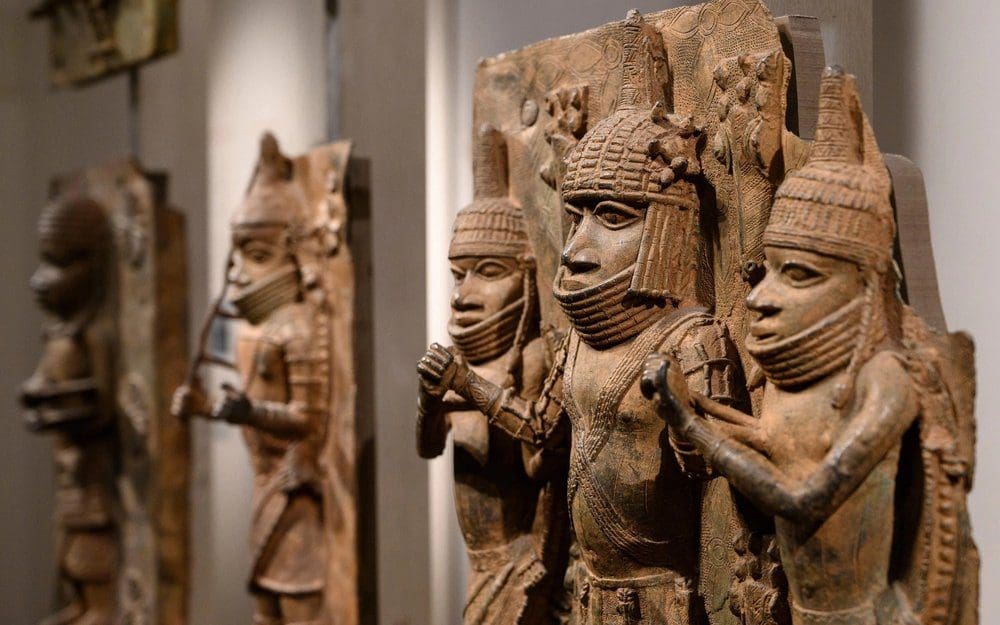
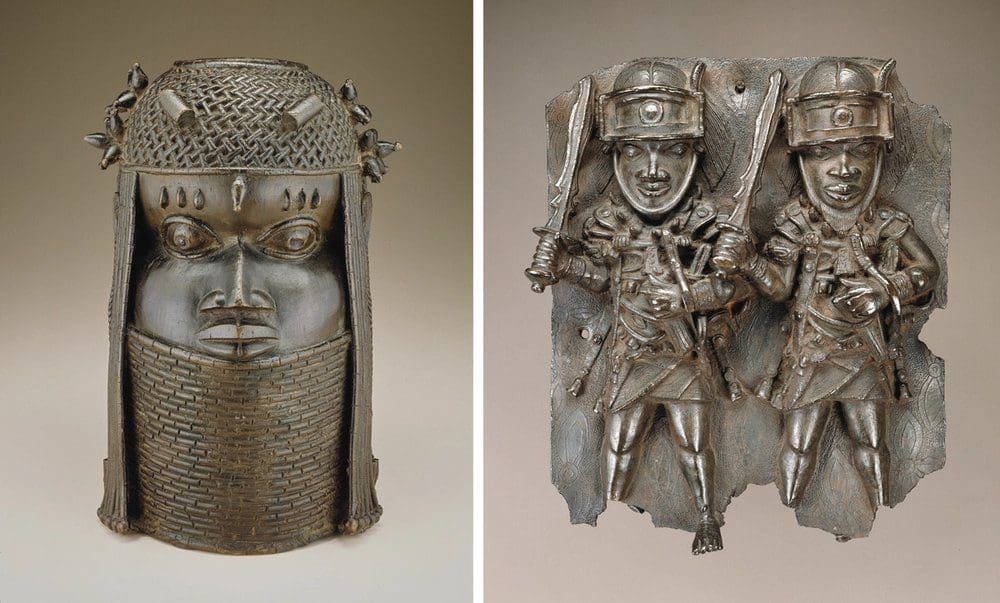
Photo: Benin Bronzes on display at the British Museum. Image Courtesy: Adam Eastland / Alamy Stock Photo
WHEN my children were small we often visited the Horniman, an ethnographic museum in south London, during the school holidays and at weekends. I don’t recall seeing any Benin Bronzes on display, but this month the Horniman agreed to return the 72 cultural objects in their collection to Nigeria.
The Benin Bronzes originated from the Kingdom of Benin which is now southern Nigeria (not to be confused with the modern-day country of Benin). Between the 16th and 19th centuries, the Benin Kingdom was ruled by an Oba (King) and was one of the most advanced and powerful states of west Africa. The term ‘Benin Bronzes’ describes a range of artifacts including sculptural pieces, brass plaques, ivory leopard statues, ornate staffs, carved elephant tusks, and wooden heads. but to define them simply as ‘artifacts’ undermines their importance to Nigerians. They have deep religious, spiritual, and sacred significance, and, as I wrote in my blog ‘What’s All the Fuss About African Art’, the historical and cultural legacies of a nation reside in its art. Resisting the return of the Benin Bronzes is not only an affront to Nigerians, it also robs them of their connection to their ancestors and past.
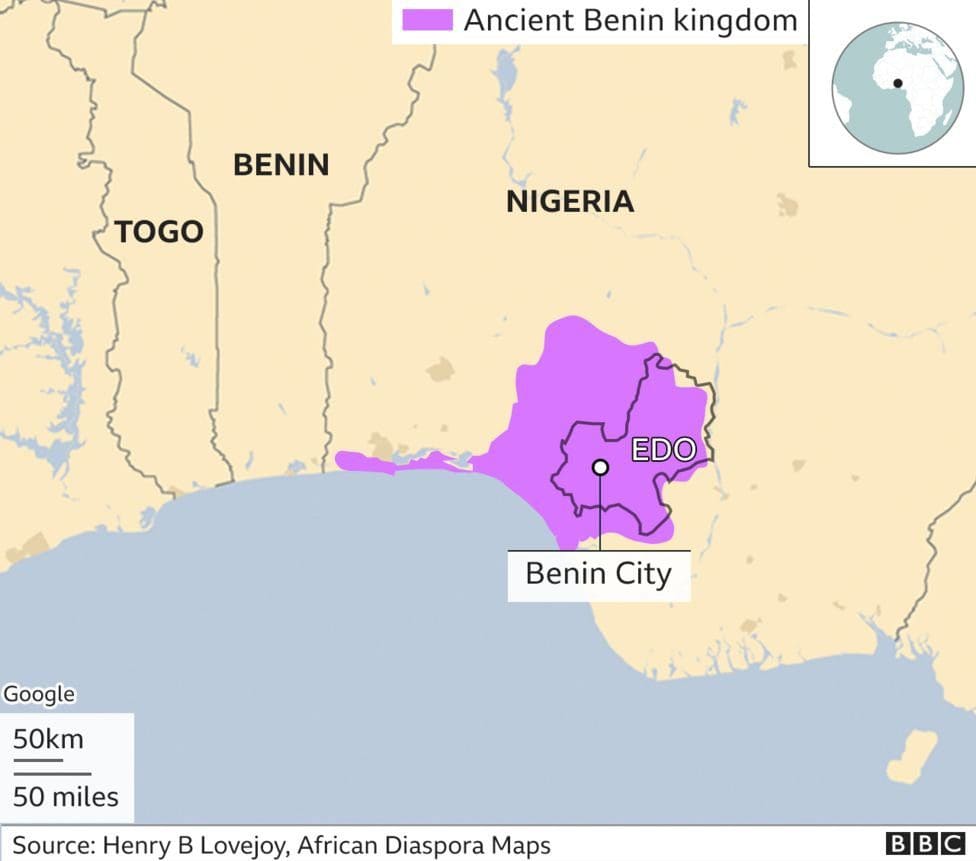
Where did the Benin bronzes come from?

The Bronzes were looted in a raid on the Royal Palace by British soldiers in February 1897 and in recent decades there have been efforts by activist groups, such as the Nigerian Legacy Restoration Trust (LRT), for their return. These demands were largely ignored By governments and institutions, but in 2020 the call for repatriation gained new impetus as a result of Black Lives Matter and worldwide protests about white supremacy. More recently, the Arts Council England issued a 33-page report detailing measures for U.K. institutions to “take proactive action in a spirit of transparency, collaboration, and fairness,” when considering repatriation claims.
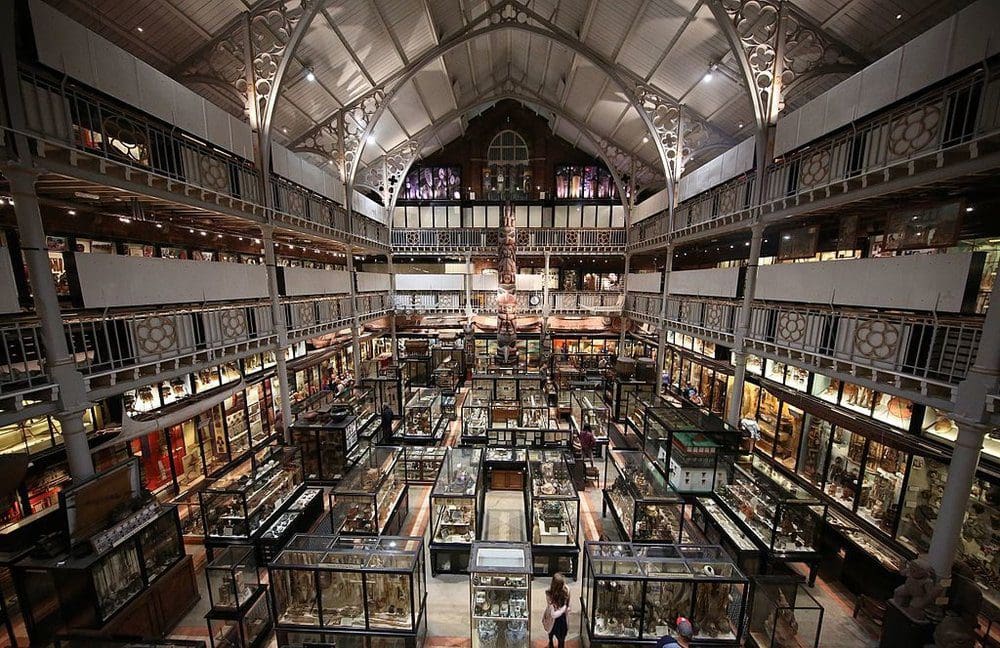
So how did these bronzes come to be in European and North American institutions and in the hands of private collectors? A large selection of the plundered Benin works was handed over to the British Museum, but many more were sold at public auctions in 1898 and scattered across Europe mainly in Austria and Germany. However, some of the works acquired by U.S. institutions came from the Pitt Rivers Museum in Oxford, England which sold off its collection in the 1970s.
The 1898 auctions sparked a frenzy of interest among museums and art dealers who were astounded and amazed by the craftsmanship (surprise, surprise) and, in the decades that followed, works began to flow out of Benin and onto the market. The Horniman decision to return 72 objects is to be welcomed and is in step with the general consensus in the museum field that the Bronzes were forcibly stolen. Aberdeen University was one of the first institutions to approve the return of a Bronze in its collection that was bought at Sotheby’s in 1957. In a statement on 25 March 2021, it declared that the Head of an Oba had been acquired in Benin “in a way that we now consider to have been extremely immoral”. The Oba, which the University paid £750 is now reputed to be valued at £500,000, was unconditionally restituted to Nigeria.
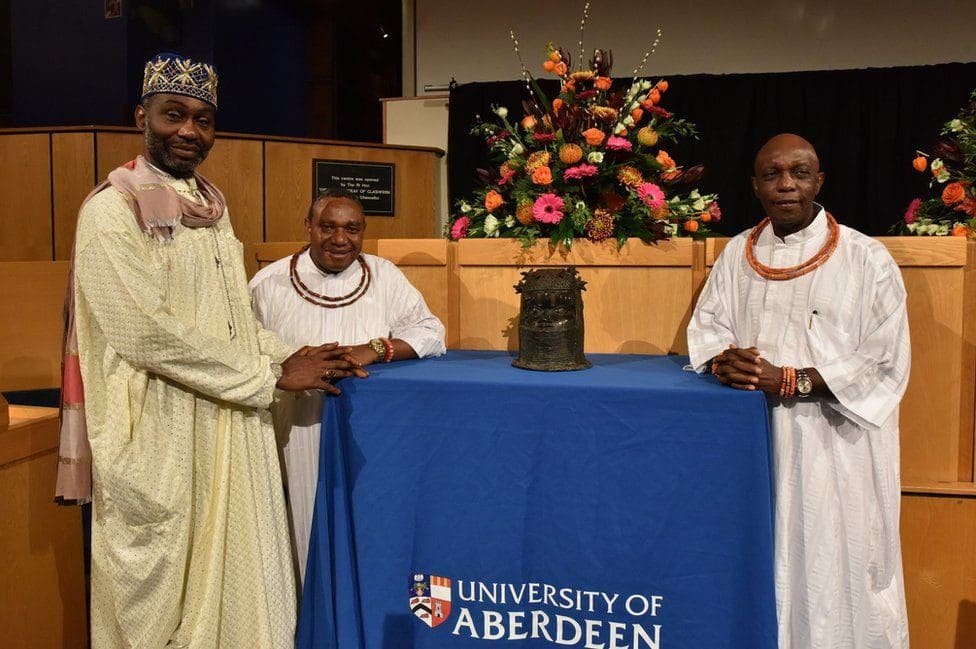
Benin bronzes are linked to colonial exploitation
The New York Metropolitan Museum of Art followed suit announcing that it too would return two brass plaques from its collection as well as a third object that had been offered to the museum for sale. And earlier this year in March, the Smithsonian Institution, one of the world’s largest cultural organizations, voted to repatriate 29 of its 39 Benin bronzes. Apparently, the legal title of the remaining 10 bronzes are in question. A spokesperson for the Institution, Linda St Thomas, claimed that some pieces were not linked to the 1897 raid and had different ownership histories. Personally, I think she misses the fundamental issue here – all the bronzes were stolen, or dubiously acquired, and whilst the Museum may have ‘legitimately’ bought some objects, having ‘legal title’ does not address the ethical (let alone factual) question of ownership.
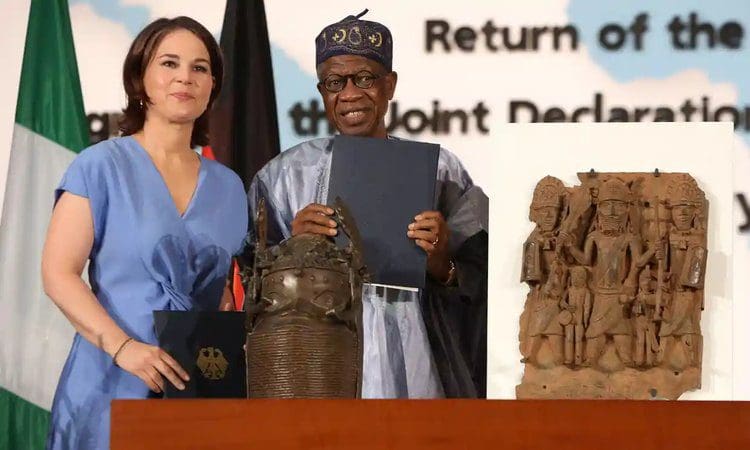
The German government accepts it is ‘Morally Wrong’
The German government has not shied away from the ethical argument, and perhaps with good reason too. They’ve had to address calls from Jewish people to return lost property and assets that were seized by the Nazis.and, since 1952, have paid out more $70 billion to victims of the Holocaust. Consequently, it would seem hypocritical of them to continue to ignore Nigeria’s call for restitution of its stolen cultural artifacts. On 1st July, they signed an agreement with the Nigerian government to transfer ownership of more than 1,100 pieces including a head of a king (or Oba) and a 16th-century plaque. These were ceremoniously handed over to Nigerian representatives by the Foreign Minister, Annalena Baerbock who declared, “The Benin Bronzes are returning home… It was wrong to take the Bronzes, and it was wrong to keep them for 120 years.” Nigeria’s ambassador to Germany, Yusuf Tuggar, tweeted that “it was a historic day.’’ However, before we start patting Germany on the back for doing the right thing, let’s not forget that it has its own bloody and violent colonial past. It might not have looted any of the Bronzes in question, but what of the treasures it did loot in Congo, Cameroon, Namibia, Rwanda, and even Nigeria? Silence. And I don’t think they offered any compensation to Nigeria for its loss either!
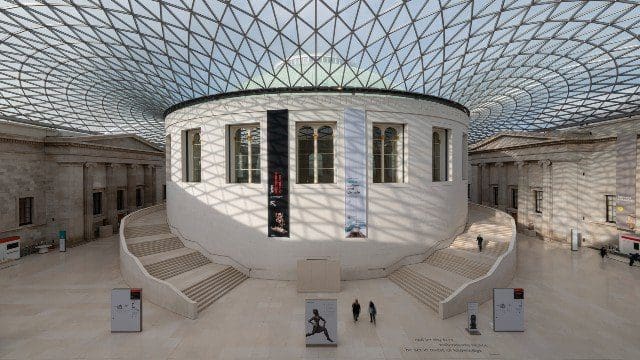
British Museum refuses to return Benin bronzes
In the UK our most venerable institution, the British Museum, has decided to ignore this trend, refusing to return the 928 objects it holds, saying it will only “lend” its collection to Nigeria. Why? Clearly, they don’t believe that Nigerians can take care of these prized objects and the Bronzes will be better preserved in their possession for all the world to see via its online portal, touring exhibition, and loans programme. This is arrogant paternalistic nonsense, but could the British Museum have other reasons for its decision?
Yes, there are disagreements among Nigerians about where the Bronzes should go and one solution is a new museum in Benin City designed by the British Ghanaian architect, Sir David Adjaye. It’s intended that the museum would house the Bronzes and other stolen treasures, but given the precarious nature of Nigerian politics, there’s concern that a change in administration would threaten the project. This is a real issue: the Adjaye museum could become a white elephant but, in my view, this shouldn’t prevent the return of the Bronzes.

How much are the Benin bronzes worth?
The Benin Bronzes are high-value objects so no wonder the British Museum doesn’t want to return them. I’m in no doubt that the British Museum prizes these not only as cultural artifacts but as financially lucrative assets. In spite of the dubious provenance of the Benin Bronzes, auction prices have been increasing over the decades. In the 1950s prices started at around £5,500 and in 2007, Sotheby’s sold a Benin head sculpture for $4.7 million. The winning bidder later went on to purchase another piece for $13.8 million in a private sale. Today, Bronzes continue to be sold at auction usually by anonymous sellers. Auction houses do not check their provenance even though it’s worth noting that many of them have restituted art departments that work tirelessly to return Nazi-looted assets to their owners. Unfortunately, Britain has no laws to enable the return of art looted during colonialism, which means auction houses are not legally obliged to stop this unethical practice.
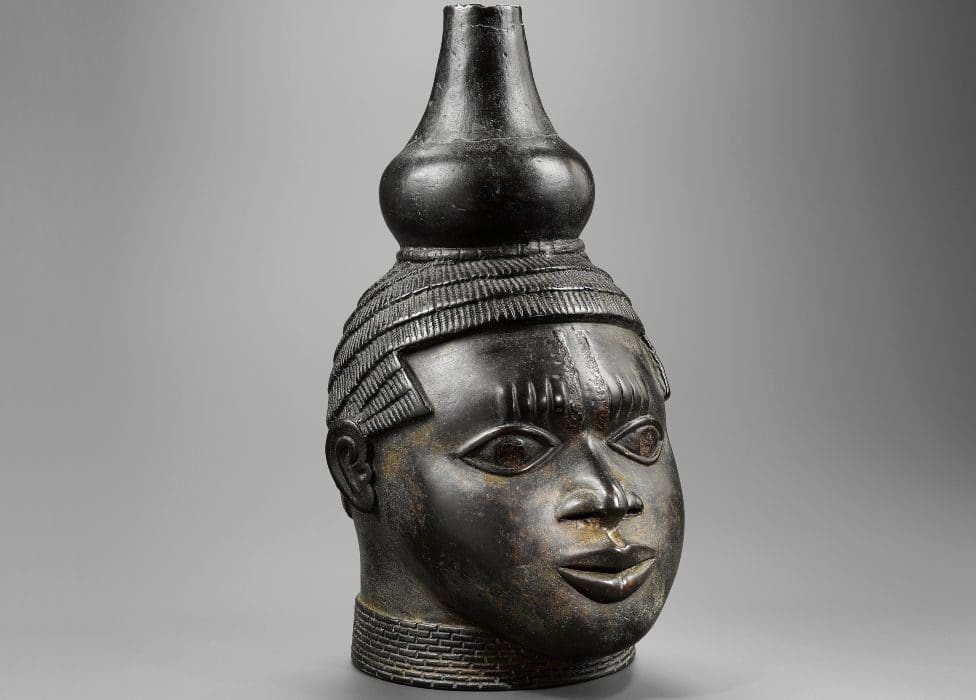
Repatriating the Bronzes won’t make up for colonial exploitation and the heinous crimes that were carried out on Africans, but ignoring calls for the return of pillaged art is not only morally unjust, it also sends out a signal that white supremacist thought is alive and kicking.
Nigerians might not have all the answers to questions about ownership or where these cultural treasures should be housed, but let them decide how the Bronzes should be preserved and shared with the rest of the world. After all, the Bronzes are part of their culture and history and why should these fine examples of African heritage be housed in European and North American museums and vaults? Would we dare question ownership of Stonehenge or where they should be housed? Of course not. We know who owns them and it’s inconceivable that they could be ‘belong’ to any country other than England. So the answer to the question of why should we return the Benin Bronzes is simple: they don’t belong to you!