
…the women of Chibok, but everywhere where, there are victims of insurgency and conflict…are not just data, statistics, these are actual humans. But more importantly, with these women of Chibok, I want people to take away the fact that the women are strong. They’re amazing. And what’s so interesting which we don’t talk about enough is that they are fighting back. In the last 12 years, they have not stopped educating their kids. People don’t talk about that.

The motivation to put this in the cinemas is because I hope that people can experience this in a cinematic environment, in a theater as a community. I would love for FilmOne to say, “hey, anyone who wants to watch, please come and watch for free. But that’s not possible, they have a business to run, and so consider it that it’s the contribution that you make to support the work that we do as documentary filmmakers to bring stories like this to ligh
By Tomi Falade
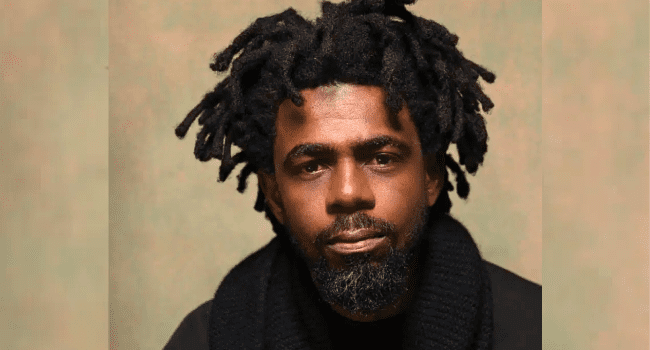
WHEN Joel Kachi Benson won an Emmy from his office in Yaba, it wasn’t just a win for his mantle; it was a signal to every Nigerian creator that global excellence doesn’t require a one-way ticket out of the country. Now, the pioneer of Nigerian VR and immersive storytelling is “pushing the envelope” once again—this time by bringing factual filmmaking into the commercial cinema space with his latest documentary, ‘Mothers of Chibok’. In this candid conversation with TOMI FALADE, Benson discusses the ‘silent defiance’ of the Chibok mothers, the reality of testing a niche genre in a ‘dance-to-sell’ cinema culture, and why true success isn’t measured in box office billions, but in the doubled harvest yields of the women whose stories he tells. It is a masterclass in purposeful filmmaking.
What has the response been to the idea that Mothers of Chibok is coming to cinema?

It’s been great. I’ve had a documentary filmmaker, a young woman tell me that she can’t wait to watch it on a big screen and be inspired, and that would also motivate her to pursue her own dreams. She said that it is already showing her that her dreams are valid. I don’t know what her dreams are, but that’s what she texted me.
A young documentary filmmaker out there can be like, if Kachi can play on the big screen, then I can too. If he can win an Emmy, then I can too. I always tell people that I am based in Nigeria, and you can achieve your dreams here. I don’t know where they get the idea that I am not based in Nigeria. It’s not about showing off. I do travel around, but I’m based here in Nigeria. I won my Emmy Award from my office in Yaba. I’m still the same kid with a dream that lived in Ijesha, Surulere. It’s intentional for me to say that. I have no problem with people who decide that they want to get out of Nigeria. But I live here. Sure, it is a tough country, but not everyone can afford to be outside the country. I hope that my story encourages someone out there that they can make it here.

Documentary films are not for every audience; the audience is very niche. Cinema is sort of a new field for you, a new ground that you have not conquered yet. Are you worried at any point that you will not make the same kind of success that you have made so far, or what would success look like for you in cinemas?
First of all, I don’t think I’m worried, because I don’t have any unrealistic expectations. Failure is when I don’t even try it. So, success, for me, starts with the fact that it actually gets to the cinema. We had a conversation with FilmOne, a cinema chain, and they said, “we believe in this, and we want to give it a try with you.” That, for me, is the first indication of success.
People are able to go in and say, “Hey, I watched this. It was great. It was fantastic. I loved it.” That’s another indication of success. If we have packed cinemas every blessed day for the for the next one month, that will be a pleasant surprise, and I would be very happy.
But even if that doesn’t happen, I’m still okay, because here’s the thing, we’re testing something new. We’re testing something that hasn’t been done before, and so we have to be realistic in our expectations. But you see, once we do it, we’ll know what works and what doesn’t work, but I’m committed to figuring out ways that we can continue to push the envelope of factual filmmaking in Nigeria. I mean, when ‘In Bakassi’, that was the first time a Nigerian filmmaker was using virtual reality to tell a story. I didn’t know if it was going to work or not, I just believed in it. And that’s the thing I feel like this film, ‘Mothers of Chibok’, when we made it, the amount of time that we put into it, the effort that we put into it, the team that worked on it, did well. I’ve experienced this film in a cinema, and I can tell you that it’s a different experience from watching on your laptop.
Did you have to change anything to make it more appealing to the cinema audience?
I always say that there’s an audience for every content, and if you find a way to reach your audience, you should be fine. Documentaries are not for everybody. Not everybody’s interested in heavy subject matters or serious subject matters, and that’s fine, we’re not in competition with anybody. This for us is just to put it out there and see what happens. It’s for a limited run, for four weeks at select cinemas that FilmOne picks. But, I think I want to keep doing this.
Do you ever see a time when there would be documentary content like yours heavily represented in Nigerian cinemas too?
That would be great. But it’s early days. Everything that we’ve accomplished as a people, from music to film to fashion, to art, has come from a place of belief. As Nigerians, we just believe. So, I believe in the power of documentaries, I believe that there’s an audience for documentaries, and we must put our money where our mouth is. So, we’ll put it out there, and we’ll see how people respond to it.
Obviously, it’s not a one-sided thing. The filmmaker alone cannot do it, the cinema chain also has to believe, and then your product, you have to figure out. So maybe there’s a world where maybe there are specific cinemas or specific areas you know that you want play in, and then the audience can go there. So, there’s going to be quite a bit of figuring out. But for it to also move, there has to be more documentary filmmakers making content for the big screen, which is why it’s important that we start with this and hopefully inspire someone to say, “Oh, I can do this too.”
Is there an age range of the audience you’re expecting?
I don’t think there’s an age range for people who love factual content. I think the audience that hasn’t experienced documentaries before would be curious to experience what a creative documentary looks and feels like. People who are passionate about Nigeria and want to understand what happened in Chibok, and understand this place and these people, and are interested in humanity and what makes us us would be interested.
But I think that it’s a story for everyone as long as you’re interested in documentaries, or in life, or in people.
Are you taking it into the community where the story originated?
Oh yes. We are already in conversations with them. They’re excited about it. This is a film that actually inspires a lot of admiration for the women, and when they watched it, because they were the first people to watch it, I made sure that they saw the characters, and they really loved it. The film portrays them with a lot of dignity and pride, and they were happy.
You make your film with your intention and your agenda. The audience takes what they want to take out of it. You don’t have control over what you get. When I made the film, my intention was to portray these women through a different light, through a different lens. I want people to experience them differently. And so, I hope that when people come out of there, they say, wow, these women are amazing, these women are strong, and we really want to support them.
One thing I’ve not mentioned is that we’ve been working on an impact campaign with the women. What they do predominantly is farming, that’s how they send their kids to school. So, we’ve been working with them to see how they can improve their harvest and make it better. We did a pilot survey last year and studied with them, nine women. In 2024, their total harvest yield was 88 bags. Then we started working with them in 2025 and their harvest in 2025 was about 176 bags.
One of the women’s harvest in 2024 was three bags. Last year, her harvest was 26 bags. That for me is physical impact. That’s the whole point of the films I make. There has to be some impact, we have to be able to point to something as a verifiable impact that we made in the community. But we’re going beyond that. Now that they’ve been able to increase their harvest, we have off takers in Lagos. We have an off taker who’s taking their products and paying a fair market price, better than what they get already. The next step now is that we’re also now working with different people to see how we can begin to process their groundnuts, which is what they farm, into finished product that people can buy.
The Nigerian cinema space is not like any other cinema space in the world. For example, there is a growing trend that if you don’t dance to market your film, it will not sell. Filmmakers now make it a point of duty to get actors who can dance for them to market the film, or do cinema and ticket sales, they do all kinds of things to make sure that to get draw the attention of the audience to watch their film. Is there any world in which you are prepared to do any kind of marketing in that regard?
I think that to some extent, the subject matter that your film is addressing would inform how you go about marketing. And I do not think that this particular subject matter would require that. I would say that we will market it as an impact film. We will tell people that this is an impact story, and we will appeal to those that these sort of stories matter to. So people can come to the cinema and experience it as a community, or as a group of people. This is something that happened to us as a nation, 12 years ago, and it was unlike anything that we had ever experienced before. And for those of us that still remember, or those who want to know more and understand, it’s an opportunity for you to experience it like you’ve never experienced it before.
I don’t think anybody has walked into the cinema in Nigeria before and experienced the Chibok story. It’s never happened. So here’s an opportunity.
What do you say to those who may think that this is a way to profit off this story?
The motivation to put this in the cinemas is because I hope that people can experience this in a cinematic environment, in a theater as a community. I would love for FilmOne to say, “hey, anyone who wants to watch, please come and watch for free. But that’s not possible, they have a business to run, and so consider it that it’s the contribution that you make to support the work that we do as documentary filmmakers to bring stories like this to light.
What’s the one message that you think that people will take out of the cinema at the end of the film?
I think the one thing that I want to take away from this is that not just the women of Chibok, but everywhere where, there are victims of insurgency and conflict. They’re not just data, statistics, these are actual humans. But more importantly, with these women of Chibok, I want people to take away the fact that the women are strong. They’re amazing. And what’s so interesting which we don’t talk about enough is that they are fighting back. In the last 12 years, they have not stopped educating their kids. People don’t talk about that.
Boko Haram means Western education is forbidden, yes, and when they kidnapped those girls, it was not a random act of violence, it was intentional. This was a statement saying “we said, don’t send your children to school. You say you will send them to school. This is what’s going to happen to you.”
You would think that will stop the women from sending their other kids to school, but in the last 10 years, they’ve not stopped. That’s defiance, but very silent. And I think that we need to celebrate and acknowledge those women. That’s courage.
- https://independent.ng/architect-of-impact-why-chibok-story-belongs-on-big-screen-joel-kachi-benson/