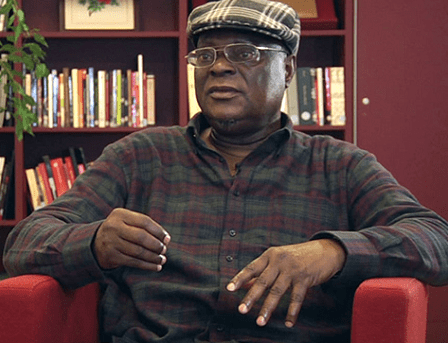
As a young man he survived several car accidents on the Lagos to Ibadan Road and on the Ijebu Ode to Benin City route. Many who travelled those roads in the 1960s to the 1980s and were involved in accidents did not survive. He did, although he has often said he does not know why. Ben Tomoloju, the dramatist, culture communicator, wrote a poem on one of Osofisan’s accidents: “No Going Yet”… He also survived hunger in Paris… He has spoken of days when he fed on frozen snow and scavenged food from the edges of markets. He did not speak of these years with bitterness. He spoke of them as part of the long apprenticeship that shaped his sense of justice and his impatience with suffering.
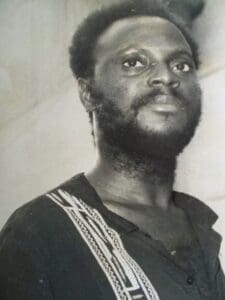
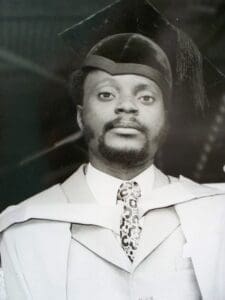
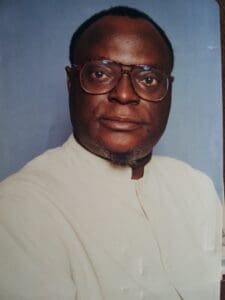 FEMI Osofisan once said he never expected to live to the age of forty. He said it without drama, as if it were a simple fact. His father died when he was three months old. His childhood was shaped by the knowledge that life could end without warning. As a young man he survived several car accidents on the Lagos to Ibadan Road and on the Ijebu Ode to Benin City route. Many who travelled those roads in the 1960s to the 1980s and were involved in accidents did not survive. He did, although he has often said he does not know why. Ben Tomoloju, the dramatist, culture communicator, wrote a poem on one of Osofisan’s accidents: “No Going Yet”.
He also survived hunger in Paris. In the late 1960s he studied at the Sorbonne and lived through winters that were harsher than anything he had known. He has spoken of days when he fed on frozen snow and scavenged food from the edges of markets. He did not speak of these years with bitterness. He spoke of them as part of the long apprenticeship that shaped his sense of justice and his impatience with suffering.
That he is alive at all feels remarkable. That he is alive at eighty and still central to Nigerian theatre and African literature feels even more so.
A Writer Formed by Hardship

Osofisan’s early life explains much about the urgency in his work. He lost his father at three months old and grew up as a peripatetic youth, being passed round family homes and mother’s cuddles in places as diverse as Erunwon Ijebu and Ilesa in present day Osun State. This uncertain existence did not cease until he secured an admission to the Government College, Ibadan in 1959.
His plays often show ordinary people caught in systems that crush them, evoking his own earlier experience. In Morountodun, Titubi enters the world of the Agbekoya farmers protesting unfair taxation, and discovers that the poor do not choose violence for pleasure. They choose it because the state has left them no other path. In Once Upon Four Robbers, the robbers are not romantic figures. They are young men trapped by poverty and by a society that punishes them while protecting those who steal on a larger scale. Four Robbers can serve as the social history of Nigeria, with its invocation of the psychological trauma that people go through every day.
These plays remain relevant because the conditions they describe have not disappeared. Nigeria still struggles with inequality, corruption and the failure of public institutions. And the Nigerian government continues to avoid treating the leprosy in the society by focusing on the ringworm in the armpit of the political excesses. Yes, Osofisan’s work continues to speak to these problems with clarity and courage.
A Theatre of Possibility
Osofisan has always believed that theatre can help a society imagine a better future. In The Chattering and the Song, he uses music, ritual and collective performance to show how a community can rebuild itself after conflict. This play perhaps could be described as his first apparent engagement with the revolutionary ethos that later fuelled his drama. Partly written in Paris when he was researching his doctoral thesis, and completed on the stage of the University of Ibadan Arts Theatre in 1971, Chattering – in a flashback/play-within-a-play – traces the entitled nature of our governments to the old Oyo Kingdom and the vaunted benevolent reign of Alaafin Abiodun Adegoolu. Osofisan reveals that, contrary to the perspectives of history, Abiodun’s reign grew on the oppression of the citizens on the kingdom, a situation linked to the growth of Nigeria after the Nigeria-Biafra war of 1967-1970. The play ends with a song of renewal. It is not a naive ending. It is a reminder that change is possible when people act together.
This belief in collective action runs through his work. It is one reason younger playwrights continue to study him and producers frequently turn to his plays. His theatre is not built around lone heroes. It is built around communities that must confront their own failures and find new ways to live.
A Master of Reimagining Stories
Osofisan is also known for his reworking of classical texts. He does not adapt them for literary or dramaturgical sake. He uses them to question power. In Women of Owu, which draws on The Trojan Women and especially the 19th century Owu war in northern Yoruba, he examines the cost of war on women and children. The play feels painfully current in a world where civilians still bear the heaviest burden of conflict. The list is endless – Afghanistan, Libya, Somali, Sudan, Yemen, Gaza, Lebanon, Rwanda, Iran, Iraq, Congo, Haiti, Ukraine, Iran (again!), without forgetting closer to home the Boko Haram/ISWAT/etc terrorism. Everywhere, it is the poor, the women and the children that suffer. Osofisan poignantly reminds us.
In Tegonni, which echoes Antigone, he explores the clash between colonial authority and indigenous moral codes. Tegonni’s refusal to obey an unjust order becomes a lesson in courage. These plays show how African writers can converse with global traditions while keeping their own histories at the centre. Indeed, these plays are examples of glocal experiments, and a pointer to those seeking decolonisation of the culture.
A Yoruba Imagination at Work
Osofisan’s work is rooted in Yoruba performance. He uses song, chant, masquerade and storytelling not as decoration but as structure. In Esu and the Vagabond Minstrels, the messenger god Esu appears among a group of wandering musicians. He tests their values and exposes their weaknesses. The play uses humour and music to ask serious questions about greed, loyalty and the search for meaning. And the main meaning Osofisan presents is that Esu is not the Christian Satan, that, in fact, Christian mythology is far removed from our cultures and that it was time we disabused the wrongness and meaninglessness of missionary and colonial interpretations of our cultures.
This blend of Yoruba tradition and modern political theatre remains one of Osofisan’s most original contributions. It has shaped how African theatre is taught and performed. It has also influenced younger artists who now return to indigenous forms as sources of strength.
A Teacher Who Shaped Generations
Osofisan’s influence is not limited to his writing. For decades he taught at the University of Ibadan, as well as at the University of Benin; University of Ife (now Obafemi Awolowo University); and universities at Lome, Togo; Beijing, China; USA; and the UK. Many of today’s leading Nigerian playwrights, directors and scholars passed through his classes. They speak of his discipline, his sharp criticism and his belief that theatre must serve the public good. They also speak of his generous acceptance of mistakes, encouraging that we cannot truly learn unless we have learnt from our errors.
His students now teach in universities across Nigeria and beyond. They run theatre companies, festivals and cultural institutions. Through them, his ideas continue to shape the field.
A Public Voice That Has Not Fallen Silent
Osofisan has also been active in public life. He has served as General Manager of the National Theatre, President of PEN Nigeria and Chairman of the Association of Nigerian Authors’ Board of Trustees. He has written essays and columns that challenge political leaders and cultural institutions. Even now he continues to speak at conferences and public events. He remains a voice to which many listen, even when they disagree with him.
A Body of Work That Still Feels New
Osofisan has written more than sixty plays (a conservative estimate, as many have not been produced or published), along with novels, poetry and essays. His work remains in print and in performance because it addresses questions that have not gone away. What does justice mean in a society marked by inequality? How do communities remember trauma? What is the role of the artist in times of crisis? How do ordinary people resist systems that seem designed to defeat them? And where does compassion feature in our everyday life?
These questions continue to shape public life in Nigeria and across Africa. Osofisan’s work offers no easy answers. It offers instead a way of thinking, a way of questioning and a way of imagining. And, in his usual quip, he urges us to ‘wear hope like a jewel, for it never fades’.
A Life That Outran Its Own Predictions
Perhaps the most striking thing about Osofisan at eighty is that he has lived long enough to see his ideas tested by several generations. He once feared he would not live to forty. Yet he has lived twice that span and remains active. He writes. He teaches. He argues. He continues to insist that Nigeria can be better than it is.
His life is a story of survival, but it is also a story of service. He has given his energy to the stage, to the classroom and to the public sphere. He has shaped the way Nigerians think about theatre and the way Africans think about literature.
At eighty he is not a figure of nostalgia. He is a living presence. He is still relevant because the society he writes about is still wrestling with the problems he has spent his life examining. He is still relevant because his plays continue to offer insight and hope. He is still relevant because he has never stopped believing that art can help build a more just world.
He once survived hunger in Paris and danger on Nigerian roads. Today he survives in another way. He survives through the plays that are still staged, the students who still quote him and the audiences who still recognise themselves in his stories.
Femi Osofisan remains, at eighty, one of the most important voices in Nigerian theatre and African literature. His life and work continue to remind us that art can illuminate the darkest corners of society and that imagination can be a form of resistance.
In response to dramatist Ben Tomoloju’s poem, Osofisan wrote an article forty-two years ago, in The Guardian of 17 June 1984, echoing the sentiments in that poem, titled ‘No going yet…’ He concluded that article with:
“So the long days of convalescence began. And, Ben, I read your poem. And I remember also the friends who called, and the cards sent. Indeed, I have learnt that it is not medicine that heals, but affection.
“How stupid it would have been to die like that, with so much still to be done? With the obligations still to be fulfilled to one’s family and friends. With the message, still unspoken, to the heart of one’s generation
“Ben, I am alright now. And you’re right, there is no going yet”.

 Dr Adeyemi, an Osofisan scholar, is Associate Professor of Drama at the University of East Anglia, United Kingdom.
 Dr Adeyemi, an Osofisan scholar, is Associate Professor of Drama at the University of East Anglia, United Kingdom.