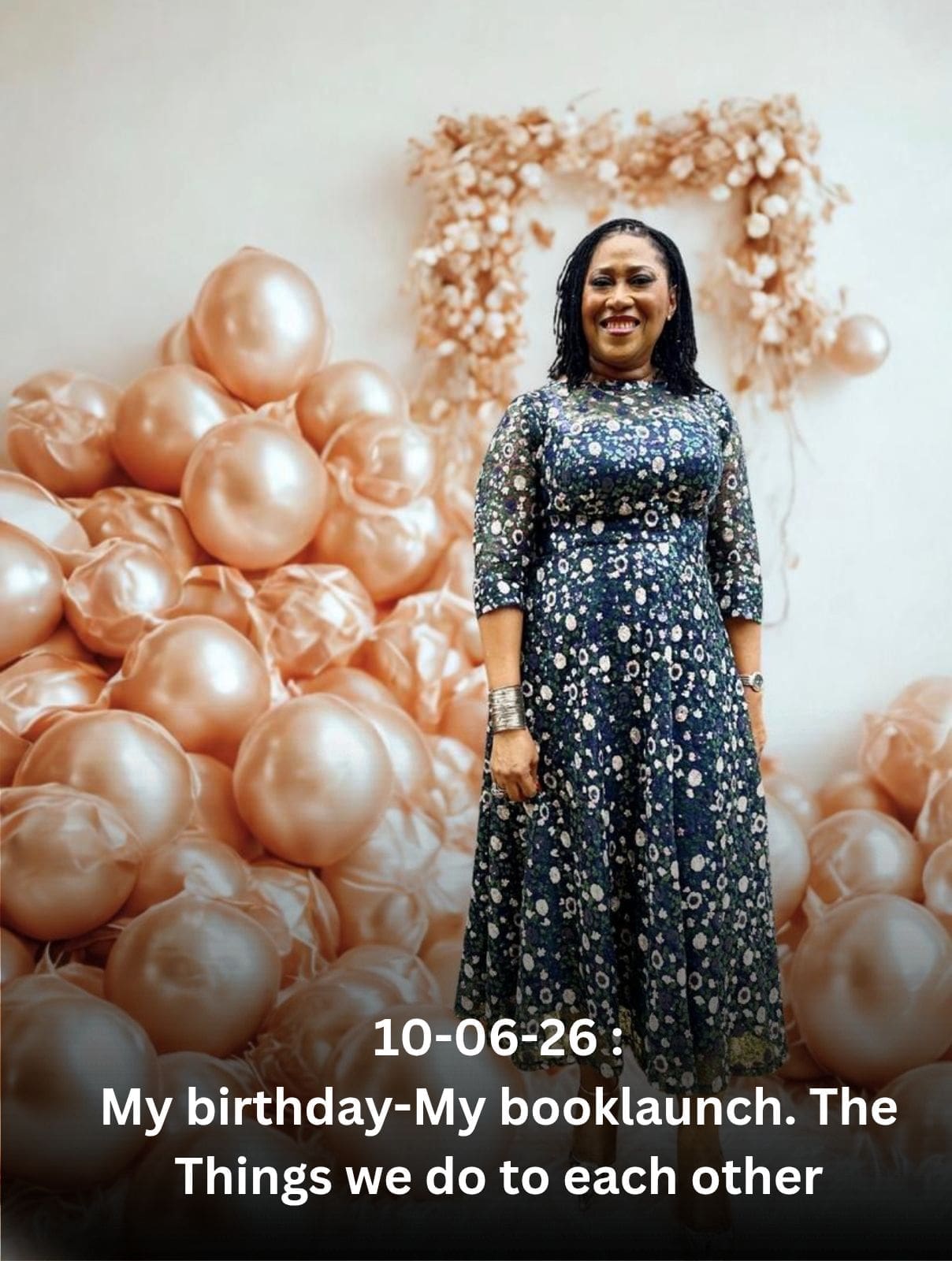
We are rarely wounded only by strangers… Most scars arrive carrying familiar names…. Most betrayals know our birthdays… Perhaps that is why The Things We Do to Each Other feels less like fiction and more like evidence.
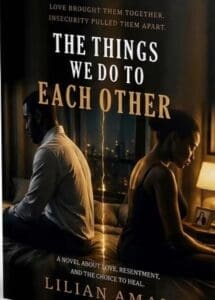 LILIAN Amah
She smiles.
Then she writes.
Somewhere between those two acts, she dismantles our certainties, exposes our contradictions, and reminds us of the things we do to each other.

The most dangerous storytellers are rarely the loudest. They are the ones who make us recognise ourselves in the story.
Three days after the launch of The Things We Do to Each Other, I find myself returning less to the book itself than to its haunting title.
It lingers.
It refuses to leave quietly.
It asks humanity to sit before a mirror it often avoids.
As I briefly pause to celebrate another family milestone, the remarkable achievement of my grand-nephew, duty calls me back to acknowledge a remarkable voice in our literary landscape:
Lilian Amah.
Or, as Zik Zulu Okafor aptly calls her:
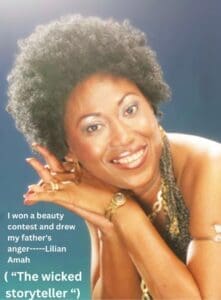 “The Wicked Storyteller.”
Wicked not in malice, but in perception.
Wicked in her ability to expose the emotional crimes we commit against one another while pretending innocence.
For beneath the sophistication of civilisation lies an uncomfortable truth:
We are rarely wounded only by strangers.
Most scars arrive carrying familiar names.
Most betrayals know our birthdays.
Perhaps that is why The Things We Do to Each Other feels less like fiction and more like evidence.
What fascinates me even more is how naturally it stands beside another narrative occupying my imagination: Esther’s Revenge.
Two stories.
Two emotional universes.
One asks: What do we do to those we claim to love?
The other asks: What happens when the wounded finally answer history back?
Both emerge from injury, yet they travel toward different destinations.
For passion can produce vengeance
Passion can produce forgiveness
Passion can produce healing
And sometimes, passion produces art
That may be literature’s greatest miracle: the same emotional fire capable of destroying relationships can also create reflection, theatre, and the possibility of redemption.
This is why storytellers matter.
They do not merely entertain.
They investigate the human condition on behalf of civilisation.
They listen to silences, interrogate memory, and cross-examine the heart.
In doing so, they leave us something more valuable than answers:
Questions
Necessary questions
Difficult questions
AS the 17th Wole Soyinka International Cultural Exchange gathers momentum under the theme “Culture Beyond Borders”, another audience waits.
Not merely to watch.
But to listen, reflect, and decide
Should Esther’s Revenge live?
Or die?
Until then, literature has spoken.
Theatre prepares its defence.
Memory assembles its witnesses.
And somewhere between revenge and reconciliation, between history and humanity, between what was done to us and what we do to each other, civilisation continues its longest conversation.
The verdict, as always, belongs to history.
Should writers comfort society or disturb it?
Or perhaps the better question is:
What, in your view, makes a storyteller truly dangerous?

Zik Zulu Okafor, Lilian Amah, a guest and the author, Teju Kareem
https://www.linkedin.com/posts/teju-kareem-1839b83b_ps-iv-the-wicked-storyteller-lilian-amah-ugcPost-