
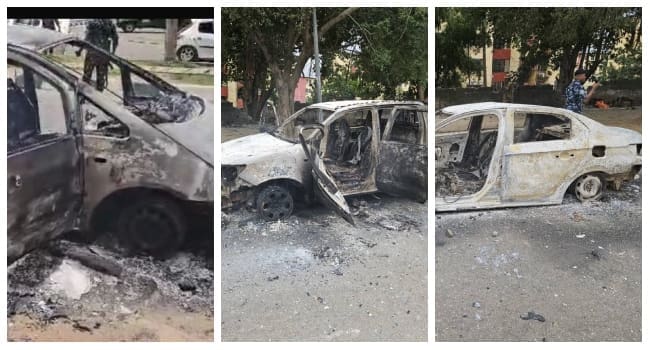
On Sunday, August 25, two policemen were brutally killed in a clash with the Islamic Movement of Nigeria (IMN), also known as the Shiites, in Abuja. Many others were reportedly killed while public and private properties were destroyed. This has become a familiar occurrence whenever members of the IMN hold their annual procession. Between 2018 and 2024, this violence occurred annually except for 2020 when the procession could not hold due to Covid-19. In each of these instances, the police also suffered significant losses. For example, in 2019, a Deputy Commissioner of Police Usman Umar was killed on July 22, during the clash.
This situation portrays a very distressing scenario in a country where non-state actors have taken control and are acting with impunity. In various parts of the country, non-state actors operate without regard for the law and the rights of others, contributing to a widespread sense of insecurity. The government, which has the constitutional authority to maintain law and order, seems too overstretched and weak in addressing this issue.
It is disturbing when law enforcement agencies seem incapable of upholding law and order. It should be clear that no group, regardless of their ideology, has the right to unleash violence and chaos while expressing their assumed rights. Despite having the right to freedom of expression and assembly, individuals also have a responsibility not to harm others who do not share in their dispositions. They have the same rights also. It appears that the Nigerian state has failed to enforce this fundamental rule, leading to road blockades and disruptions by aggrieved entities who care less about the rights of other citizens.
It is obvious that some groups have chosen not to operate under the country’s constitution and state authority but under their doctrines and leadership, to the extent of establishing private security forces and operating a sovereign entity within a country. This poses a significant threat in a diverse society and could be considered a low-level insurgency, which may escalate into a full-scale insurgency if left unchecked.

The recurring clashes between the police and IMN members raise questions about the effectiveness of the country’s intelligence network in handling this specific issue. There should be proactive discussions and planning to prevent the cycle of violence from repeating each year.
The government must find a diplomatic yet firm approach to address non-state actors and their unlawful behaviour. The government must adopt a holistic approach to solve this problem, especially as more young people are being radicalised to reject government authority. The army of such youths is swelling and this was evident during the last protests over governance issues, particularly in the northern part of the country and a swarm of lawless gangs in the south east and the south south.
It must be emphasised that it is dangerous in any society when law enforcement agents cannot enforce law and order; when the government surrenders its authority to non-state actors; when unbecoming actions are condoned or justified under any guise. Citizens, especially in the media and civil society organisations must exercise discretion in justifying irregular actions under the guise of rights and freedoms. They may unwittingly be encouraging lawlessness in society, a development that does not bode well for both the people and the country.