
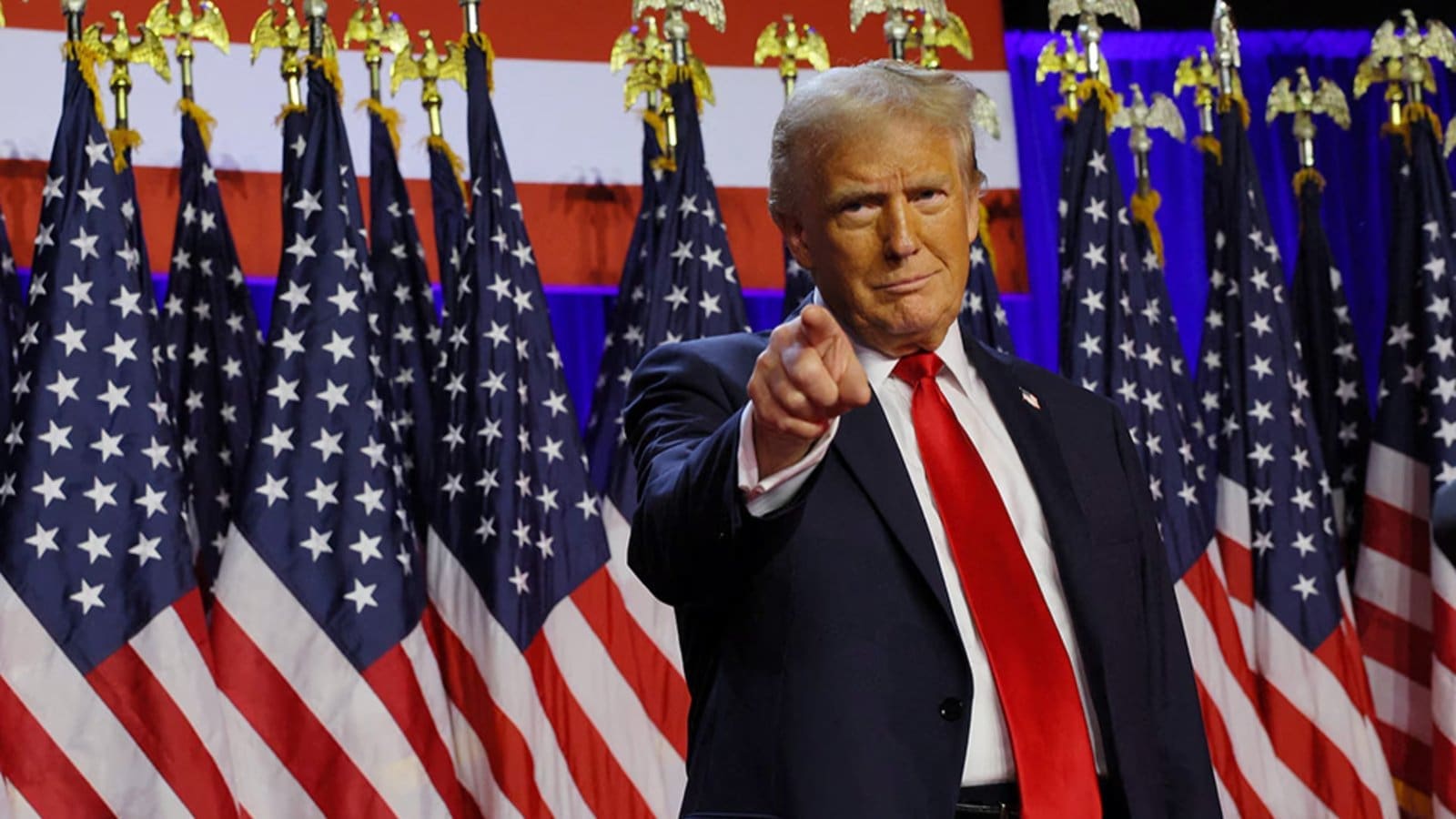
THE President of the United States, Donald Trump, has sparked a global trade war that, while potentially having serious implications for the global economy, may also leave the U.S. struggling to fulfill certain roles. In economics, there is a phenomenon known as the “Kinked Demand Curve,” which describes a situation where demand is affected by uncertain elasticity—leading to a lose-lose scenario. In sociological terms, this can be understood as “unintended consequences,” where the desired outcome produces unexpected results. The U.S. may find itself in such a challenging position.
For Nigeria, and indeed Africa, the critical question is: how can we benefit from these changes? With America potentially unable to fulfill specific roles, will the world turn to us? What are our competitive advantages? This situation highlights that we live in an era of temporary advantages; no nation remains dominant forever.
One area where Nigeria could gain is in oil and gas. While the U.S. is focused on increasing its own oil production, the global market may shy away from American supplies due to imposed tariffs. This scenario could allow Nigeria to boost its oil output and earn more foreign exchange, which could be a positive outcome.
Agriculture is another sector where we could make significant progress. It is essential for Nigeria to enhance its agricultural capabilities to meet the demands of potential export markets.

The Nigerian economy should be built on four strong pillars, starting with a clear national vision supported by a coherent strategy. We need a country strategy that focuses externally, as our economy has become heavily dollarised. Essentially, every activity here is tied to the dollar, which is then converted to naira for local transactions. We often hear that no currency is inherently strong or weak; what truly matters is the strength or weakness of the economy behind that currency.
We should prioritise attracting foreign direct investment (FDI). While America may be deterring investors, we should welcome them and showcase our openness to investment. Many investors may be interested in Nigeria, and we need to effectively highlight what makes us attractive. Seeking FDI requires a robust framework that demonstrates we are ready to provide the necessary support.
However, we must discern the type of FDI we want. We should not be interested in portfolio investments—money that flows into the stock market and can be pulled out overnight based on shifting preferences. Such investments do little to create jobs or help our economy. What we need is FDI that establishes industries, farms and institutions capable of absorbing and nurturing our talented workforce.
To facilitate this, we need to work on two foundational levels. The first level involves creating a cohesive country strategy, structure and competitive environment. The second level focuses on our factor conditions. We have already mentioned oil and gas and agriculture, but we must also explore our abundant mineral resources across various regions. It is time to begin developing these sectors.
Also, we have a significant asset in human capital. Nigeria boasts talented individuals, as evidenced by recent achievements like a Grammy award winner, which represents just a fraction of our potential. We have financial experts globally, engineers at NASA and outstanding doctors around the world. This human capital distinguishes us and will attract foreign investors, who may not need to bring in expatriates but can find skilled professionals in Nigeria. They might only need to provide management expertise while sourcing the operational workforce locally.
There will be no need to seek investments abroad if we can create an environment where things operate effectively. Nigerians investing at home will attract others back to the country. If infrastructure and security are improved, there won’t be any need to encourage Nigerians living abroad to return; they would do so willingly if assured of access to quality healthcare, reliable electricity, basic infrastructure and all the necessities they currently enjoy in developed countries.
The Challenge for Africa
With Trump’s trade wars and cancelling numerous development initiatives across Africa and the rest of the developing world, we ask: What does all this mean for Africa as an economic zone?
From discussions at trade conferences and research centered on intra-regional trade, it is evident that the prosperity of different regions varies significantly. For instance, intra-regional trade accounts for about 60% in the Americas, around 40% in Europe, and more than 50% in Asia. Unfortunately, in Africa, it is less than 10%. However, efforts were initiated in 2024 to improve this situation.
The meeting of small and medium-sized enterprise (SME) organisations, comprising chambers of commerce and business associations in Africa, took place in Kenya and Tanzania under a mission called “East Meets West.” This gathering was eye-opening. Teams from various countries met with local counterparts to discuss enhancing trade relations and how participants could network to bring more prosperity to their regions.
One significant observation from the discussions in Tanzania was that they (Tanzanians) still predominantly trade in fresh and unprocessed goods, following practices established during colonial times. In contrast, West Africa at least tends to focus on processing, for instance: turning nuts into oils and grains into flour, etc. This approach facilitates the creation of various processed products for consumption. In Arusha, Tanzania, businesses expressed eagerness to know if others could invest and establish operations in a joint venture to process primary products. They were also interested in acquiring the necessary skills for engaging in this process.
This realisation highlights a critical point: the need for improved infrastructure and the addressing of non-tariff barriers on the continent, alongside a focus on positive engagement. Many developments in Africa occur not through careful planning but out of necessity. What is often lacking is a common vision.
Nevertheless, there are numerous opportunities, and perhaps the recent high tariffs imposed by the U.S. will motivate Africa to increase trade among countries within the region. This could help better align with trading practices in other regions, ultimately raising prosperity and expanding external trade. As earlier mentioned, Africa’s global trade currently stands below 10%, and its intra-continental trade is even lower. This trade war might be the catalyst it needs to begin taking the necessary steps.
Again, there is a report indicating that the African Union (AU) is launching a new initiative called “Move Africa.” This project aims to change the negative perception surrounding migration.
Historically, migration has been viewed unfavorably by the West, and this mindset has been adopted by the Global South as well. However, the AU argues that migration has always been a natural part of African life, particularly in the informal sector where borders are often disregarded. So, why should Africa share the same negative attitude towards migration held by the West? When discussions about migration arise, reference is typically to Africans and, to some extent, Asians. In contrast, individuals from the U.S. or Europe are often labeled as expatriates. This disparity suggests that the term “migrant” carries a derogatory connotation, implying inferiority.
The AU’s “Move Africa” campaign, spearheaded by their information department, seeks to positively shift this perception. The reality is that Africa cannot function effectively with the boundaries currently dividing the continent and the existing visa processing systems. If implemented properly, initiatives like “Move Africa” could facilitate the movement of people, goods and services across the continent, similar to what obtains in Europe. There is no doubt that free movement of goods, services and people can foster trade by bringing valuable skills and resources.
Trump’s tariff war was intended to foster American production, create local jobs, and potentially reduce the number of migrants, whom he claimed were taking jobs that should belong to Americans. Africa could adopt a similar but positive perspective—encouraging production to create jobs, attract investments to boost the regional economy, and potentially decrease the number of expatriates filling jobs that could be held by Africans.