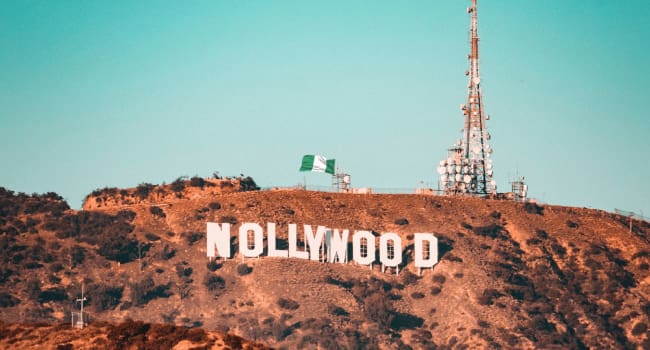
Nigeria’s challenges are vast, and no single industry can be held responsible for them. Nollywood is a mirror – sometimes distorted, sometimes unflattering, sometimes illuminating. To demand that it carries the weight of national transformation is to misunderstand both its limitations and its possibilities. What we need is not a scapegoat, but a more mature media literacy, a more critical public, and a film industry that continues to grow in depth, diversity, and ambition.
IN recent days, a viral video by Emmanuel Ameju Iyaje titled ‘NOLLYWOOD and its Impacts in our Society’ has been circulating widely. In it, he delivers a blistering indictment of Nollywood, accusing the industry of everything from fuelling mass rural–urban migration to destroying marriages and empowering fake pastors. His tone is urgent, his accusations sweeping, and his examples vividly drawn from the familiar canon of early 2000s melodrama. Yet beneath the heat of his rhetoric lies a set of anxieties that deserve careful attention. What is far less convincing is the causal chain he constructs, one that places Nollywood at the centre of Nigeria’s social unravelling. The truth, as ever, is more complex.
To begin with, the speaker is right about one thing: media matters.
Media theorists such as George Gerbner and Stuart Hall help illuminate why these debates around Nollywood are important. Gerbner’s cultivation theory suggests that repeated screen images can subtly shape how audiences perceive the world, while Hall’s work on representation reminds us that film and television do not merely mirror reality but actively construct it. Their ideas, though developed far from Nigeria, offer a useful framework for understanding how Nollywood’s early tropes – spiritual warfare, urban aspiration, family conflict – entered the national imagination. Yet both scholars also emphasise audience agency, reminding us that viewers interpret, negotiate, and sometimes resist the meanings placed before them.
Early Nollywood, with its spiritual warfare, scheming relatives, and firebrand pastors, did not merely entertain; it helped codify cultural narratives already circulating in the national imagination. The “village witchcraft” trope, the tyrannical mother‑in‑law, the overnight city millionaire – these were not neutral stories. They carried emotional weight, and they travelled far beyond the screen, influencing societal perceptions in ways that were sometimes subtle and sometimes overt.

It is also true that Nollywood’s early output coincided with a period of profound social change. The 1990s and early 2000s were marked by economic instability, the rise of Pentecostal deliverance culture, and a growing sense of spiritual insecurity. In that context, films that dramatized spiritual attack or celebrated the power of urban pastors found a ready audience. The speaker’s observation that such films may have reinforced religious dependency is not without merit. Nor is his claim that certain portrayals, particularly of mothers‑in‑law, shaped the expectations of young viewers who lacked the critical distance to separate melodrama from reality.
But to leap from these observations to the assertion that Nollywood “caused” failed marriages, mass migration, or the breakdown of village–city relations is to stretch the argument beyond breaking point. Nigeria’s social challenges are rooted in structural forces far larger than any film industry. Rural–urban migration, for instance, is driven by unemployment, lack of infrastructure, and the concentration of opportunity in major cities. Nollywood may have glamorised the city, but it did not invent the economic desperation that pushes young people to leave home.
Similarly, the rise of Pentecostalism predates Nollywood and is tied to global religious movements, political disillusionment, and the search for alternative forms of authority. To infer that pastors owe their influence primarily to film scripts is to misunderstand the depth of Nigeria’s religious landscape – a landscape that would take volumes to reconstruct.
The speaker also underestimates the agency of audiences. Nigerians are not passive vessels into which filmmakers pour ideas. They negotiate, reinterpret, and often laugh at the excesses of the very films he cites. The melodramatic mother‑in‑law is a stock character precisely because audiences recognise her as an exaggeration or a cipher, not a documentary portrait. The idea that millions of viewers internalised these portrayals wholesale is a claim that demands evidence, not assumption.
Moreover, Nollywood is not the monolith the speaker imagines. It is a sprawling, diverse ecosystem encompassing Yoruba, Igbo, Hausa, and English‑language productions, as well as the more recent “New Nollywood” with its global ambitions and refined storytelling, fuelled partly by Netflix and other streaming platforms. To blame “Nollywood” as a single entity is to flatten an industry that has evolved dramatically over the past three decades.
There is also a danger in romanticising the past. The speaker paints a picture of a pre‑Nollywood Nigeria in which village and city existed in perfect harmony, where trust flowed freely and social bonds were unbroken. Yet the tensions between rural and urban life, between tradition and modernity, long predate the film industry. Nollywood did not invent suspicion of the village; it dramatised a fear that was already present in folklore, oral storytelling, and everyday conversation. The idea of the dangerous relative, the jealous neighbour, or the spiritually potent elder is woven deeply into West African cosmology.
Where the speaker’s argument becomes most strained is in his proposed “solution”: a public contest of spiritual power between pastors and traditionalists at Eagle Square. This theatrical gesture undermines the seriousness of his earlier critique. If the problem is the blurring of fiction and reality, the answer cannot be to stage yet another spectacle. To what end, indeed.
And yet, despite these weaknesses, his video resonates because it touches on something real. Nollywood did help shape the emotional vocabulary of a generation. It did popularise certain fears and fantasies. It did, at times, lean into sensationalism at the expense of nuance. The industry is not above criticism, and indeed, many filmmakers themselves have acknowledged the need for more responsible storytelling.
But the more productive question is not whether Nollywood is to blame for Nigeria’s social challenges. It is how the industry can continue to evolve in ways that reflect the complexity of contemporary life. In recent years, we have seen precisely this shift: films that explore mental health, gender dynamics, political corruption, and the everyday struggles of ordinary people. Directors like Kunle Afolayan, Kemi Adetiba, Obi Emelonye, and Jade Osiberu are crafting narratives that move beyond the old binaries of good pastor versus evil herbalist, wicked mother‑in‑law versus innocent bride. The industry is maturing, experimenting, and expanding its thematic range.
Nollywood’s power lies not in its ability to dictate behaviour but in its capacity to spark conversation. The speaker’s video, for all its exaggerations, is part of that conversation. It reminds us that stories matter, that representation matters, and that the images we consume shape the emotional architecture of our society. But it also reminds us that blame is easy, while understanding is harder.
Nigeria’s challenges are vast, and no single industry can be held responsible for them. Nollywood is a mirror – sometimes distorted, sometimes unflattering, sometimes illuminating. To demand that it carries the weight of national transformation is to misunderstand both its limitations and its possibilities. What we need is not a scapegoat, but a more mature media literacy, a more critical public, and a film industry that continues to grow in depth, diversity, and ambition.
In the end, the stories we tell about ourselves, whether in film or in viral videos, reveal our deepest fears and our highest hopes. Nollywood did not create those fears, but it has helped to give them shape. The task now is to tell new stories, richer stories, stories that reflect not only our anxieties but our resilience, creativity, and capacity for change.
- Dr Adeyemi teaches at the University of East of Anglia, UK