
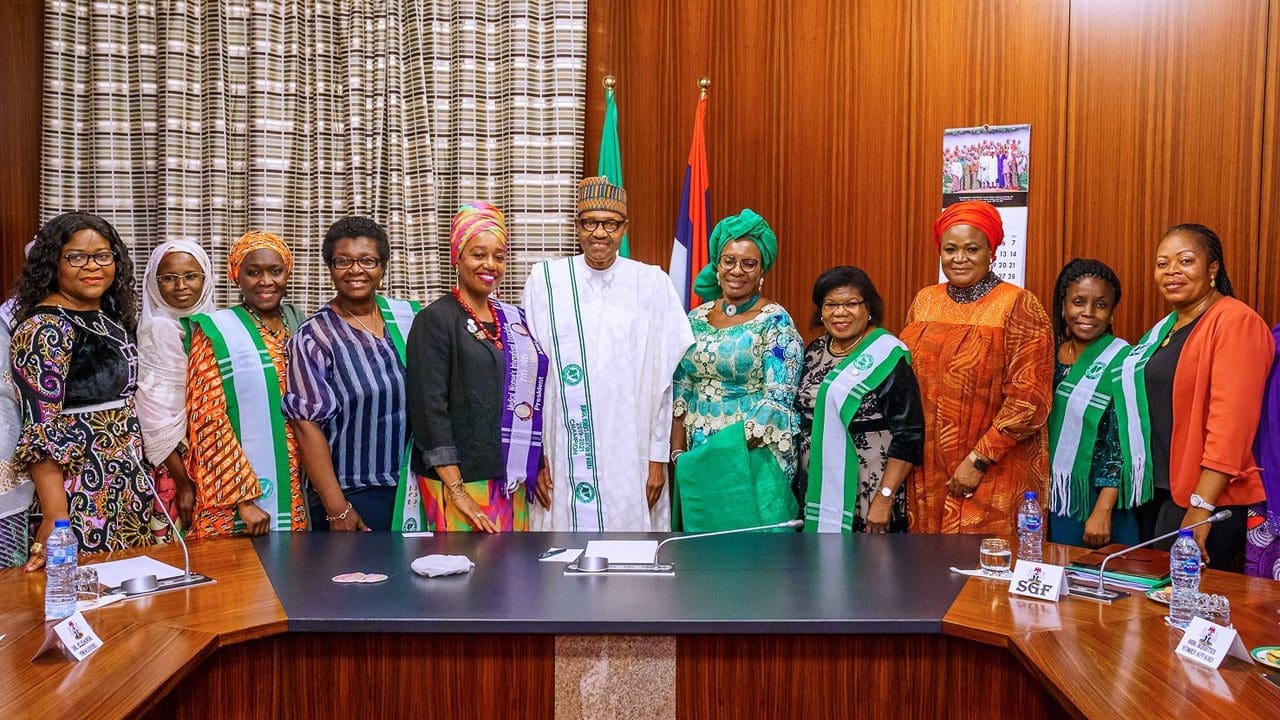
* ‘From 15 women in the cabinet in first termto seven in second term’
AS Nigeria joins the rest of the world to commemorate International Women’s Day (IWD), one of the major issues, which have engaged critical commentary is the representation and participation of women in decision making.
Although stakeholders have celebrated the amazing personal stories of a few exemplary women who shattered glass ceilings to make history, the consensus is that such achievements would continue to be the exception instead of the norm, if the vast majority of women are kept away from the decision making process. In the Nigerian context, the representation of women in parliament has been poor. A close look at data from global sources puts this reality in bold relief.
In Nigeria, the highest percentage of seats held by women in parliament since the advent of the current democratic dispensation is 6.98 in 2007, while the lowest is in 2019 where only 3.38 percent of seats were won by women. This points to a decline, even when the rest of the world is pushing and breaking new grounds with respect to gender parity. Even in terms of appointive positions, the current administration of President Buhari has lagged behind in terms of women representation. In his first term which ran from 2015 to 2019, the President did not meet up with the 35 percent affirmative action as enshrined in the National Gender Policy. In his first term, there were 15 women in the cabinet; this number declined to seven in his second term, which commenced on May 29, 2019.

Subsequently, the decline in women’s participation on Buhari’s watch has been accentuated by the relegation of the role of the wife of the President. Many observers point to the fact that despite having a spouse who seems connected and concerned to the major issues facing women, the Buhari Presidency has done everything to whittle down whatever influence Mrs. Aisha Buhari would have exerted on governance.
Consequently, as the world marks the IWD, several civic groups have been clamouring that the state of decline in women participation must be reversed, especially as Nigeria marches towards its next general elections in 2023. One of such groups is the Resource Centre for Human Rights&Civic Education (CHRICED). The group, while congratulating women for being the energetic, dependable and ever resourceful, noted that the IWD presented an opportunity to reflect on the massive contributions women have made to the advancement and stability of all societies. In a statement signed by its Executive Director, Dr. Zikirullahi Ibrahim, the group commended great women achievers, whom it noted successfully struggled and triumphed over the limitations placed on their path by entrenched injustices, marginalization and alienation.
He said: “It is instructive that in several fields of human endeavours, women have worked assiduously to reach great heights despite the many obstacles they faced. In science, technology, economy, politics, culture, and other fields too numerous to mention, women have continued to demonstrate their knack for excellence and their commitment to progress.
“The most recent example in the Nigerian context is the rise of former Finance Minister, Ngozi Okonjo Iweala who now sits atop the World Trade Organization (WTO) as its Director-General. In January, there was the equally heartwarming story of Kamala Harris, who made history by becoming the first women to be sworn in as Vice President of the United States of America.”
Zikirullahi explained that the reference to these touching stories of achievements are important because they represent what Nigeria and the rest of the world would benefit if more women participated in governance.
On her part, the Director of frontline pro-democracy think tank, the Centre for Democracy and Development, Idayat Hassan called for the implementation of policies and legislations, which would improve the participation of women. She said beyond the inspiring stories of a few women who overcame many challenges to get to the peak, there is a need for societies to work to derive more benefits from women’s capacities by opening up political and economic spaces for them to play their roles in the quest for a better world.
Her words: “In a variety of sectors such as education, health, business and technological innovation, women have continued to demonstrate their capacities. In terms of leadership, evidence abounds that even in the context of COVID-19, countries led by women were able to put forward strategies to limit the devastating impacts of the pandemic. To address the challenges, which hold women back and limit their potentials, CDD calls on stakeholders to work together to address gender inequities by deepening participation of women in politics, economic decisions, education, health and other key sectors in society,” she admonished.


4 comments
… [Trackback]
[…] Find More on that Topic: naijatimes.ng/iwd-women-status-in-governance-keeps-declining-under-buharis-watch-civil-activists/ […]
… [Trackback]
[…] Find More on on that Topic: naijatimes.ng/iwd-women-status-in-governance-keeps-declining-under-buharis-watch-civil-activists/ […]
… [Trackback]
[…] Read More Info here on that Topic: naijatimes.ng/iwd-women-status-in-governance-keeps-declining-under-buharis-watch-civil-activists/ […]
… [Trackback]
[…] Read More Info here to that Topic: naijatimes.ng/iwd-women-status-in-governance-keeps-declining-under-buharis-watch-civil-activists/ […]