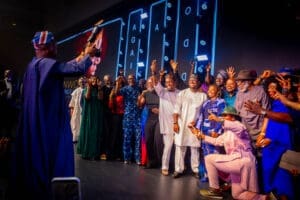
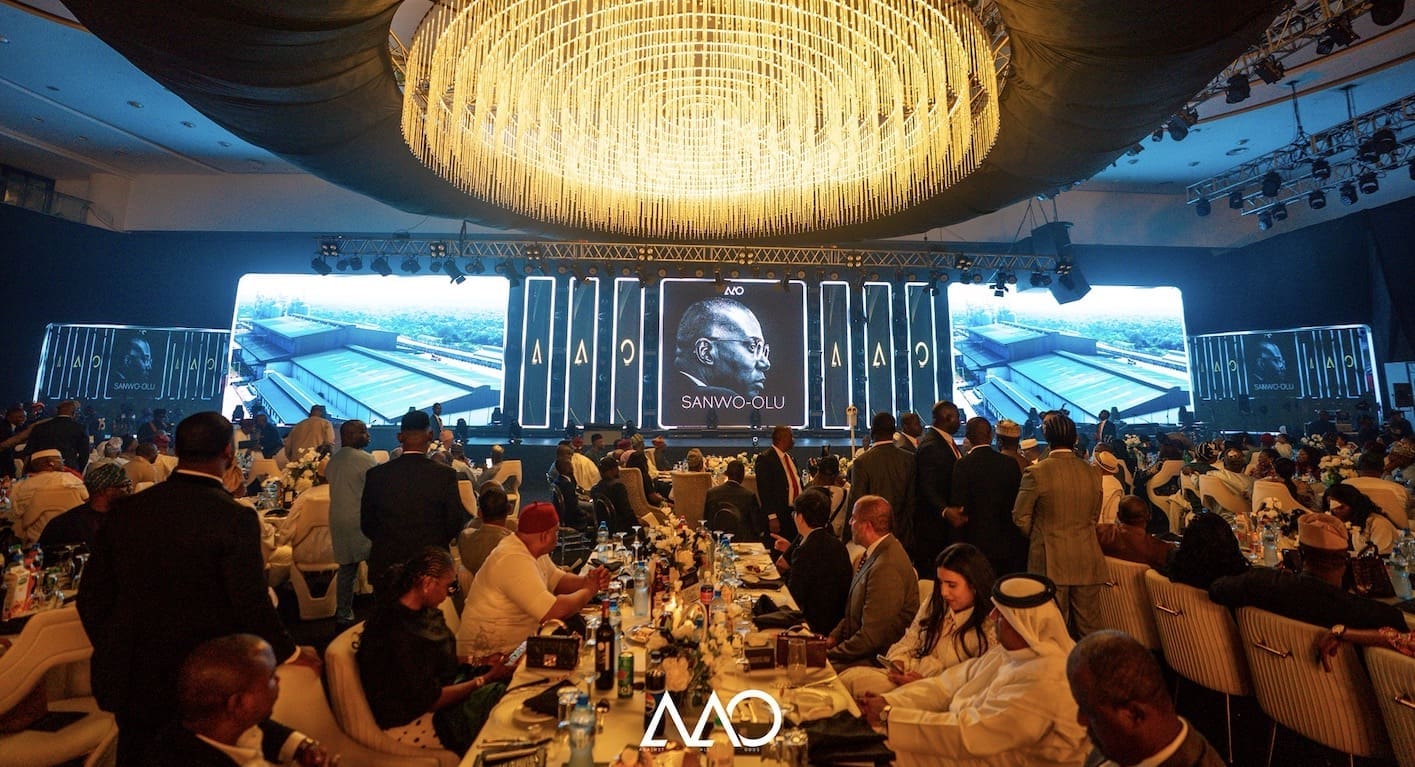
The photographs, selected for the book, out of hundreds of others, are memory-laden and significant. Enfolded pages and spreads of high-resolution pictures, spiced with inspiring quotes from Rudyard Kipling, Aristotle, Woodrow Wilson and James Buchanan,add to its beauty. The QR codes embedded in the book link the reader seamlessly to audio-visual archives of most of the works done in many of the ministries, making this book a relatively comprehensive official history of the Sanwo-Olu administration.
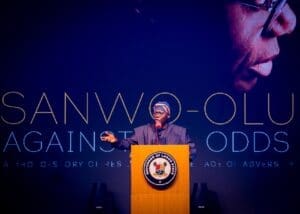 WE live in an age of the camera. The camera as reporter captures the serious and the mundane, the beauty and the beast, the decent and the pornographic. Those who intuitively and consciously understand the visual language, aesthetics and logic of photography have been translating the world they know into compelling stories. And these translations into images of human thoughts and experiences, of faces and places, of ideas and events, have had huge impact on humanity. Laura Morton, a San Francisco-based award-winning documentary photographer, says that cameras are tools of exploration and passports to the deep. And Mary Golon, Assistant Managing Editor and Director of Photography at The Washington Post, observes, with brisk authority, that photography has the capacity to inform, to educate and to move people worldwide without the need for a shared spoken language. In his essay, “The Past Recaptured,” Paul Theroux, a prominent American novelist, writes that, almost since its inception, photography has been able to give history a human face by supplying the world with crystal images. Theroux goes further to argue that “while the eye is selective, the camera lens is not, which is why photography, when it is masterful, is both an art and a science, the triumph of technology creating a luminous and symmetrical artifact.” In Salman Rushdie’s novel, The Ground Beneath Her Feet, the nosey and brilliant narrator tells us that photography is a “gift of permanent vision, of the transformation of sight into memory, of the actual into the eternal—the gift of immortality bestowed upon mankind.”
I suppose that Ademola Olaniran, the author of Sanwo-Olu Against All Odds: A Photo-Story of Resilience in the Face of Adversity, shares these perspectives. As a front row witness, he has documented the first term in office of the Sanwo-Olu administration diligently and extensively in this book, using the medium of photography. His lenses were never out of focus as he took hundreds of shots. He went the extra mile to get candid pictures, or what Robert Draper describes in his essay, “The Power of Photography,” as ‘the epic shot.’ This visually powerful and consistently engaging photobook is the result of his passion and forbearance. The photographs, selected for the book, out of hundreds of others, are memory-laden and significant. Enfolded pages and spreads of high-resolution pictures, spiced with inspiring quotes from Rudyard Kipling, Aristotle, Woodrow Wilson and James Buchanan,add to its beauty. The QR codes embedded in the book link the reader seamlessly to audio-visual archives of most of the works done in many of the ministries, making this book a relatively comprehensive official history of the Sanwo-Olu administration. I say official history deliberately, because it is hard for a book of this nature not to be a selective story telling.
How did Babajide Sanwo-Olu become the fifteenth governor of Lagos State—the economic capital of Nigeria? On 18 September 2018 when he declared his intention to run for governor, he had served as an adviser to Otunba Femi Pedro, then Deputy Governor of Lagos State, and served three times as commissioner in Lagos State under different regimes. He was also the Managing Director and Chief Executive Officer of the Lagos State Development Property Company (LSDPC). Most importantly, he had the solid support of Asiwaju Bola Ahmed Tinubu, a political mastermind, who has been controlling the levers of power in Lagos State for close to thirty years. The Governor’s Advisory Council (GAG), on 30 September 2018, proclaimed him the preferred candidate of the All Progressives Congress (APC). All the thirty-six members of the Lagos State House of Assembly also unanimously voted to adopt him. And a major contender, Dr Obafemi Hamzat, graciously stepped down for him. That consensus at the top generated tensions among party faithful. But many of the aggrieved were soon pacified. Sanwo-Olu eventually emerged on 2 October 2018 as the winner of the APC governorship primaries with 970,851 votes, leaving the incumbent, Governor Akinwunmi Ambode, with 72,901 votes. Still, the rancour within the rank and file of APC and the crisis of confidence among some sections of the electorate persisted. That deep division needed a calm head and a peace maker. Sanwo-Olu rose to the challenge and was able to reconcile different warring factions and various groups. APC then presented a formidable front that roundly beat Mr Jimi Agbaje of the People’s Democratic Party (PDP) at the poll on 9 March 2019 after an intense campaign.
There are pictures here of party leaders such as President Muhammadu Buhari, Vice-President Yemi Osinbajo, Asiwaju Bola Ahmed Tinubu, Mr Babajide Sanwo-Olu, Mr Babatunde Raji Fashola, Mr Akinwunmi Ambode, Dr Obafemi Hamzat, Hon Mudashiru Obasa, Mr Femi Ipaye, Hon Abiodun Faleke, Senator Gbenga Asafa, Senator Oluremi Tinubu, Princess Adejoke Orelope-Adefulire, Dr Oluranti Adebule, Dr Ibijoke Sanwo-Olu, Mrs Oluremi Hamzat and Mr Tayo Ayinde, the Director-General of the Babajide Olusola Sanwo-Olu Campaign Organisation (BOSCO) at different rallies, marketing their candidates and talking to people about the programmes of APC. These programmes were grounded in Greater Lagos Agenda called THEMES Plus, a short for Transportation, Traffic management, Technology, Tourism, Transparency in Finance, Healthcare, Housing, Environment, Education, Economy, Entertainment and Security. That vigorous campaign culminated in power and glory on 29 May 2019 as Governor Babajide Sanwo-Olu and his deputy, Dr Obafemi Hamzat, were sworn in.

They were less than ten months in office when Coronavirus disease (Covid-19), which had been killing hundreds of thousands of people in China, United Kingdom, United States and elsewhere, sneaked into Lagos like a thief in the night on 27 February 2020 through a plague vector, an Italian, who flew into the city from Milan. That created moments of high panic in Nigeria. In the long history of humanity, viruses have killed more people than wars. Those who were conscious of this fact were full of anxiety as that plague hit, leaving the world perplexed, mortally afraid, and disillusioned by the spate of deaths. There was the agonising despair that Covid-19 would make mince-meat of Africa. That doomsday prediction was not misplaced because the continent was very vulnerable. But before dead bodies multiplied exponentially around the world, Lagos was ready to wage a well-planned battle against that infectious disease. The governor and his team had set up what they called the Lagos State Incident Command Structure (ICS) which moved rapidly to counter the spread of the scourge. Regarding this invasion as war, Governor Babajide Sanwo-Olu took charge as the Lagos State Incident Commander. His battle-ready Second-in-Command was Professor Akin Abayomi the Commissioner for Health. Their war cabinet and all the foot soldiers worked tirelessly to contain the arithmetic of death. Lockdowns were imposed. Like everyone else in the world, Lagosians were asked to wear face masks, observe physical distancing protocols and clean up regularly. Restrictions on movements were painful, but they had to be imposed. So many people had to work remotely. The volume of Covid-19 testing was increased and the process of diagnosis was made easy. Many vectors in Lagos were quickly and effectively quarantined. And the patients got quality care. All the other good works that the Incident Commander and his team did, physically and virtually, in collaboration with the Federal Government, some corporate entities like the Central Bank of Nigeria (CBN), the National Petroleum Company (NNPC), Transgreen Nigeria Limited, National Primary Healthcare Development Agency (NPHCDA ) and private donors like Ooni of Ife, Oba Adeyeye Ogunwusi, are recounted with graphic photographs in this book.
As if the catastrophe of Coronavirus was not enough, on 15 March 2020, there was a huge gas explosion at Abule Ado in Amuwo Odofin Local Government Area, which left wreckage of neighbourhoods in its wake. This was followed by #EndSARS protests which began on 8 October 2020 and spread across some parts of the country with Lagos as the flashpoint. Most notably, the protest in Lagos put the Sanwo-Olu administration under a lot of stress, particularly when what started as a peaceful protest degenerated into mayhem between 14 and 19 October 2020. By the time the governor moved around the city on 23 October 2020 to assess the extent of the infrastructural damage, he was absolutely devastated by the colossal destruction he saw. The historic Federal High Court was burnt down; seventeen police stations were set ablaze; the Lagos State bus terminals at Berger, Yaba and Oyingbo were damaged and many buses in them burnt down; the Nigeria Ports Authority’s offices in Lagos were attacked; the Ajeromi-Ifelodun Local Government was burnt down with over forty cars within its premises; the multi-billion naira DNA and forensic Centre, first of its kind in West Africa, was completely destroyed; a section of the palace of the Oba of Lagos was vandalised; the headquarters of TVC Communications was shattered; and the thugs did not only damage the City Hall, they defecated in many of its offices. In this city that we love, in this city that we call home, in this city of possibilities and opportunities, many other public and private properties were destroyed. And in the aftermath of the clash between the protesters and the security operatives, there were casualties and fatalities. Most of the steps taken by Governor Sanwo-Olu to restore peace such as his appeal to the restive youths not to be violent, his frantic trip to Abuja to deliver their original five-point demand to President Muhammadu Buhari, and the setting up of Judicial Panel of Inquiry headed by Justice Doris Okuwobi to investigate the turmoil are all documented in the book. While Ademola Olaniran and his team support the right of Nigerians to make their grievances known through protests, they consider it despicable that some people gloated over the loss of lives and massive destruction of properties in Lagos during the #EndSARS protest.
The dark memory of the #EndSARS incident had not receded in the Lagos consciousness when on 1 November 2021 a twenty-one-storey building on 42 Gerrard Road, Ikoyi, being constructed by Fourscore Heights Limited, collapsed in the afternoon of that day. It instantly became headline news. Governor Sanwo-Olu was on an investment trip, far away in Rome, Italy, en route to Glasgow, for a climate change conference, when that happened. Professor Abayomi, who was with him on that trip, reports in this book that Sanwo-Olu heard the tragic news before he went on stage to deliver his speech. The governor promptly cancelled all his itineraries and returned to Lagos, given the magnitude of that disaster. He quickly set up a Panel of Inquiry to investigate the cause of the collapse in which forty-five people had died including Mr Femi Osibona, the Managing Director of Fourscore Heights Limited. The six-man investigation panel headed by the President of the Nigeria Institute of Town Planners (NITP), Mr Toyin Ayinde, discovered that building codes, town planning regulations and design specifications were breached.
Those tragic incidents did not overwhelm Governor Sanwo-Olu. Instead, they instilled in him a stronger determination to succeed as he quickly came to grips with the problems. They simply got him accustomed to managing other difficult conditions. This is self-evident in the large numbers of the digital sharp photographs in the book devoted to the achievements of his administration: the construction of roads and bridges in different parts of the state; the inauguration of LAGRide, operated in partnership with the CIG Group; the replacement of the buses burnt down during the #EndSARS violence; the building of more bus and Jetty terminals; the improvement in the commercial operations of LAGFERRY; the acquisition of more boats for swift search-and-rescue missions in case of any waterways accidents; the huge investments in Lekki Deep Seaport to make Nigeria a prominent maritime hub in west and central Africa; the Blue and Red Lines Intra-city Rail projects with all the compliments of modern stations; the fully equipped healthcare facilities built across the state; and the modernisation of waste evacuation and management processes. Many of the photographs also tell the stories of the capacity building for workers in the state; the empowerment of youth and women in different Skills and Acquisition Centres; the building of more modern classrooms, the maintenance of the old ones and the provision of learning materials for public primary and secondary schools; the construction of 8,272-bed hostel and the faculty of management science building for Lagos State University; the establishment of the Lateef Jakande Leadership Academy; the partnership with Oando Clean Energy Limited to promote clean environment by rolling out electric mass transit buses; the laying of fibre ducts across Lagos State to make internet connectivity faster; the creation of business-friendly environment and investment opportunities for new and established entrepreneurs and industrialists; the investment in technological development and science research; the provision of more affordable housing; the building of the largest Rice Mill in Africa located in Imota; the building of Fresh Food and Logistics Market; the steady supply of vehicles, modern communication gadgets and other up-to-date equipment to the Nigerian Army, the Nigeria Police and the Lagos Neighbourhood Safety Corps to strengthen their crime fighting power; the building of more fire stations and emergency service headquarters; the construction of the John Randle Centre for Yoruba Culture and History; the renovation of Glover Memorial Hall; and the unwavering support for cultural events which include sports, music, festivals, films, heritage preservation, among others. It was on the strength of those achievements, the book argues, that the governor and his deputy were re-elected on 11 March 2023.
There are pictures of Governor Babajide Sanwo-Olu attending many local and international summits where he exchanged ideas with international business entrepreneurs and political leaders on how to grow the economy and run a mega city like Lagos. There are pictures of him, his wife and others campaigning against rape. There are also pictures of him receiving several local and international awards for his accomplishments in health management, political leadership, public infrastructure, urban renewal, good governance, education and economic development. The governor is much praised in the book by President Bola Ahmed Tinubu, Prof Yemi Osinbajo, Mr Babatunde Raji Fashola, Dr Akinwunmi Adesina, Dr Obafemi Hamzat, Professor Akin Abayomi, Alhaji Aliko Dangote, Mr Femi Otedola, Mr Gbenga Omotoso, Engineer Abimbola Akinajo, Mr Tokunbo Wahab, Mr Tayo Ayinde, Mr Hakeem Muri-Okunola, Mr Dayo Adedayo and Mr Gboyega Akosile for his tenacity of purpose, his selflessness, his emotional intelligence, his policy insights and his sense of responsibility. Lastly, the photograph of Governor Sanwo-Olu holding a small replica of the Lagos Blue Line with his predecessors—Asiwaju Bola Ahmed Tinubu, Mr Babatunde Raji Fashola and Mr Akinwunmi Ambode—is particularly striking. What is the symbolism of this image? Beyond its general intention and purpose, what does it signify? As semioticians would tell you, reading some symbols accurately can be very subjective and contentious indeed. To my mind, this photograph representsan unbroken legacy: a smooth transition from one regime to the other in Lagos State in the last thirty years. In what ways has this deeply strategic political dominance benefitted Lagos State? The answer, my friend, is blowing in the wind.
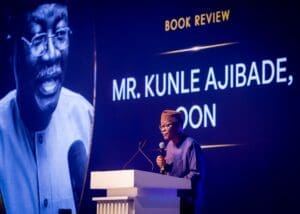
- Ajibade, Executive Director of TheNEWS /PM NEWS, read this review on 20 July 2026 at Eko Hotel and Suites, Victoria Island, Lagos.
Screenshot
Screenshot