
So, what do we owe these mothers? As citizens, sustained attention, not episodic outrage. As government, security, justice, and competent delivery. As the private sector, investment in opportunity. As a nation, we owe them memory.

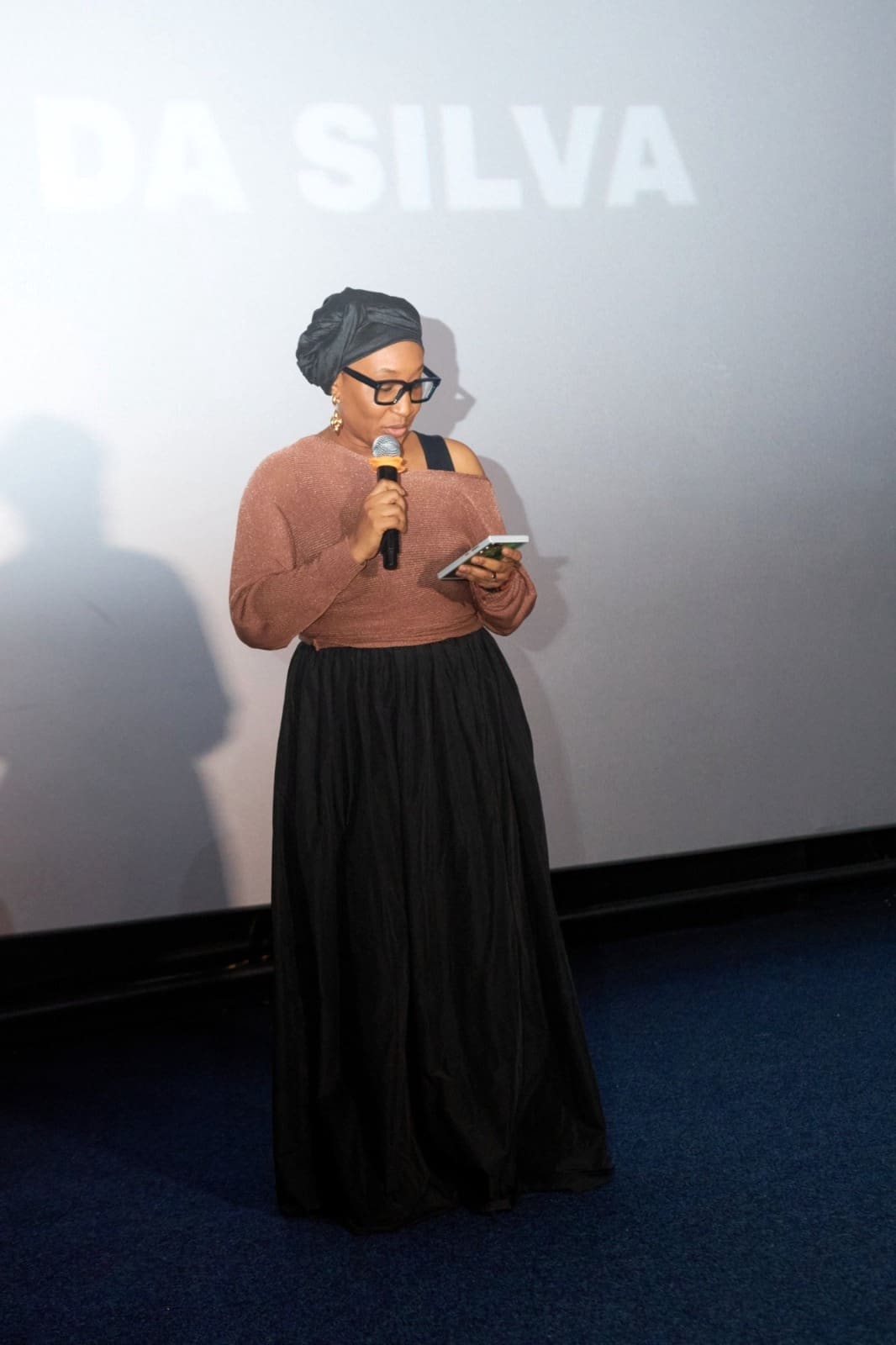
Distinguished guests, ladies and gentlemen, and to the mothers whose courage fills this room, good evening.
Standing here tonight is deeply personal for me.
My involvement in Mothers of Chibok was not simply observational. During production, I was on the ground working in Borno. I helped facilitate access and clearances that allowed the filmmakers to move responsibly and safely between Maiduguri and Chibok. I witnessed moments of reunification that were unscripted, sacred, and profoundly human.

But my connection runs deeper than facilitation.
At the time, I had the privilege of serving in an advisory capacity on humanitarian interventions and internally displaced persons to the late President Muhammadu Buhari. In that role, I was directly involved in shaping and driving interventions in the Northeast. I also led, on behalf of the Federal Government, the Recovery and Peace Building Assessment, a technical and comprehensive effort to move the region from emergency response toward structured recovery and long-term stabilization.
I also had the opportunity to conceptualize and drive, on behalf of the immediate past Vice President, Professor Yemi Osinbajo, the North East Children’s Trust. A private sector-led, government-enabled, and communitysupported initiative for children orphaned by the conflict.
So tonight, I stand at the intersection of three worlds.
- Field work.
- Policy.
- And storytelling.
And it is at that intersection that this film becomes profoundly important.
From thin data to thick data:
In government, our language is data.
We count displaced persons. We assess damaged infrastructure. We quantify destroyed schools, health centers, and markets. We build the matrices and financing plans that help mobilize resources and coordinate stakeholders.
That work is essential. It creates a structured pathway for rebuilding.
But numbers alone, however necessary, are thin. They tell us what happened. They rarely tell us how it felt.
As an example, a dashboard cannot fully explain why trust was broken. It cannot capture how dignity was strained. It cannot describe what resilience looks like in a grieving household.
The power of thick data
This is where storytelling becomes indispensable.
Films like Mothers of Chibok capture what social scientists call “thick data.” The lived texture of experience. The nuance, the silences, the contradictions of strength that a spreadsheet cannot hold.
My time in Borno was transformative because I encountered this thick data firsthand.
I saw the consequences of conflict beyond physical destruction. I saw psychological fracture.
I watched communities negotiate survival daily, within a complex web of security risks, local dynamics, and political and donor expectations.
And that is why this film matters.
It does not replace policy. It completes it.
Reweaving the fabric: From the Recovery and Peace Building Assessment, we learned that interventions do not operate in a vacuum. They land in real places, with real histories, and real trauma.
We learned that restoring livelihoods and governance requires more than funding. It requires listening.
And listening is not a soft skill. It is a delivery requirement.
Because when policy is grounded in context, it does more than deliver outputs. It delivers outcomes. It does more than build structures. It rebuilds trust.
When we listen carefully, with appreciation for lived realities, we can design with empathy. We can design for fit and purpose.
And then our interventions become not just technically sound, but socially transformative.
Education as strategic recovery:
One of the most important lessons from the Northeast is this.
Recovery is not only about rebuilding what was destroyed. It is also about preventing recurrence… Because extremism feeds on exclusion, ignorance, and hopelessness. Education counters that narrative by building an identity anchored in possibility rather than grievance.
Through the collaboration of government, private sector and community, together, we mobilized unprecedented support for education in the region.
Today, we celebrate graduates of software engineering and peace and conflict studies. We see children thriving in universities, in secondary schools, and in their vocations.
To be clear, this was not charity. It was strategy.
Resilience over pity:
In these communities, we witnessed an extraordinary, quiet resilience.
Families who lost everything still insisted their children return to school.
Mothers who endured unthinkable trauma organized, advocated, and held their neighbors together.
This film reflects that specific brand of strength.
As we watch, it is vital that we resist the pity narrative. The Northeast is not a story of helplessness. It is a story of profound strength under pressure.
At the same time, we must not romanticize resilience.
Resilience is not permission to abandon people to hardship. It is evidence of what people carry when systems are not able to adequately deliver.
Storytelling as accountability:
Storytelling also plays another role. One that may be uncomfortable, but is necessary.
It holds us accountable.
Narratives shape public memory. And public memory shapes governance.
When stories are told truthfully, they prevent erasure. They ensure that tragedy is not normalized, and that recovery is not declared prematurely.
For those of us who have served in government, storytelling can be a mirror.
A mirror that asks:
- Did we move fast enough.
- Did we listen deeply enough.
- Did we protect adequately.
That is not criticism. That is responsibility.
Our shared responsibility
So, what do we owe these mothers?
As citizens, sustained attention, not episodic outrage.
As government, security, justice, and competent delivery.
As the private sector, investment in opportunity.
As a nation, we owe them memory.
If we allow thick data to inform policy, and if we anchor recovery in dignity, then trauma can become transformation.
Tonight, as we watch this film and meet these remarkable mothers, let us not treat this story as a closed chapter.
Let us treat it as a living reminder of shared responsibility.
May we leave here not only moved, but more deliberate.
Not only reflective, but more accountable.
Not only sympathetic, but more strategic.
Because storytelling, when aligned with policy and action, becomes more than art.
It becomes nation-building.
Thank you for listening.